
The period of adolescence represents a pivotal epoch in human development, characterized by profound transformations that extend far beyond the realms of social and physical maturation to fundamentally reshape the intricate architecture of the brain. During these formative years, higher-order cognitive functions, including the capacity for strategic planning, logical deduction, and nuanced decision-making, undergo a continuous process of refinement and advancement. Despite the critical importance of this developmental stage, a comprehensive and definitive understanding of the precise mechanisms by which the brain’s complex neural circuitry is sculpted during this crucial window remains elusive to the scientific community.
At the foundational level of neural development lie synapses, which are the specialized junctions that facilitate the transmission of information between neurons, thereby enabling the intricate flow of signals throughout the brain. For a considerable period, the prevailing scientific consensus held that the total number of synapses follows a trajectory of consistent growth throughout childhood, followed by a significant reduction during adolescence. This established viewpoint fostered the widely embraced theory positing that an excessive rate of "synaptic pruning," the biological process involving the elimination of weak or infrequently utilized neural connections, might be a contributing factor to the etiology of various neuropsychiatric conditions. Notably, disorders such as schizophrenia, which manifest with symptoms like hallucinations, delusions, and a disorganization of thought processes, have frequently been implicated and linked to this proposed mechanism of synaptic reduction.
However, a groundbreaking investigation conducted by a distinguished cohort of researchers affiliated with Kyushu University has now brought forth compelling evidence that challenges this long-standing and deeply ingrained theoretical framework. Their seminal study, meticulously detailed and disseminated in the prestigious journal Science Advances on January 14th, has unveiled a surprising discovery: the adolescent brain does not merely engage in the wholesale elimination of neural connections. Instead, the research indicates that during this developmental phase, the brain actively constructs and consolidates new synaptic connections, forming densely packed clusters within specific segments of neurons.
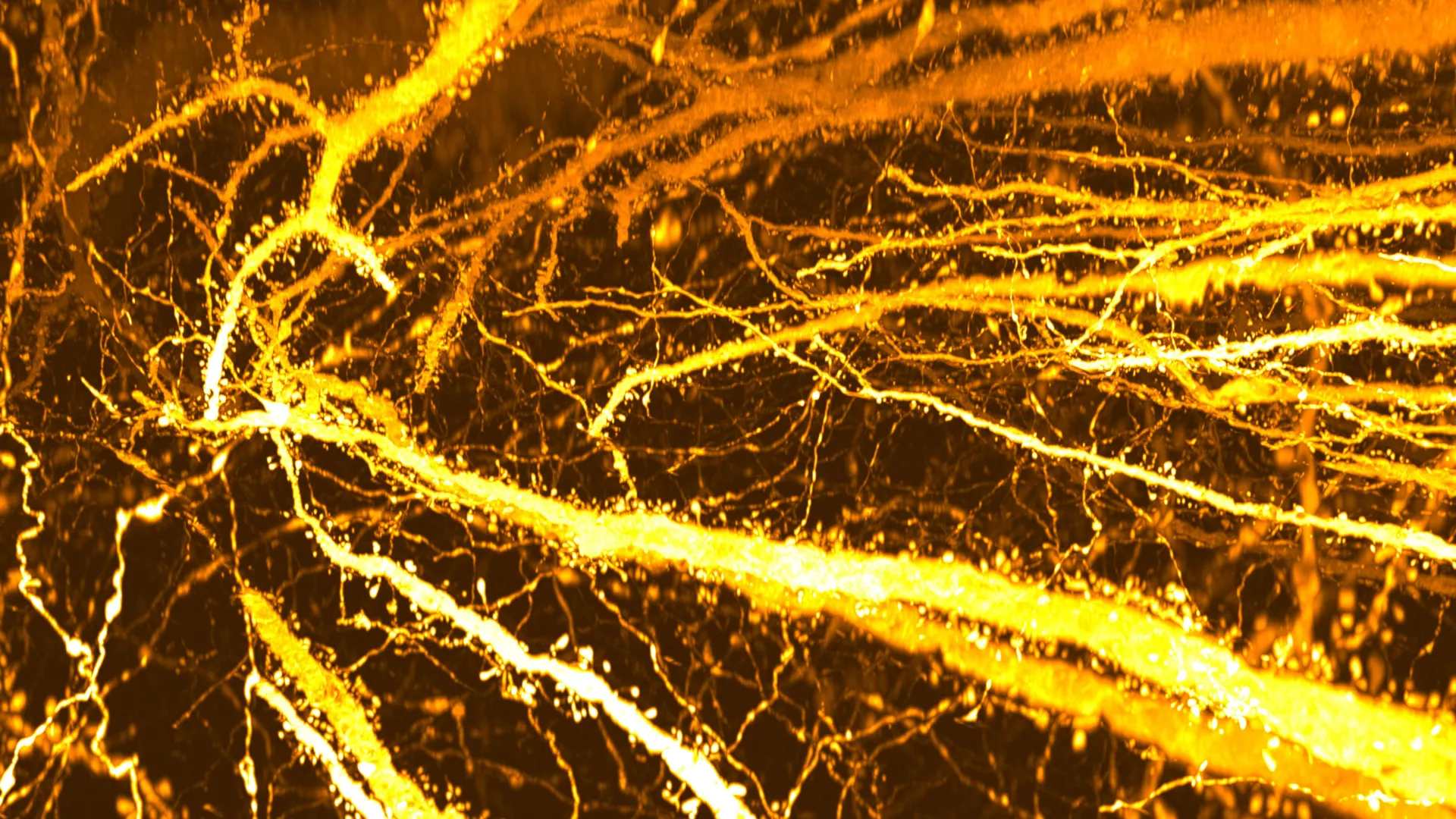
Professor Takeshi Imai, a leading figure at Kyushu University’s Faculty of Medical Sciences, shared insights into the genesis of this transformative research. He clarified that the initial impetus for the study was not directly aimed at investigating neurological disorders. Rather, the team’s curiosity was piqued after they successfully developed an advanced, high-resolution methodology for synaptic analysis in 2016. Their initial exploration, focusing on the cerebral cortex of laboratory mice, yielded unexpected and aesthetically striking observations of neuronal structures. Beyond appreciating the inherent beauty of these formations, the researchers were astonished to encounter a previously undocumented region exhibiting an exceptionally high density of dendritic spines, which are minute, protrusion-like structures extending from dendrites and serving as the principal sites for the formation of excitatory synapses.
The cerebral cortex, the outermost layer of the brain, is a marvel of biological engineering, organized into six distinct strata that collaborate synergistically to orchestrate highly sophisticated neural circuits. Professor Imai and his collaborators concentrated their investigative efforts on neurons residing within Layer 5 of this critical brain region. These neurons are instrumental in their function, acting as crucial hubs that integrate information from a multitude of sources before transmitting signals outward, thus serving as the ultimate output pathway of the cerebral cortex. Due to this pivotal role, neurons within Layer 5 function as a central control nexus for the brain’s complex information processing operations.
To facilitate an in-depth examination of these specialized cells, the research team judiciously employed a dual approach combining SeeDB2, a proprietary tissue-clearing agent developed by Professor Imai’s group, with the capabilities of super-resolution microscopy. This innovative methodological fusion empowered the researchers to render brain tissue transparent, thereby enabling them to meticulously map the distribution of dendritic spines across entire Layer 5 neurons for the very first time in scientific history.
The detailed topographical mapping of these neural structures revealed an unanticipated and remarkable pattern. A particular segment of the dendrite was found to harbor an exceptionally concentrated aggregation of dendritic spines, a phenomenon that the researchers have termed a "hotspot." Subsequent, more rigorous analysis confirmed that this specific hotspot is conspicuously absent in the brains of younger subjects and emerges distinctly during the adolescent developmental period.
In an effort to precisely delineate the temporal emergence of this structural modification, the research team embarked on a longitudinal tracking of spine distribution across various developmental stages. In young mice, approximately two weeks of age and prior to the weaning process, the dendritic spines were observed to be relatively uniformly dispersed across the neuronal surface. However, between the ages of three and eight weeks, a period encompassing the transition from early childhood through adolescence, a dramatic and localized surge in spine density was observed within a specific region of the apical dendrite. Over time, this concentrated growth culminated in the establishment of the identified dense synapse hotspot. Professor Imai underscored the profound implications of these findings, stating that they necessitate a fundamental reevaluation of the long-established hypothesis concerning "adolescent synaptic pruning."
This groundbreaking discovery may also offer significant insights into the developmental trajectories of certain brain disorders. Ryo Egashira, the study’s principal author and a graduate student at Kyushu University’s Graduate School of Medical Sciences at the time of the research, posited that while synaptic pruning occurs broadly across dendrites, the simultaneous formation of synapses within specific dendritic compartments during adolescent cortical development is also a critical process. He suggested that disruptions to this localized formation process, rather than generalized pruning, might represent a key etiological factor in a subset of schizophrenia cases.
To rigorously investigate this hypothesis, the researchers meticulously examined mouse models engineered with genetic mutations in genes previously identified as being associated with schizophrenia, including Setd1a, Hivep2, and Grin1. The early developmental stages in these genetically modified mice appeared largely unremarkable, with spine density remaining within normal parameters up to approximately two to three weeks post-birth. However, during the critical adolescent period, synapse formation was observed to be significantly attenuated, thereby impeding the proper and expected development of the hotspot.
For many years, schizophrenia has predominantly been conceptualized as a disorder arising from an overabundance of synapse loss. The findings from this recent study introduce a compelling alternative perspective, suggesting that impairments in the active construction of new synapses during adolescence could play a crucial and pivotal role in the disorder’s pathogenesis. Nevertheless, the researchers themselves prudently emphasize that their investigation was exclusively conducted on rodent models, and the extent to which these newly elucidated processes translate to primate or human brains remains an open and critical question for future research.
Looking toward the future, Professor Imai articulated the team’s research aspirations. He expressed hope that their ongoing work will succeed in identifying precisely which brain regions are actively engaged in the formation of these novel synaptic connections during adolescence. Such identification, he explained, will illuminate the specific neural circuits that are being actively constructed and refined during this critical developmental window. A deeper understanding of the intricate "how" and "when" of these connections being forged holds the promise of significantly advancing our fundamental knowledge of both normal brain development and the complex underlying mechanisms that contribute to the emergence of neuropsychiatric disorders.
About the Author












