The accumulation of adipose tissue around the midsection, commonly referred to as "waist overhang" or central adiposity, represents a widespread health concern that often intensifies with advancing age. This phenomenon is influenced by a confluence of physiological shifts, including a natural deceleration of metabolic rate, a gradual decline in muscle mass known as sarcopenia, and intricate hormonal fluctuations. While conventional exercise regimens are undeniably effective in mitigating this issue, their intensity or accessibility can pose significant barriers for certain populations, particularly older adults or individuals navigating mobility limitations and joint discomfort. A burgeoning approach, however, focuses on leveraging the supportive environment of a bed or mattress to perform targeted, low-impact movements, offering a unique pathway to core strengthening and a potential reduction in abdominal fat without the need for specialized equipment or the apprehension associated with traditional gym settings.
Central to understanding the health implications of midsection fat is differentiating between subcutaneous fat, which lies just beneath the skin, and visceral fat, which is metabolically active and surrounds internal organs. While both contribute to waist circumference, an excess of visceral fat is particularly concerning, as it is strongly linked to an elevated risk of chronic conditions such as type 2 diabetes, heart disease, and certain cancers. Addressing this internal fat necessitates a holistic strategy encompassing diet, lifestyle, and consistent physical activity. For those seeking accessible exercise solutions, the concept of bed-based workouts emerges as a remarkably viable and gentle alternative, particularly beneficial for individuals over 60, or anyone experiencing challenges with balance, joint pain, or the fear of falling during standing or floor exercises.
The inherent advantages of utilizing a mattress as an exercise platform are multi-faceted. Firstly, the soft, yielding surface provides a degree of cushioning that significantly reduces impact on joints, making these exercises ideal for individuals with arthritis, osteoporosis, or general joint sensitivity. This reduced impact environment fosters a sense of security and comfort, encouraging consistent participation where other forms of exercise might deter. Marshall Weber, Founder at Functional Idaho, highlights this benefit, explaining that for older adults, especially those with pre-existing mobility or joint issues, bed exercises offer a valuable avenue for exploration. "Essentially," Weber states, "you can get rid of the fear that comes with falling or pushing your body too far." This psychological comfort is a powerful motivator, removing a significant barrier to regular physical activity.
Beyond injury prevention and psychological ease, the supportive nature of a mattress also plays a crucial role in optimizing muscle engagement, particularly within the deep core musculature. Unlike hard floor surfaces that might cause spinal compression or discomfort, the conforming mattress allows the spine to maintain a neutral alignment, facilitating more effective activation of the transverse abdominis and pelvic floor muscles. Karen Ann Canham, CEO and founder of Karen Ann Wellness, emphasizes this point, noting that when physical discomfort is minimized, muscles can activate more efficiently, leading to improved outcomes. Canham further elaborates, "Gentle, controlled movements help retrain posture and pelvic alignment, which strongly influence waist overhang." This underscores the broader benefits that extend beyond mere fat reduction, contributing to improved body mechanics and overall functional strength.
It is important to acknowledge that while "spot reduction"—the idea that exercising a specific body part will only reduce fat from that area—is a myth, targeted core exercises play a vital role in strengthening the muscles that support the abdomen. Stronger core muscles contribute to better posture, improved stability, and a more toned appearance. When combined with a calorie-controlled diet and overall activity, these exercises become a potent tool in a broader fat-loss strategy, as increased muscle mass generally boosts metabolic rate, aiding in overall calorie expenditure.
Here are five expertly recommended bed-based movements designed to fortify the core, enhance stability, and contribute to a reduction in midsection fat:
1. Knee Marches:
This foundational exercise is excellent for initiating deep core activation while maintaining spinal neutrality. To perform knee marches, lie flat on your back on the mattress with your knees bent and feet flat, hip-width apart. Engage your abdominal muscles gently, drawing your navel towards your spine without pressing your lower back into the mattress excessively. Slowly lift one knee towards your chest, maintaining a 90-degree bend at the knee. Hold briefly, focusing on the contraction in your lower abdomen, then deliberately lower your foot back to the starting position. Alternate legs, ensuring the movement is controlled and smooth, avoiding any rocking or shifting of the hips. The key here is precision and mind-muscle connection, rather than speed. This exercise targets the lower abdominal muscles and hip flexors, promoting stability in the lumbar spine.
2. Heel Slides:
Heel slides are a superb exercise for developing refined abdominal control and engaging the deep core stabilizers. Begin by lying on your back with knees bent and feet flat on the mattress, similar to the knee march setup. Keeping your core engaged and your lower back stable against the mattress (or maintaining its natural curve if comfortable), slowly slide one heel away from your body, extending the leg until it is almost straight. The movement should be slow and controlled, focusing on preventing any arching of the lower back. As you extend the leg, imagine a string pulling your navel inward. Once fully extended, slowly drag the heel back towards your glutes, feeling the abdominal muscles work throughout the entire range of motion. If core strength is relatively low, begin with small slides and gradually increase the range of motion as your strength improves. This movement specifically challenges the lower abdominal wall and improves lumbar-pelvic stability.
3. Side-Lying Knee Lifts:
This variation on the knee march shifts the focus to the oblique muscles and hip abductors, enhancing lateral core stability. Lie on your side on the mattress, stacking your hips and knees. You can support your head with your lower arm or a pillow. Ensure your body forms a straight line from head to tailbone. With your top knee bent, gently lift it towards the ceiling, keeping your feet together throughout the movement. The motion should primarily come from the hip, engaging the outer thigh and gluteal muscles, along with the obliques for stability. Avoid rolling your torso forward or backward. Control the descent, slowly returning the knee to the starting position. Perform an equal number of repetitions on both sides. This exercise is excellent for strengthening the muscles responsible for side-to-side stability and toning the external oblique region.
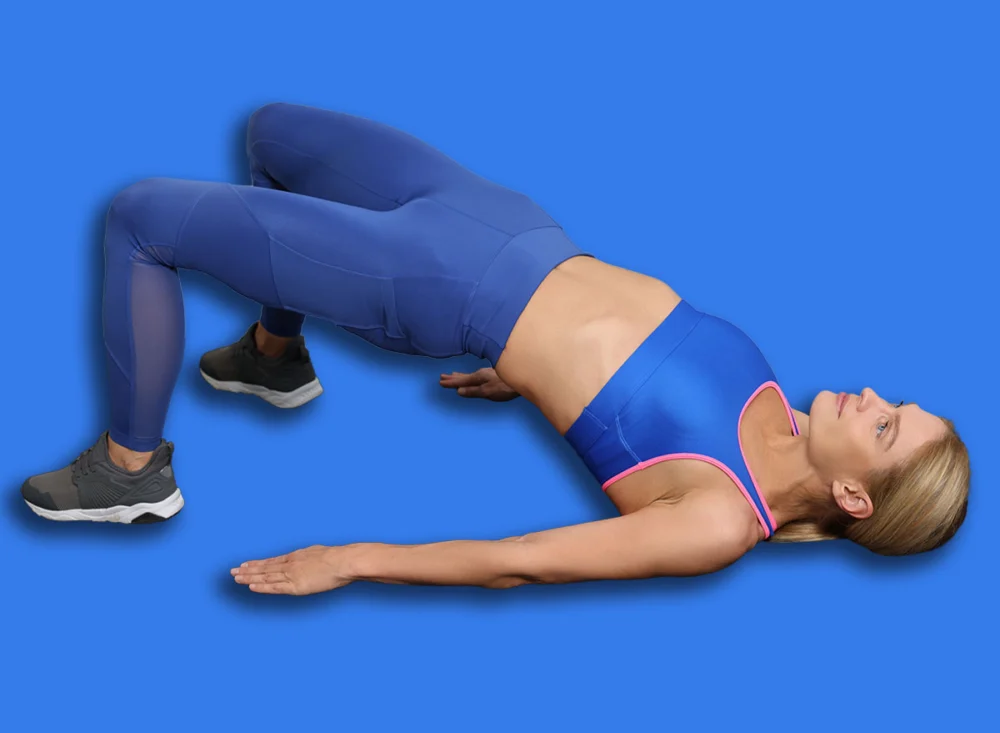
4. Glute Bridges:
While primarily known for gluteal activation, the glute bridge is also highly effective for strengthening the posterior chain, which plays a crucial role in supporting the core and improving posture. Lie on your back with knees bent and feet flat on the mattress, hip-width apart, positioned relatively close to your glutes. Pressing through your heels, engage your glutes and lift your hips off the mattress until your body forms a straight line from your shoulders to your knees. Avoid over-arching your lower back; instead, focus on a strong glute contraction at the top. Hold this position for a moment, then slowly lower your hips back down to the mattress with control. This exercise strengthens the glutes, hamstrings, and lower back, contributing to a more stable pelvis and a reduction in anterior pelvic tilt, which can sometimes exaggerate the appearance of a "waist overhang."
5. Bent-Knee Windshield Wipers:
This gentle yet effective exercise promotes spinal mobility and further engages the oblique muscles. Lie on your back with your knees bent, feet flat on the mattress, and arms extended out to the sides in a ‘T’ shape, palms facing up. Keep your knees and feet together. Slowly allow your bent knees to fall to one side, keeping both shoulders pressed into the mattress. You should feel a gentle stretch along the opposite side of your torso. Only go as far as comfortable without lifting your opposite shoulder. Hold briefly, then use your core to slowly bring your knees back to the center. Repeat the movement to the other side. This exercise improves rotational flexibility of the spine, strengthens the oblique muscles, and helps release tension in the lower back, contributing to overall core health and flexibility.
Incorporating these bed-based exercises into a regular routine can be a game-changer for individuals seeking a gentle yet effective way to address abdominal fat, enhance core strength, and improve overall mobility. Consistency is paramount; even short, regular sessions can yield significant benefits over time. While these exercises offer a valuable tool, they are most effective when integrated into a broader healthy lifestyle that includes balanced nutrition, adequate hydration, sufficient sleep, and stress management. As with any new fitness regimen, particularly for those with underlying health conditions or significant mobility concerns, consulting a healthcare professional or a certified physical therapist before beginning is always recommended to ensure safety and appropriateness. By embracing these accessible movements, individuals can take proactive steps towards a stronger core and a healthier midsection, all from the comfort and safety of their own bed.
About the Author