
As individuals navigate the landscape of aging, maintaining physical prowess, particularly in the upper body, becomes increasingly crucial not only for aesthetic reasons but also for preserving functional independence and overall quality of life. The natural physiological shifts that occur beyond the mid-fifties, including the gradual decline in muscle mass known as sarcopenia and changes in connective tissue elasticity, often manifest as diminished firmness in the posterior region of the upper arms. While the desire to address this is common, conventional strength training methods, such as tricep dips, frequently present considerable challenges and potential risks for an older demographic due to their demanding nature on joints and stability.
Traditional exercises designed to target the triceps, like bodyweight dips, typically necessitate placing the shoulder joint into a position of deep extension, simultaneously loading significant body weight through the wrists, elbows, and shoulders. For mature adults, whose joints may already exhibit reduced flexibility, compromised cartilage integrity, or pre-existing discomfort, this configuration can quickly lead to irritation rather than effective, consistent muscular engagement. Such discomfort often creates a deterrent, limiting the intensity and frequency of exercise, which in turn stalls progress and undermines the very goal of achieving greater arm definition and strength. The critical insight for successful upper arm strengthening in later life, therefore, lies not in sheer force or strenuous exertion, but in meticulously designed movements that prioritize joint health, provide ample support, and facilitate a focused, sustained contraction of the target musculature.
This is precisely where chair-assisted exercises emerge as an invaluable and often superior alternative. By leveraging the stability and support of a simple chair, these routines mitigate the need for complex balancing acts or stressful floor transitions, allowing the triceps, along with supportive shoulder and upper back muscles, to perform their work in a controlled and isolated manner. This approach dramatically reduces the fear of pain or instability, which can be a significant barrier to consistent physical activity for older adults, thereby fostering greater adherence and more reliable outcomes. The emphasis shifts from overcoming external challenges to internalizing the muscular effort, promoting a stronger neuromuscular connection crucial for maintaining and rebuilding tissue quality.
The efficacy of these supported exercises stems from their ability to create targeted tension and prolonged muscular engagement without imposing undue stress on vulnerable joints. They are engineered to improve muscular endurance, restore the intricate communication pathways between the brain and muscles, and channel the contractile force precisely where it is most beneficial for reshaping arm contours. Each movement in this supported regimen encourages deliberate control, promotes calm and regulated breathing, and is repeatable with consistent effort—key ingredients for cultivating firmer arms without aggravating existing shoulder or elbow conditions. This method aligns perfectly with the principles of progressive resistance training adapted for aging bodies, focusing on quality of movement and sustained effort over high impact or heavy loads.
Supported Triceps Extension Drive
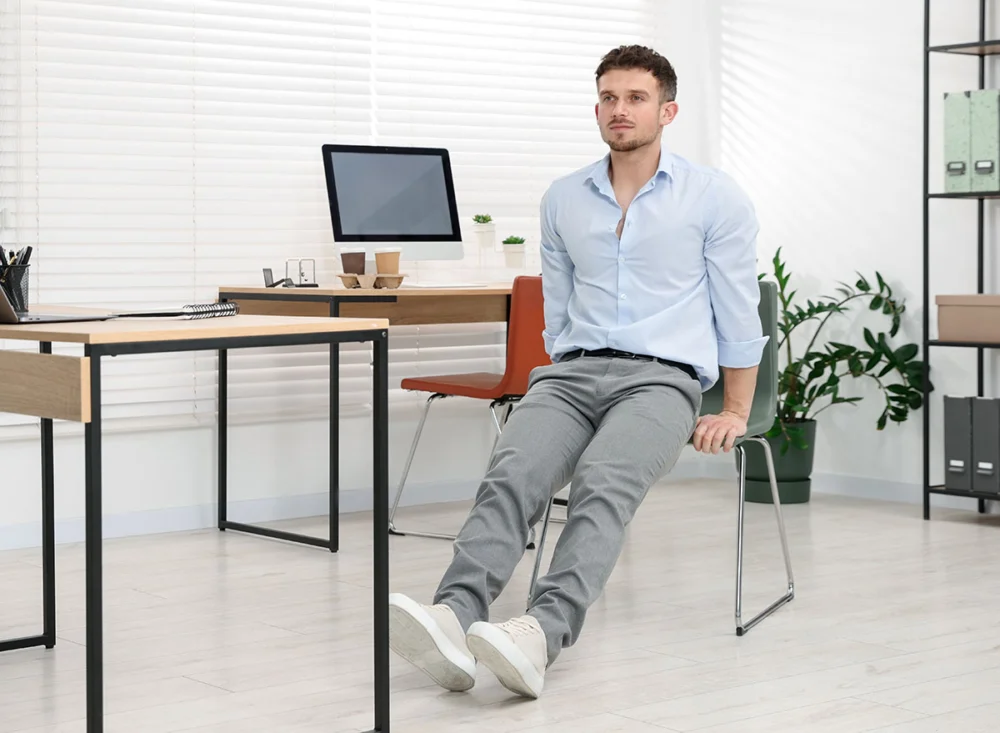
A common characteristic of reduced upper arm firmness is often attributed to underactive triceps that rarely engage fully through their complete range of extension with precise control. The Supported Triceps Extension Drive directly addresses this physiological gap without compelling the shoulders into the extreme angles often demanded by exercises like tricep dips. In this seated posture, the individual positions themselves facing the back of a sturdy chair, placing their hands firmly against the top edge or backrest. The objective is to press backward into the chair with controlled force, allowing the arms to extend fully while the torso remains upright and securely supported. This configuration enables the triceps to activate and work effectively without the competing strain of maintaining overall body balance or navigating awkward joint positions.
The seated nature of this exercise intrinsically removes momentum from the equation, thereby isolating the effort to the arm musculature. Because the hands remain anchored behind the body, the triceps are compelled to work simultaneously in an isometric (static hold) and dynamic (moving through extension) fashion. This dual mode of engagement is particularly effective for enhancing muscle fiber recruitment across a broader spectrum and significantly improving muscular endurance—two qualities that contribute more substantially to the tightening and toning of arm tissue than raw, explosive strength alone. Over time, consistent practice of this movement cultivates a heightened awareness and control over the triceps, translating into better engagement during everyday pushing tasks, which contributes to a visibly firmer appearance of the arms even outside dedicated workout sessions. To perform, sit tall, place hands shoulder-width apart on the chair back, and gently lean back, pushing through the hands to extend the elbows, feeling the triceps contract. Control the return to the starting position.
Elevated Arm Lengthen and Retract
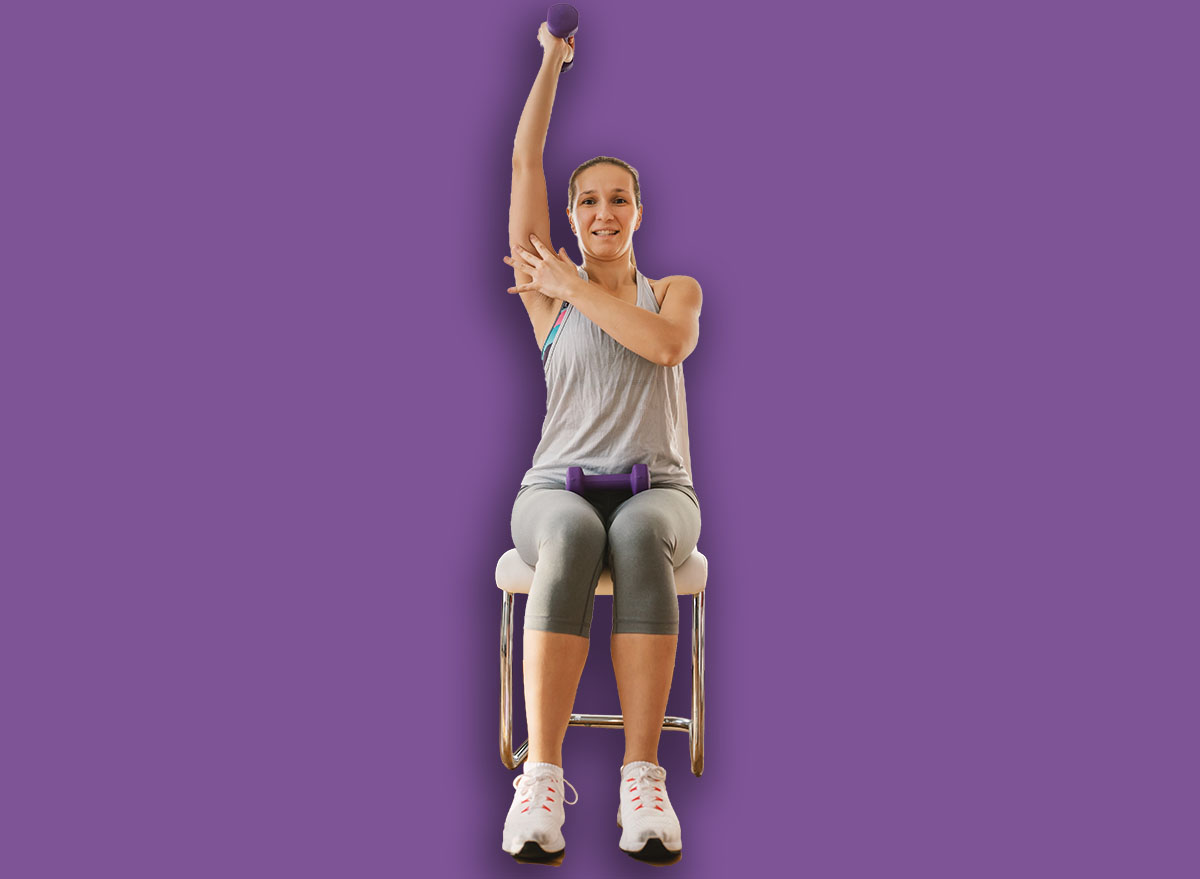
For optimal arm tightening, it is essential for the triceps to work through an extended range of motion, promoting both flexibility and strength. The Elevated Arm Lengthen and Retract exercise achieves this critical effect without the need for external weights or the potential for joint compression often associated with overhead movements. The action involves reaching the arms overhead to deliberately lengthen the triceps, followed by a controlled, purposeful pull-down phase that re-engages these muscles through contraction. Executing this movement from an upright seated position maintains the spine in a neutral alignment and significantly minimizes stress on the shoulders, allowing the individual to direct their entire focus to the precise articulation of the arm muscles.
The slow, deliberate nature of the pull-down phase is instrumental in building and sustaining time under tension, a training principle to which aging muscle tissue responds with particular effectiveness, promoting hypertrophy and improved tone. Furthermore, this exercise simultaneously contributes to enhanced shoulder mobility, a functional capacity that frequently diminishes with age and can indirectly contribute to a perceived softness in the arm region. Throughout the exercise, maintaining calm and controlled breathing is paramount; it not only prevents unnecessary tension from accumulating in the neck and upper traps but also reinforces proper postural alignment, supporting the spine and maximizing the efficiency of the movement. Sit tall, extend arms overhead with palms facing each other, then slowly pull them down as if pressing through thick air, feeling the triceps contract.
Leaning Triceps Kickback Variation
This particular movement offers a brilliant modification of the traditional triceps kickback pattern, eliminating the balance demands entirely and making it exceptionally accessible for individuals who might find standing variations challenging. By adopting a slight forward lean while seated, with the forearms comfortably supported—either on the thighs or a stable surface—the triceps can extend against gravity in a controlled, repeatable manner. This supported posture is pivotal, as it ensures the torso remains stable and uncompromised, thereby allowing the arms to perform all the work without the additional cognitive and physical load of maintaining equilibrium.
The deliberate and slow extension of the elbows during this exercise forces the triceps muscle to remain engaged for a longer duration, fostering improved firmness and endurance rather than merely inducing fatigue. This isolation also minimizes the involvement of the shoulder joint, rendering it an ideal choice for those who experience discomfort or limitations during unsupported dips or other overhead arm work. Consistent incorporation of this movement into a routine can lead to marked improvements in arm definition while simultaneously ensuring the joints remain comfortable and free from irritation, promoting long-term adherence and tangible results. Lean slightly forward in the chair, resting forearms on thighs. From this position, slowly extend your forearms backward, straightening your elbows and squeezing your triceps, then control the return.
Sustained Downward Arm Contraction
Isometric holds represent a highly effective strategy for strengthening and firming muscles by compelling them into sustained engagement without dynamic movement. This characteristic makes them particularly beneficial for older adults seeking noticeable results without the risk of joint irritation often associated with repetitive, high-impact exercises. In the context of the Sustained Downward Arm Contraction, the individual presses their arms downward into the seat or armrests of the chair, activating the triceps continuously. This continuous tension is held for a specified duration, effectively training muscle endurance and enhancing muscle tone without necessitating heavy external resistance.
This method often yields more rapid and discernible improvements in visible firmness compared to repetitive dynamic repetitions alone, as it recruits a greater number of muscle fibers for the duration of the hold. Beyond the physical benefits, isometric exercises like this play a significant role in reinforcing the mind-muscle connection. By consciously focusing on the sensation of contraction and holding that tension, individuals can improve their proprioception and kinesthetic awareness, helping the arms stay actively engaged and toned not just during structured workouts but also throughout various daily movements and activities. Sit upright, place hands on the chair seat or armrests, and press down firmly, engaging the triceps and holding the contraction. Maintain steady breathing throughout.
In conclusion, achieving greater upper arm strength and definition beyond the age of 55 is an entirely attainable goal, provided the exercise approach is tailored to the unique physiological needs of an aging body. By embracing the stability and joint-sparing advantages of chair-assisted movements, individuals can bypass the limitations and potential hazards of traditional exercises while still effectively targeting and stimulating the triceps. These supported techniques not only contribute to enhanced muscular firmness and aesthetic improvement but also profoundly impact functional strength, bolster confidence, and foster greater independence in daily life. Consistency, mindful execution, and a commitment to listening to one’s body are the cornerstones of this accessible and highly effective path to resilient upper body health.
About the Author










