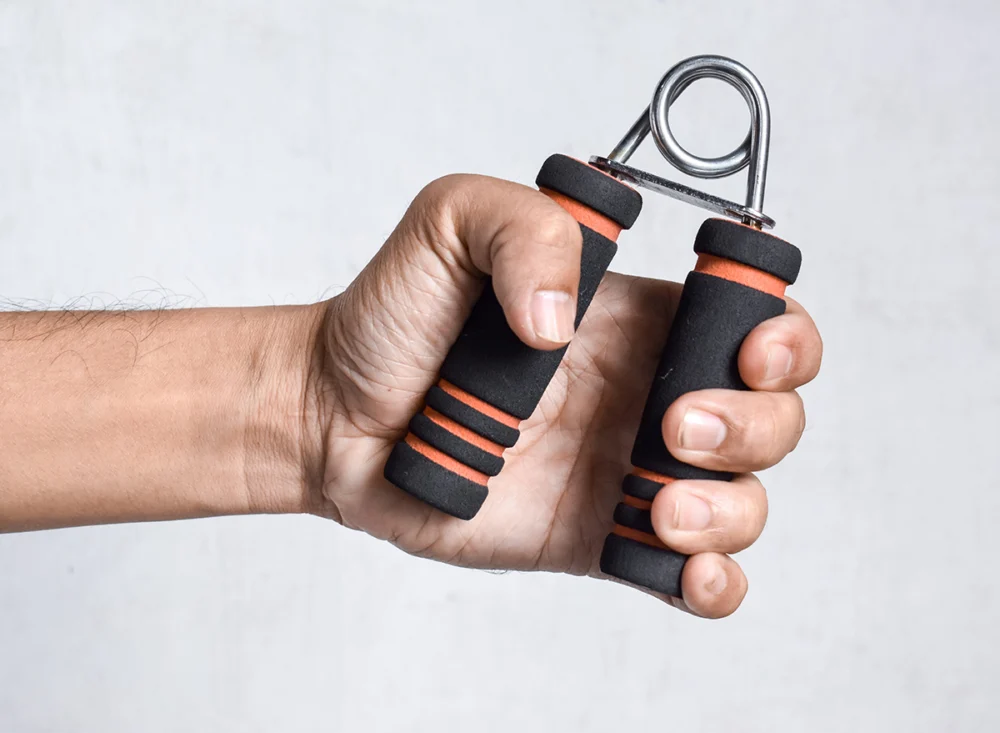
As individuals advance into their later decades, often past the age of sixty, the subtle yet significant decline in grip strength frequently goes unnoticed, despite its profound implications for overall health, functional independence, and quality of life. Far from being merely a measure of physical prowess, a robust grip serves as a critical biomarker, offering insights into an individual’s general fitness, muscular integrity, and even neurological coordination. Scientific research consistently establishes a compelling correlation between strong hand grip and improved balance, reduced risk of falls, enhanced bone mineral density, and a greater capacity to perform routine activities without assistance, thereby contributing substantially to sustained autonomy throughout the aging process.
The gradual weakening of hand strength can transform once-effortless daily tasks—such as opening stubborn jars, carrying groceries, or manipulating household tools—into formidable challenges. This diminishment is not solely a matter of convenience; it signals broader changes within the musculoskeletal and nervous systems that can accelerate fatigue and compromise an individual’s ability to engage fully with their environment. While the perception often persists that restoring such strength necessitates rigorous, heavy weight training, contemporary understanding in exercise physiology for older adults points towards more targeted, functional approaches. These methods frequently demonstrate remarkable efficacy in revitalizing hand and forearm musculature, often yielding perceptible improvements more rapidly and with less joint strain than conventional heavy lifting protocols.
The efficacy of these specialized movements stems from their ability to directly challenge the complex interplay of the nervous system, intrinsic hand muscles, and connective tissues in ways that mimic real-world demands. Unlike exercises that primarily load large muscle groups with heavy resistance, these focused techniques prioritize sustained tension, multi-directional resistance, and fine motor control. This tailored stimulus is particularly beneficial for the aging hand, which benefits from consistent, varied engagement rather than intermittent, maximal exertion. The exercises outlined below are chosen for their accessibility, joint-friendly nature, and adaptability, ensuring they can be safely and effectively incorporated into diverse fitness levels. They collectively form a comprehensive program designed to enhance the full spectrum of grip capabilities: crushing strength, pinching strength, and endurance.
Understanding the Physiological Basis of Grip Decline and Restoration
Aging is a multifactorial process, and sarcopenia—the age-related loss of muscle mass and strength—is a primary contributor to diminished grip. This reduction is not uniform across all muscle groups, and the intricate network of muscles in the hands and forearms, critical for dexterity and power, can be particularly susceptible. Beyond sarcopenia, neurological changes, including slower nerve conduction velocities and reduced motor unit recruitment, also play a role. The connective tissues, such as tendons and ligaments, may also lose some elasticity and strength, further impacting overall hand function.
Traditional weight training, while undeniably beneficial for overall muscular development, sometimes falls short in addressing the specific, nuanced requirements for optimal hand and forearm health in older adults. Heavy barbells or dumbbells, for instance, might engage the larger flexor muscles but may not adequately stimulate the extensors, intrinsic hand muscles, or the rotational and stabilizing elements crucial for comprehensive grip. Moreover, the high-impact nature or significant joint loading associated with some weightlifting movements can be counterproductive for individuals with pre-existing conditions like arthritis or general joint sensitivity. Functional grip exercises, conversely, are designed to work the hands through their natural range of motion and in varied planes, fostering strength, endurance, and coordination without excessive stress.
Pillars of Effective Hand and Forearm Training for Seniors
To maximize the benefits of a grip strengthening regimen, particularly for those over sixty, several core principles should guide exercise selection and execution:
- Consistency Over Intensity: Frequent, shorter sessions are often more effective for hand muscles than infrequent, strenuous ones. The hands respond well to regular stimulation.
- Multi-Planar Engagement: The hands operate in multiple dimensions (squeezing, twisting, pinching, holding). Exercises should reflect this versatility.
- Joint-Friendly Adaptations: Prioritize movements that minimize stress on the wrist, elbow, and shoulder joints, allowing for sustained practice.
- Focus on Endurance and Control: Many daily tasks require sustained grip rather than maximal bursts of strength. Exercises that build endurance are therefore highly relevant.
- Mind-Muscle Connection: Consciously engaging the specific hand and forearm muscles during each movement enhances neural pathways and improves recruitment.
By adhering to these principles, individuals can develop a training strategy that not only builds physical strength but also supports cognitive function and maintains a vibrant, active lifestyle.
Targeted Exercises for Enhanced Hand and Forearm Resilience
Here are four highly effective, trainer-certified movements designed to rebuild and sustain robust grip strength, emphasizing functional capacity and joint comfort.
1. The Towel Wring Squeeze: Cultivating Rotational and Sustained Grip Strength
This exercise expertly simulates common real-world actions like wringing out laundry or twisting open a bottle, engaging the hands and forearms through both rotational and sustained isometric tension. It is particularly effective because it works the flexors and extensors of the fingers and wrists in a coordinated manner, without imposing undue stress on the joints. The continuous tension inherent in the wringing motion forces the grip muscles to work harder and longer than they would during brief lifting actions, significantly enhancing endurance and fine motor control, which often declines with age.
- Muscles Engaged: Finger flexors, finger extensors, forearm pronators and supinators, intrinsic hand muscles, and wrist stabilizers.
- How to Perform It:
- Select a hand towel or a small bath towel. For beginners, a dry towel offers less resistance; a damp towel provides a greater challenge.
- Hold the towel horizontally with both hands, about shoulder-width apart, ensuring a firm but comfortable grip.
- Begin to twist the towel as if you are wringing water out of it. One hand should twist forward while the other twists backward, creating opposing forces.
- Squeeze the towel firmly with both hands throughout the entire twisting motion, imagining you are trying to leave deep handprints in the fabric.
- Continue twisting until the towel is fully wrung out in one direction.
- Reverse the motion, twisting the towel back in the opposite direction until it is fully wrung out again.
- Maintain constant tension and a controlled pace throughout the exercise.
- Recommended Sets and Reps: Aim for 3 sets of 10 controlled twists in each direction (20 total twists per set). Allow approximately 45 seconds of rest between each set to facilitate recovery.
- Progression/Regression: To increase difficulty, use a thicker, longer, or wetter towel. For easier execution, use a smaller, dry towel. Focus on slower, more deliberate twists to enhance time under tension.
- Form Tip: Actively engage your entire hand, not just your fingers. Visualize "crushing" the towel to maximize muscle activation.
2. Rice Bucket Hand Digs: Comprehensive Finger and Hand Dexterity
The rice bucket exercise is an old-school yet remarkably effective method for developing nuanced strength, endurance, and fine motor control across all planes of hand movement. The granular resistance of rice or sand provides a unique challenge, forcing individual fingers and the entire hand to work independently and synergistically against constant, multi-directional pressure. This comprehensive loading pattern is often missed by traditional weights and is excellent for improving dexterity, reducing hand fatigue, and rehabilitating grip function. Many individuals report significant improvements in hand control and a noticeable reduction in everyday hand discomfort within a few weeks of consistent practice.
- Muscles Engaged: All finger flexors and extensors, thumb adductors and abductors, forearm muscles, and the intricate network of intrinsic hand stabilizers.
- How to Perform It:
- Acquire a sturdy bucket (e.g., a five-gallon paint bucket) and fill it approximately two-thirds full with uncooked rice. For a greater challenge, sand can be used.
- Submerge one hand completely into the rice.
- Perform a series of controlled movements:
- Make a fist: Squeeze the rice tightly into a fist, then slowly open your hand.
- Spread fingers: Push your fingers wide apart against the rice’s resistance.
- Pinch: Pinch small handfuls of rice between your thumb and each finger.
- Stirring motions: Rotate your hand and wrist in circular motions through the rice.
- Digging: Repeatedly dig and bury your hand, manipulating the rice.
- Maintain a slow, deliberate tempo for each movement, allowing the rice to resist every phase of the action.
- After completing the prescribed time for one hand, switch to the other.
- Recommended Sets and Reps: Execute 3 sets of 30-45 seconds of continuous movement per hand. Rest for approximately 30 seconds between sets.
- Progression/Regression: Vary the depth of the rice; a deeper bucket increases resistance. Alternate between fast and slow repetitions. Using finer sand provides a different type of resistance.
- Form Tip: Focus on deliberate, controlled movements that engage every part of your hand and fingers against the rice.
3. Fingertip Wall Holds: Isometric Strength and Individual Finger Power
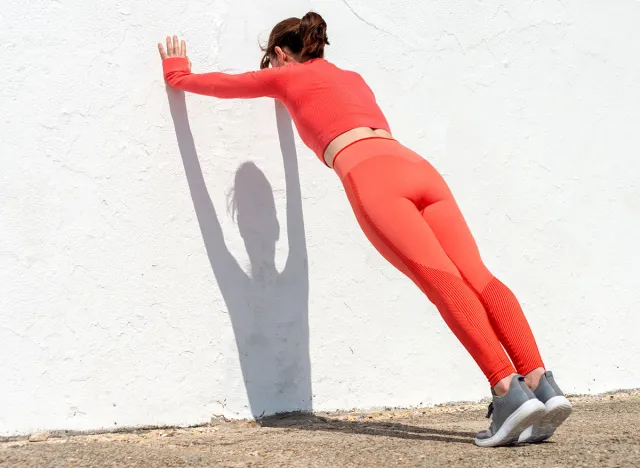
This isometric exercise focuses on building sustained, static grip strength, particularly in the fingertips, while being exceptionally gentle on the elbow and shoulder joints. By pressing against a wall with only the fingertips, individuals can control the amount of body weight they leverage, making it highly scalable for any fitness level. This movement reinforces the critical hand strength required for balance, bracing oneself against a fall, and performing tasks that demand precise fingertip control. It also uniquely strengthens the finger extensors, which are often underdeveloped compared to the flexors.
- Muscles Engaged: Finger flexors, finger extensors, forearms, wrist stabilizers, and the intrinsic muscles of the hand.
- How to Perform It:
- Stand facing a sturdy wall, approximately an arm’s length away.
- Place the fingertips of both hands on the wall, roughly shoulder-width apart, ensuring only the pads of your fingers are in contact. Keep your palms slightly off the wall.
- Lean gently into the wall, distributing your body weight through your fingertips. Adjust your distance from the wall to control the intensity – closer for less resistance, further away for more.
- Engage your core and maintain a straight body line from head to heels.
- Hold this position, actively imagining you are trying to "pull" the wall towards you with your fingertips, creating maximum tension.
- Recommended Sets and Reps: Perform 3 sets, holding the position for 20 to 30 seconds. Rest for 45 seconds between each set.
- Progression/Regression: Increase duration of holds. For a greater challenge, perform single-hand holds or gradually lower your body position by bending your knees (mimicking a wall push-up on fingertips). Vary the pressure on individual fingertips.
- Form Tip: Keep your shoulders down and back, avoiding shrugging. Ensure even pressure across all fingertips.
4. The Suitcase Carry: Integrated Grip, Core, and Postural Strength
The suitcase carry is a highly functional, full-body exercise that develops exceptional grip endurance, core stability, and improves posture. By holding a weight in one hand while walking, the body is forced to counteract the uneven load, engaging the hand, forearm, shoulder stabilizers, and the entire core musculature. This movement directly translates to daily activities such as carrying groceries, luggage, or laundry, where sustained grip and balance are paramount. The beauty of this exercise lies in its simplicity and adaptability; a dumbbell or kettlebell is not strictly necessary, as a loaded grocery bag, a full jug of water, or even a heavy book can serve as effective resistance.
- Muscles Engaged: Finger flexors, forearms, wrist stabilizers, shoulder stabilizers (rotator cuff, deltoids), obliques, erector spinae, and glutes for core and postural stability.
- How to Perform It:
- Select an appropriate weight that challenges your grip but allows you to maintain good posture throughout the movement. Start lighter than you think you need to.
- Hold the weight in one hand, allowing your arm to hang naturally by your side. Your palm should face your body.
- Stand tall, engaging your core, and pull your shoulders back and down. Avoid leaning to one side or letting your shoulder slump.
- Begin walking slowly and deliberately for a set distance or duration. Maintain a steady, upright posture, resisting the urge to lean away from the loaded side.
- Focus on "crushing" the handle of the weight with your grip throughout the entire walk.
- After completing the desired distance or time on one side, switch the weight to the other hand and repeat.
- Recommended Sets and Reps: Complete 3 sets of 30 to 45 seconds of walking per side. Allow for a 60-second rest period between sets.
- Progression/Regression: Increase the weight, extend the walking duration, or traverse uneven surfaces. To regress, reduce the weight or perform stationary holds for shorter periods.
- Form Tip: Imagine a string pulling you upwards from the top of your head. Keep your gaze forward and avoid looking down at the weight.
Optimizing Your Grip Strengthening Journey After Sixty
Beyond specific exercises, integrating smart practices into your routine will accelerate progress and ensure long-term hand health:
- Prioritize Consistency: Short, frequent sessions (e.g., 10-15 minutes, 3-5 times a week) are more beneficial for grip development than infrequent, intense workouts.
- Listen to Your Body: Pay attention to any pain or discomfort. Modify exercises or take rest days as needed. Gradual progression is key to avoiding injury.
- Vary Your Grip: Regularly change the type of grip you use in daily life—from pinch grips to crushing grips to open-hand holds—to stimulate different muscle groups.
- Incorporate Daily Habits: Mindfully engage your grip during everyday activities. For instance, consciously squeeze objects you pick up, or try carrying grocery bags in different ways.
- Stay Hydrated and Nourished: Proper hydration and a diet rich in protein and micronutrients support muscle repair and overall tissue health, which are crucial for strength development.
- Warm-Up and Cool-Down: Gently warm up your hands and wrists with light stretches and rotations before exercises, and cool down similarly to improve flexibility and reduce stiffness.
By embracing these targeted exercises and adopting a mindful approach to hand health, individuals over the age of sixty can effectively combat age-related grip decline. Restoring and maintaining robust grip strength is not merely about physical capacity; it is a powerful investment in preserving independence, enhancing confidence, and sustaining a vibrant, active engagement with the world around you. Stronger hands empower a stronger life at any age.
About the Author