
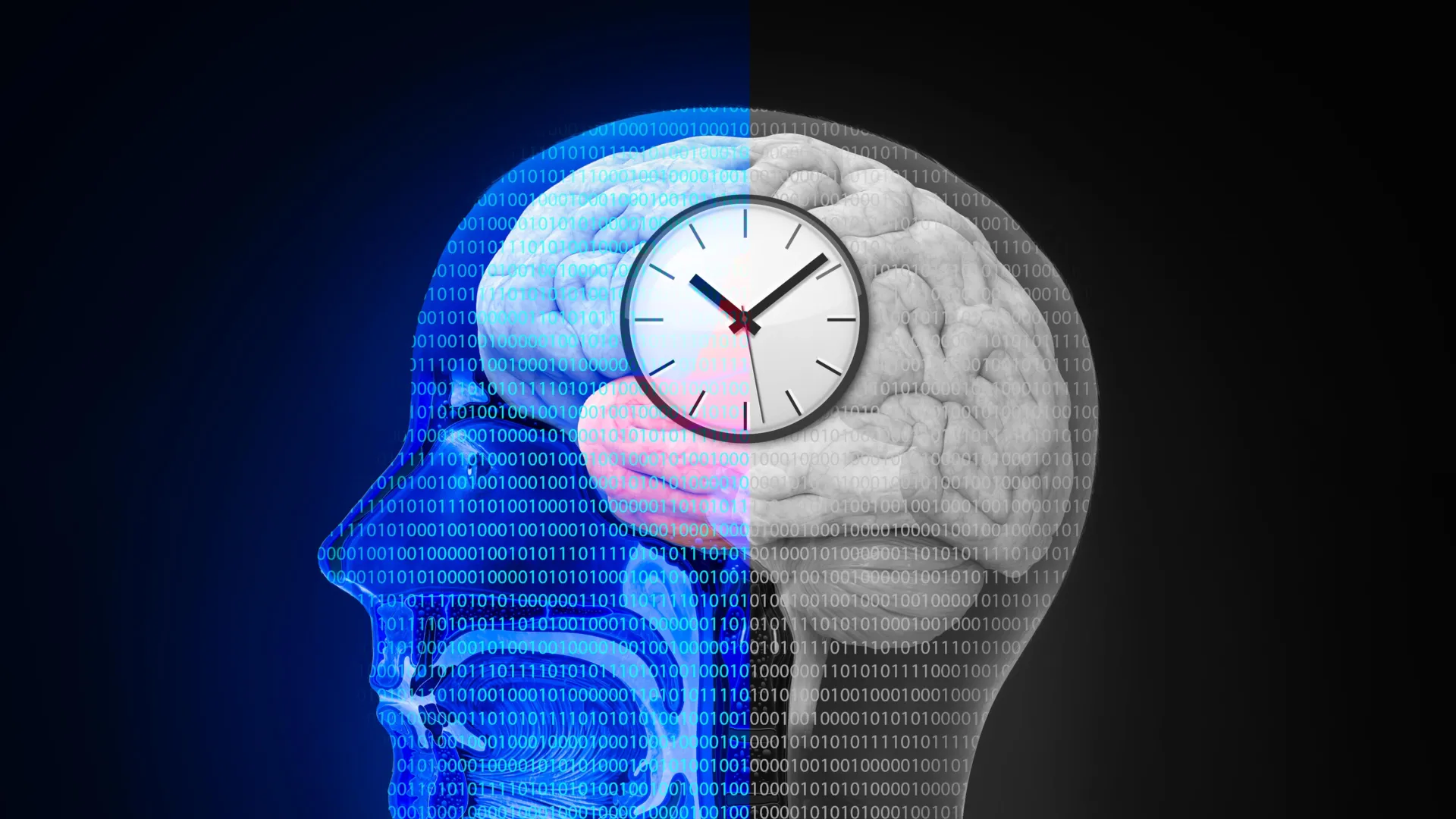
The human brain operates as a dynamic processing hub, constantly sifting through a torrent of incoming information that arrives at vastly different temporal resolutions. While some sensory inputs necessitate immediate responses to environmental shifts, others require a more protracted period of deliberation, allowing for the nuanced interpretation of meaning, context, and underlying intentions. A groundbreaking investigation spearheaded by researchers at Rutgers Health, and detailed in the esteemed journal Nature Communications, has illuminated the intricate mechanisms by which the brain orchestrates this convergence of rapid and protracted signals. At the heart of this research lies an exploration of how the brain’s intricate network of white matter tracts facilitates inter-regional communication, thereby underpinning fundamental cognitive functions, decision-making processes, and observable behaviors.
It has become increasingly evident that distinct neural circuits within the brain do not operate on a uniform temporal rhythm. Instead, each region is characterized by a specific temporal aperture, termed intrinsic neural timescales (INTs), which dictates the duration for which it retains incoming information before transitioning to subsequent data streams. This temporal heterogeneity is not merely an incidental feature but a critical determinant of how the brain constructs a coherent representation of the world and guides our actions. Dr. Linden Parkes, an assistant professor of Psychiatry at Rutgers Health and the senior author of the study, emphasizes this crucial point: "To effectively interact with our surroundings through volitional action, our brains must seamlessly integrate information that has been processed across disparate temporal scales. The brain accomplishes this feat by ingeniously leveraging its white matter architecture to foster inter-regional information exchange, a process that is absolutely vital for the exhibition of complex human behavior."
To meticulously dissect the architecture and functional dynamics of this temporal integration, Dr. Parkes and his research consortium undertook an extensive analysis of neuroimaging data acquired from a substantial cohort of 960 individuals. This vast dataset enabled the researchers to construct highly detailed atlases, or connectomes, depicting the intricate web of neural connections for each participant. Employing sophisticated mathematical frameworks designed to model the temporal evolution of complex systems, the team then meticulously traced the flow of information across these neural networks, effectively charting the journey of signals through the brain’s communication pathways. "Our investigation delves into the underlying neural substrates of this integration process within the human brain by directly inferring the intrinsic neural timescales of individual regions from their connectivity profiles," explained Dr. Parkes, who is also a distinguished member of the Rutgers Brain Health Institute and the Center for Advanced Human Brain Imaging Research. "This approach establishes a direct empirical link between the localized information processing capabilities of brain regions and the manner in which this processing is disseminated throughout the brain to ultimately shape observable behavior."
The study’s findings underscore the profound significance of temporal organization within the cerebral cortex for cognitive efficiency. Specifically, the researchers discovered that the spatial arrangement of these intrinsic neural timescales significantly influences the brain’s capacity to fluidly transition between large-scale neural activity patterns that are intrinsically linked to distinct behavioral states. Intriguingly, this precise temporal orchestration was found to exhibit considerable inter-individual variability. "We observed that variations in how the brain processes information at different speeds serve as a key explanatory factor for the observed differences in individuals’ cognitive proficiencies," stated Dr. Parkes. This suggests that the efficiency with which our brains can synchronize and desynchronize neural activity across different temporal scales is a fundamental component of cognitive flexibility and capacity.
Furthermore, the research extended to explore the biological underpinnings of these temporal patterns, revealing a compelling connection between neural timescales and fundamental genetic, molecular, and cellular characteristics of brain tissue. This discovery effectively bridges the gap between high-level cognitive phenomena and the granular biological processes that govern neural function. The presence of similar correlations in the brains of mice provided compelling evidence for the evolutionary conservation of these fundamental temporal integration mechanisms across species, suggesting that these principles are deeply rooted in mammalian neural architecture. "Our research highlights a fundamental and hitherto underappreciated nexus between the brain’s white matter connectivity infrastructure and its intrinsic computational properties at the local circuit level," Dr. Parkes elaborated. "Individuals whose neural wiring exhibits a more harmonious alignment with the distinct temporal processing capacities of different brain regions tend to demonstrate enhanced cognitive capabilities."
The implications of these findings are far-reaching, particularly for the burgeoning field of neuropsychiatric research. The research team is actively extending this analytical framework to investigate a spectrum of neuropsychiatric conditions, including schizophrenia, bipolar disorder, and depression. The overarching objective is to elucidate how alterations in neural connectivity patterns may disrupt the intricate temporal dynamics of information processing within the brain, potentially contributing to the symptomatology of these disorders. This novel approach promises to offer a more nuanced understanding of the neurobiological underpinnings of mental illness, moving beyond static structural abnormalities to explore dynamic functional disruptions.
This pivotal study was conducted through a collaborative effort involving Dr. Avram Holmes, an associate professor of psychiatry and a core member of both the Rutgers Brain Health Institute and the Center for Advanced Human Brain Imaging Research, alongside postdoctoral researchers Ahmad Beyh and Amber Howell, and Professor Jason Z. Kim from Cornell University. Their collective expertise and dedication have provided a foundational understanding of the brain’s temporal architecture and its critical role in shaping human cognition and behavior, opening new avenues for both fundamental neuroscience research and the development of innovative therapeutic strategies for neurological and psychiatric conditions. The study’s emphasis on the dynamic interplay of different temporal processing speeds within the brain offers a fresh perspective on individual differences in cognitive function and lays the groundwork for future investigations into the neurobiological basis of a wide range of cognitive abilities and disorders.
About the Author












