
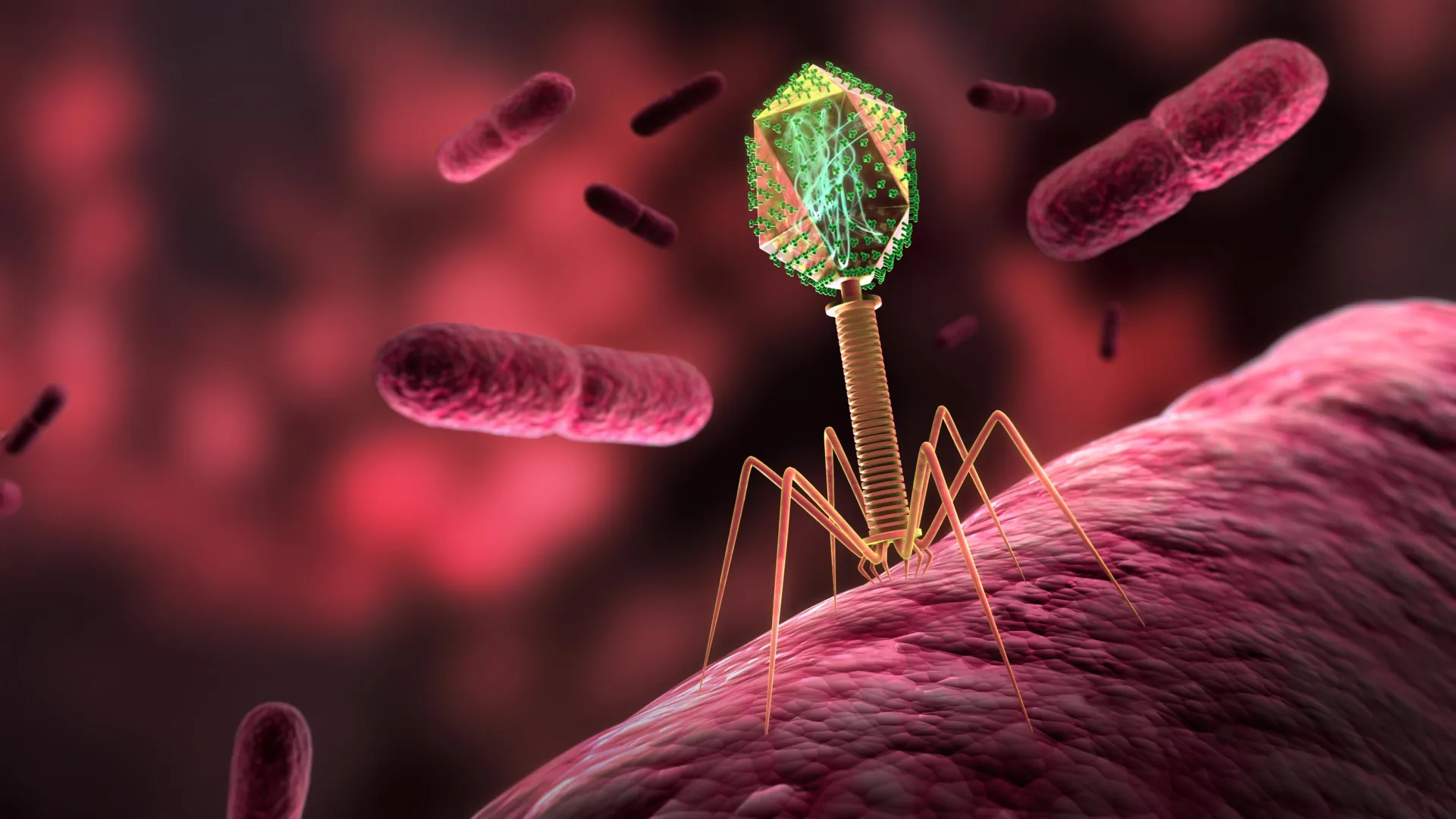
In a groundbreaking investigation conducted within the unique confines of the International Space Station (ISS), scientists have observed significant evolutionary shifts in bacteriophages – viruses that prey on bacteria – and their bacterial hosts, Escherichia coli (E. coli), when exposed to the near-weightless conditions of space. This research, detailed in the latest issue of the open-access journal PLOS Biology, reveals that while these microscopic adversaries can still engage in their fundamental interactions, the dynamics of their co-evolutionary dance are profoundly altered by the absence of Earth’s persistent gravitational pull.
The intricate relationship between viruses and their bacterial hosts is a cornerstone of microbial ecology, often characterized by a relentless evolutionary arms race. Bacteria develop sophisticated defense mechanisms to evade viral infection, while viruses, in turn, adapt to overcome these defenses, leading to a continuous cycle of adaptation and counter-adaptation. On Earth, this dynamic unfolds under the constant influence of gravity, which affects everything from the physical mechanics of cellular collisions to the physiological processes within bacteria. However, the impact of microgravity, a key environmental factor in space exploration, on these vital interactions has remained a relatively unexplored frontier.
To bridge this knowledge gap, a team led by Phil Huss from the University of Wisconsin-Madison embarked on an ambitious experiment, comparing the evolutionary trajectories of a specific bacteriophage, known as T7, and its E. coli host in two distinct environments. One cohort of these microbial participants was cultivated and studied under standard terrestrial laboratory conditions, serving as a baseline. The second cohort was transported to the ISS, where they were allowed to interact and evolve in the microgravity environment for a defined period.
Initial observations from the space-bound samples indicated a period of acclimatization or delay, after which the T7 phages successfully initiated infection in the E. coli populations. However, the true divergence became apparent through comprehensive whole-genome sequencing. This detailed genetic analysis unveiled striking differences in the types and patterns of mutations that accumulated in both the viral and bacterial genomes when comparing the Earth-bound samples to their counterparts that had orbited the planet.
The T7 phages that spent time in microgravity gradually acquired specific genetic alterations. These mutations appeared to enhance their infectivity, potentially by improving their ability to recognize and bind to the receptor sites on the surface of the E. coli cells, which is the crucial first step in initiating an infection. Concurrently, the E. coli bacteria exposed to the space environment also underwent genetic modifications. These bacterial mutations seemed to confer resistance against phage attacks and, importantly, improved their overall survival capabilities within the unique physiological landscape of near-weightlessness.
Delving deeper into the molecular mechanisms driving these adaptations, the researchers employed a powerful technique called deep mutational scanning. This method allowed for a highly detailed examination of the T7 phage’s receptor binding protein, a critical component responsible for initiating the infection process. The scanning revealed significant variations in this protein’s structure and function between the phages evolved in microgravity and those that remained on Earth. Further laboratory experiments, conducted back on Earth but informed by these space-derived insights, demonstrated that the microgravity-associated modifications in the receptor binding protein resulted in phages with markedly enhanced efficacy against specific strains of E. coli. Notably, these engineered phages exhibited superior activity against E. coli strains responsible for human urinary tract infections, strains that are typically resistant to the original, Earth-evolved T7 phage.
This study represents a significant advancement in our understanding of how fundamental biological processes, such as viral infection and microbial co-evolution, are influenced by extraterrestrial environmental conditions. The implications extend beyond the realm of basic microbiology, offering potential avenues for new therapeutic strategies. By studying the adaptive responses of phages and bacteria in space, scientists can uncover novel biological mechanisms that might be exploited to combat challenging pathogens. The insights gained from space-based microbial evolution could lead to the development of more potent antimicrobial agents, a critical need given the escalating global threat of antibiotic resistance.
The authors emphasize that the space environment fundamentally alters the nature of the phage-bacteria interaction. The rate of infection is noticeably slower, and the evolutionary paths taken by both organisms diverge significantly from those observed on Earth. The adaptations forged in this unique setting have provided invaluable biological knowledge, enabling the researchers to engineer phages with demonstrably superior capabilities against drug-resistant bacteria prevalent on Earth. This success underscores the potential of conducting advanced biological research aboard the ISS, not only for unraveling the mysteries of life in extreme environments but also for generating practical solutions to pressing health challenges facing humanity.
The research was supported by funding from the Defense Threat Reduction Agency, with additional support provided for one of the researchers through a graduate training scholarship from the Anandamahidol Foundation in Thailand. The funding bodies played no role in the design, execution, analysis, or publication decisions of the study, ensuring the independence and integrity of the scientific findings. The full study, "Microgravity reshapes bacteriophage-host coevolution aboard the International Space Station," is accessible through the provided link.
About the Author












