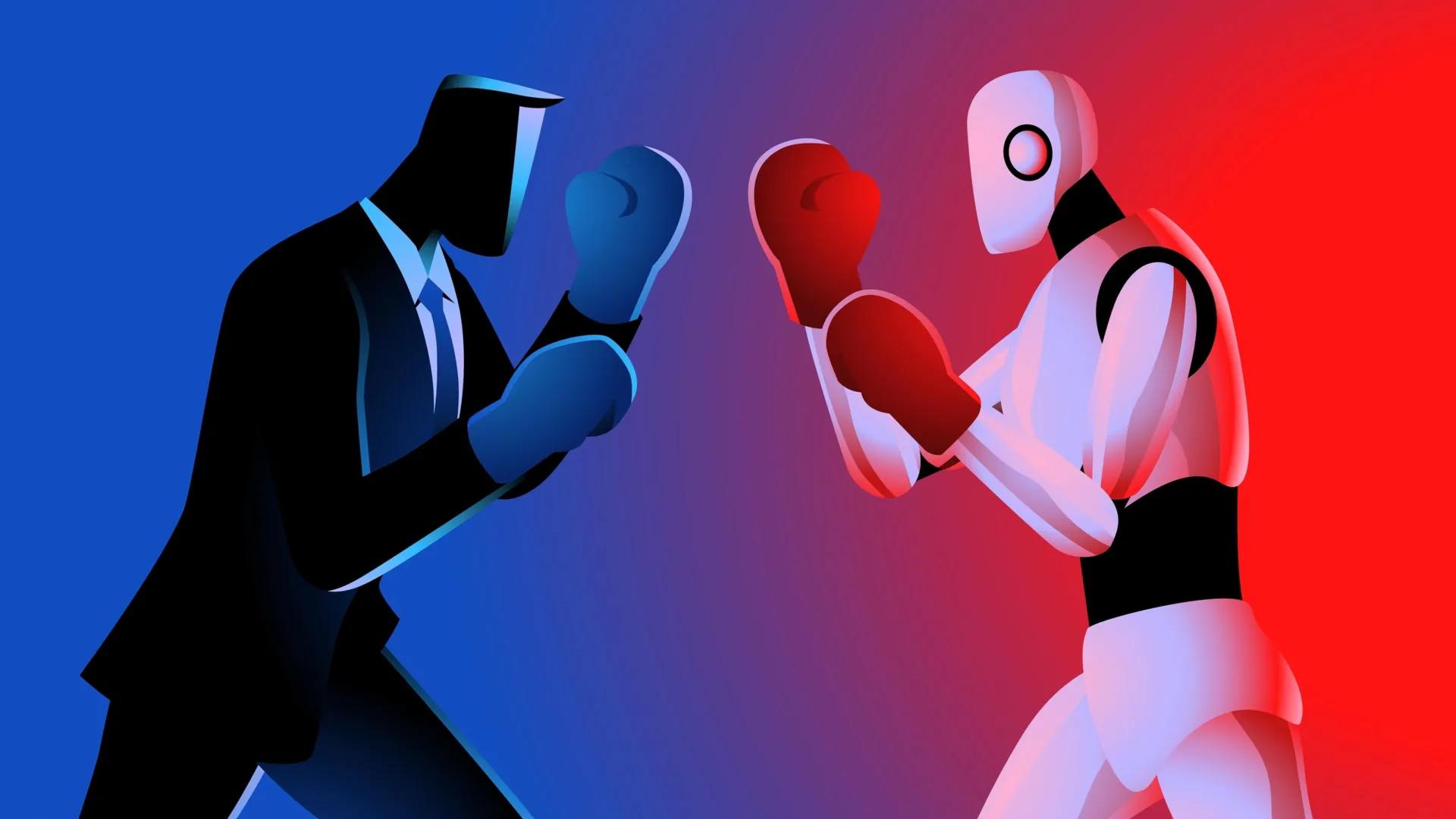
The long-standing debate concerning the capacity of artificial intelligence to generate truly novel concepts has reached a pivotal moment, following the publication of groundbreaking research that systematically compared the creative output of advanced AI systems with that of a vast human cohort. A recent investigation, spearheaded by Professor Karim Jerbi from the Université de Montréal’s Department of Psychology and featuring the notable contribution of celebrated AI researcher Yoshua Bengio, has unveiled compelling insights into the evolving landscape of machine intelligence and human ingenuity. This comprehensive study represents the most extensive direct evaluation ever undertaken to assess and contrast the creative faculties of large language models (LLMs) with human participants, involving a staggering pool of over 100,000 individuals.
Published in Scientific Reports, a prestigious journal within the Nature Portfolio, the findings delineate a significant inflection point in the capabilities of generative AI. The research indicates that these sophisticated systems have now progressed to a stage where they can, in certain well-defined creative dimensions, surpass the performance of the average person. Concurrently, the study emphatically reinforces the enduring superiority of the most creatively gifted humans, who consistently demonstrate a distinct and substantial advantage over even the most advanced AI algorithms currently available. This nuanced outcome offers a balanced perspective on the future interplay between artificial intelligence and human creativity, moving beyond simplistic narratives of replacement or obsolescence.
The research team rigorously assessed several prominent large language models, including iterations of ChatGPT, Claude, and Gemini, juxtaposing their creative outputs against the responses gathered from more than one hundred thousand human participants. This unparalleled scale allowed for a robust statistical comparison, revealing a clear threshold crossed by machine intelligence. Notably, specific AI systems, such as GPT-4, exhibited scores exceeding the average human benchmark on tasks specifically engineered to gauge divergent linguistic creativity. Professor Karim Jerbi elaborated on this surprising development, stating, "Our investigation clearly illustrates that certain AI frameworks built upon large language models are now capable of outperforming typical human creativity on precisely defined assignments. While this revelation may evoke astonishment—perhaps even disquiet—our study concurrently underscores an equally crucial observation: the finest AI systems still fall short of the creative heights attained by the most imaginative individuals among us."
Further in-depth analysis, meticulously conducted by the study’s co-first authors, postdoctoral researcher Antoine Bellemare-Pépin from the Université de Montréal and PhD candidate François Lespinasse from Concordia University, illuminated a striking pattern. Although a subset of AI models now demonstrates superior performance compared to an average individual, the apex of creative achievement remains firmly within the human domain. Indeed, when researchers focused their scrutiny on the more creatively adept half of the human participants, their collective average scores decisively outstripped those of every AI model subjected to the tests. This disparity widened even more dramatically when the comparison was narrowed to the top 10 percent of the most exceptionally creative individuals, highlighting a persistent, significant gap at the highest echelons of imaginative thought. Professor Jerbi, also an associate professor at Mila, the Quebec AI Institute, emphasized the methodological rigor, noting, "In collaboration with Jay Olson from the University of Toronto, we devised a stringent evaluative framework, enabling us to compare human and AI creativity using identical metrics, leveraging data from over 100,000 participants."
To ensure a fair and equitable assessment of creativity across both human and artificial intelligences, the research collective employed a multifaceted approach. The cornerstone of their evaluation methodology was the Divergent Association Task (DAT), a widely recognized and validated psychological instrument designed to quantify divergent creativity. Divergent thinking, a core component of creativity, refers to the ability to generate a broad spectrum of unique and varied ideas or solutions from a singular starting point or prompt. The DAT, ingeniously conceived by study co-author Jay Olson, instructs participants, irrespective of whether they are human or AI, to compile a list of ten distinct words that are semantically as far apart from one another as possible. An exemplary response, indicative of high creative capacity, might include an eclectic collection such as "galaxy, fork, freedom, algae, harmonica, quantum, nostalgia, velvet, hurricane, photosynthesis." The task’s effectiveness stems from its ability to prompt participants to explore disparate conceptual domains, thereby revealing their capacity for novel associative leaps.
Performance on the DAT has been empirically shown to correlate strongly with outcomes on other established assessments of creativity, encompassing domains such as written expression, brainstorming, and innovative problem-solving. While the task is inherently language-based, its demands extend far beyond mere lexical proficiency. It actively engages broader cognitive mechanisms integral to creative thought processes across a multitude of disciplines. Furthermore, the DAT offers significant practical advantages: it typically requires only two to four minutes for completion and is readily accessible online, facilitating large-scale data collection. This efficiency and accessibility were crucial for conducting a study of this unprecedented magnitude.
Transitioning from the foundational word association exercise, the researchers proceeded to investigate whether the success of AI on this relatively straightforward task would translate to more intricate and ecologically valid creative endeavors. To explore this, they challenged both AI systems and human participants with complex creative writing assignments, including the composition of haikus—a concise, three-line poetic form—the development of compelling movie plot summaries, and the crafting of short stories. The results derived from these more elaborate tasks largely mirrored the patterns observed in the DAT. While certain AI systems occasionally surpassed the performance benchmarks of average human participants, the most accomplished human creators consistently produced work characterized by superior originality, depth, and artistic merit. This reinforced the notion that while AI can mimic and even exceed typical human output in specific creative niches, the nuanced artistry and profound originality of peak human imagination remain unparalleled.
These compelling findings naturally spurred another crucial inquiry: Is the creative capacity of AI a fixed attribute, or can it be deliberately influenced and refined? The study unequivocally demonstrated that AI creativity is indeed amenable to adjustment through the manipulation of technical parameters, most notably the model’s "temperature" setting. This parameter essentially dictates the degree of predictability or adventurousness inherent in the AI’s generated responses. At lower temperature settings, AI tends to produce outputs that are more conventional, conservative, and aligned with established patterns. Conversely, when the temperature is elevated, the AI’s responses become markedly more varied, less predictable, and overtly exploratory, enabling the system to venture beyond familiar conceptual boundaries and generate more novel associations.
Beyond technical controls, the researchers also discovered that the efficacy of AI creativity is profoundly shaped by the manner in which instructions, or "prompts," are formulated. For instance, prompts that explicitly encourage models to delve into the etymological roots and structural underpinnings of words were found to elicit more unexpected associations and consequently higher creativity scores. These results underscore the critical role of human guidance in cultivating AI creativity, positioning sophisticated interaction and meticulous prompt engineering as central to the collaborative creative process. The ability to "steer" AI towards more innovative outcomes through thoughtful prompting highlights a powerful avenue for human-AI partnership.
The comprehensive study offers a nuanced and balanced perspective on prevailing anxieties regarding the potential displacement of creative professionals by artificial intelligence. While it is undeniable that AI systems can now rival or even exceed average human creativity across specific tasks, their inherent limitations and fundamental reliance on human direction remain pronounced. Professor Karim Jerbi emphasized the need to reframe the conversation: "Even though AI can now attain human-level creativity on certain assessments, we must transcend this potentially misleading perception of competition. Generative AI has, above all, emerged as an extraordinarily potent instrument in the service of human creativity. It will not supplant creators, but rather profoundly reshape how they envision, explore, and materialize their ideas—for those who choose to harness its capabilities."
Far from signaling the demise of creative vocations, the study’s conclusions strongly suggest a future paradigm where AI functions as an indispensable creative assistant. By facilitating the expansion of conceptual frameworks, generating diverse ideations, and opening up previously unexplored avenues for creative inquiry, artificial intelligence holds the potential to significantly amplify human imagination, rather than supersede it. This symbiotic relationship promises a new era of artistic and intellectual exploration, where the strengths of human intuition and machine processing converge. Professor Jerbi eloquently concluded, "By directly juxtaposing human and machine capabilities, studies such as ours compel us to re-evaluate and redefine our understanding of creativity itself."
The research, titled "Divergent creativity in humans and large language models," was officially published in Scientific Reports on January 21, 2026. This collaborative endeavor united leading scientists and researchers from a consortium of esteemed institutions, including the Université de Montréal, Concordia University, the University of Toronto Mississauga, Mila (the Quebec AI Institute), and Google DeepMind. Professor Karim Jerbi served as the principal investigator leading the study, with Antoine Bellemare-Pépin from the Université de Montréal and François Lespinasse from Concordia University sharing credit as co-first authors. The distinguished research team also included Yoshua Bengio, the visionary founder of Mila and LoiZéero, and a recognized pioneer in the field of deep learning, the foundational technology underpinning contemporary AI systems such as ChatGPT. This multi-institutional, interdisciplinary collaboration underscores the complexity and significance of unraveling the mysteries of creativity in both biological and artificial intelligence.
About the Author