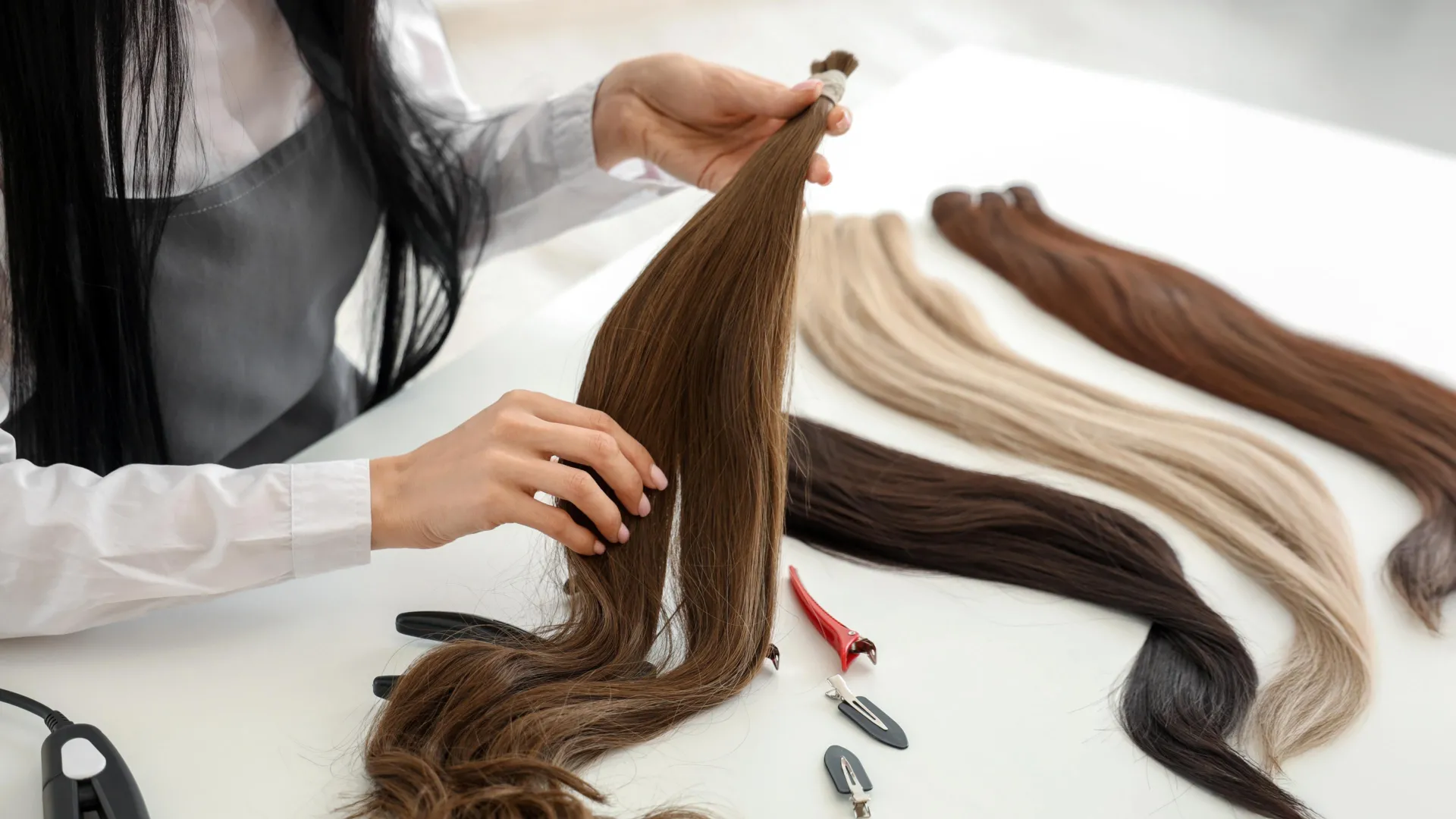
A comprehensive scientific inquiry conducted by the Silent Spring Institute has brought to light the presence of a substantial array of potentially hazardous chemical compounds within commonly available hair extension products, including those derived from ethically sourced human hair. This marks the most in-depth chemical assessment to date for this segment of the beauty industry, which has largely operated with minimal regulatory oversight. The researchers contend that their findings provide compelling evidence suggesting that hair extensions could pose significant health risks, a concern that disproportionately impacts Black women, who exhibit a notably higher rate of usage for these beauty enhancements.
Published in the esteemed journal Environment & Health by the American Chemical Society, this study emerges against a backdrop of escalating public apprehension regarding the long-term health implications associated with the prolonged use of hair extensions. Data indicates that upwards of 70% of Black women have reported utilizing hair extensions at least once within the preceding year, a figure starkly contrasting with the less than 10% observed among women of other racial and ethnic backgrounds. The adoption of extensions is often driven by a confluence of factors, encompassing cultural expression, individual aesthetic preferences, and the practical convenience they offer.
Dr. Elissia Franklin, the lead investigator and a research scientist at the Silent Spring Institute, articulated the motivation behind the study, stating, "While previous investigations have identified certain chemicals of concern in hair extensions, a comprehensive understanding of their overall chemical composition has remained elusive. Our objective was to gain a more complete picture of the scope of this issue." She further emphasized the industry’s historical neglect of the health considerations pertinent to Black women, asserting, "This is an industry that has long overlooked the health of Black women, who should not have to choose between cultural expression, convenience, and their health."
The production of hair extensions involves both synthetic materials, typically plastic polymers, and bio-based sources such as human hair, banana fibers, or silk. To enhance their performance characteristics, manufacturers frequently subject these fibers to various chemical treatments, aiming to impart properties like flame resistance, water repellency, or antimicrobial capabilities. However, a significant transparency deficit exists within the industry, as companies seldom provide explicit details about the chemicals employed in achieving these desired attributes. This lack of disclosure leaves consumers unaware of the potential health ramifications associated with extended contact and wear. Given that these fibers are positioned in direct proximity to the scalp and neck, prolonged skin exposure is an inherent aspect of their use. Moreover, when styling tools generating heat are applied, there is a risk that volatile chemicals could be released into the surrounding air, leading to potential inhalation by the wearer.
To meticulously scrutinize the contents of these widely used products, Dr. Franklin and her team procured 43 distinct brands of hair extensions from both online marketplaces and brick-and-mortar beauty supply establishments. The collected samples were categorized based on their constituent fiber type – synthetic or bio-based – and any specific claims made on their product packaging were systematically recorded. Among the synthetic products examined, 19 were advertised as flame retardant, three as water resistant, nine as heat resistant, and three carried environmental certifications such as "PVC-free" or "non-toxic."
The researchers employed a sophisticated analytical technique known as non-targeted analysis, designed to detect a broad spectrum of chemical compounds, including those not routinely screened in consumer goods. Utilizing a high-resolution mass spectrometry coupled with two-dimensional gas chromatography, the team identified over 900 distinct chemical signatures, encompassing both well-characterized substances and novel, unidentified compounds. Subsequent analysis, facilitated by machine-learning algorithms, involved comparing these signatures against an extensive chemical database, which enabled the identification of 169 specific chemicals belonging to nine major structural classifications.
This rigorous testing protocol yielded the detection of numerous substances with known associations to adverse health outcomes, including carcinogenic properties, endocrine disruption, developmental toxicity, and adverse effects on the immune system. Among the identified contaminants were common flame retardants, phthalates, pesticides, styrene, tetrachloroethane, and organotins. Dr. Franklin expressed particular surprise at the prevalence of organotins, noting, "We were especially surprised to find organotins. These are commonly used as heat stabilizers in PVC and have been linked with skin irritation, which is a common complaint among hair extension users." The detrimental effects of organotins have also been documented in relation to cancer and hormonal imbalance.
The global market for hair extensions is experiencing substantial growth, with projections indicating it will exceed $14 billion by the year 2028, and the United States stands as a primary importer. In light of the market’s considerable scale and the alarming chemical findings, Dr. Franklin advocates for enhanced regulatory oversight. "These findings make clear that stronger oversight is urgently needed to protect consumers and push companies to invest in making safer products," she stated. The presence of many of the detected chemicals under California’s Proposition 65 initiative suggests that hair extensions may warrant more explicit consumer warnings and increased regulatory scrutiny.
Momentum is building to enact policy changes aimed at addressing these concerns. In New York, legislative proposals have been introduced that would mandate ingredient disclosure from manufacturers of synthetic braids and hair extensions. Similarly, a bill progressing through the New Jersey legislature seeks to prohibit the use of certain hazardous chemicals in synthetic hair products. On a national level, the Safer Beauty Bill Package, introduced in Congress recently, includes provisions that would empower the Food and Drug Administration (FDA) to regulate the safety of synthetic braids and hair extensions. The funding for this critical research initiative was generously provided by a Beauty Justice Grant from the Environmental Defense Fund and through charitable contributions to the Silent Spring Institute, including support for its Safer Chemicals Program.
About the Author