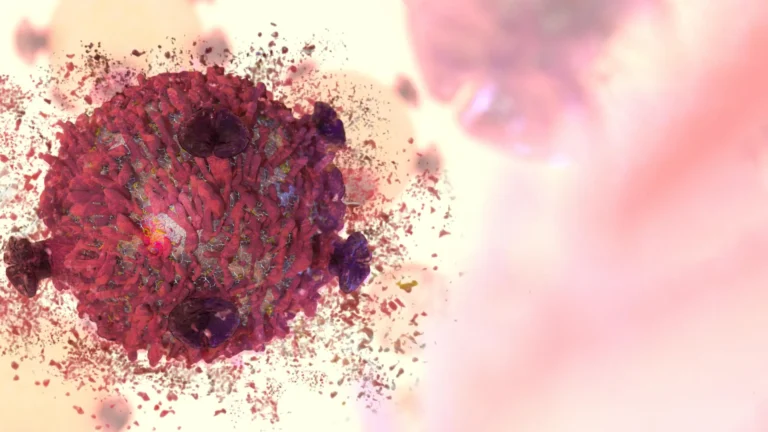
A significant breakthrough in understanding the complex interplay between viral infection and autoimmune disease has been announced by researchers at the University of California, San Francisco (UCSF), offering a more precise explanation for how the Epstein-Barr virus (EBV) may instigate and perpetuate multiple sclerosis (MS). MS, a chronic neurological condition that impacts the central nervous system and affects close to a million individuals in the United States, has long been associated with EBV, but the exact mechanisms have remained elusive until now.
The comprehensive findings, detailed in the latest issue of Nature Immunology, illuminate a critical pathway involving a specific type of immune cell, the CD8+ "killer" T cell, in the development of MS. These potent immune cells, typically tasked with identifying and eliminating infected or damaged cells, were found in significantly elevated quantities in individuals diagnosed with MS. Crucially, a substantial subset of these hyperactive killer T cells demonstrated a heightened reactivity specifically towards proteins produced by the Epstein-Barr virus. This direct correlation strongly suggests that EBV infection may act as a trigger, initiating a misguided immune response that ultimately targets the body’s own neural tissues, a hallmark of multiple sclerosis.
The persistent connection between EBV and MS has been a subject of scientific inquiry for many years. The ubiquity of the virus, which infects an estimated 95% of the adult population globally, and its near-universal presence in individuals who later develop MS, has fueled speculation about its causal or contributory role. Dr. Joe Sabatino, a senior author of the study and an assistant professor of Neurology at UCSF, emphasized the significance of this new perspective, stating that the investigation into these previously underappreciated CD8+ T cells provides a crucial link, offering a clearer insight into the likely manner in which EBV contributes to the pathogenesis of this debilitating disease.
The fundamental pathology of multiple sclerosis lies in the immune system’s aberrant behavior, where it mistakenly identifies myelin, the protective sheath that insulates nerve fibers in the brain and spinal cord, as a foreign invader. This autoimmune assault leads to the gradual degradation of myelin, a process known as demyelination, which disrupts the efficient transmission of nerve impulses. The ensuing damage to the central nervous system manifests as a wide array of neurological symptoms, including visual disturbances, motor impairments, sensory deficits, and cognitive challenges, often worsening over time and significantly impacting an individual’s quality of life.
Historically, much of the scientific focus in MS research has gravitated towards CD4+ T cells, another vital component of the immune system. These cells are primarily involved in orchestrating and regulating immune responses, but they do not possess the direct cytotoxic capabilities of their CD8+ counterparts. The relative ease with which CD4+ T cells can be studied in established animal models of MS has contributed to their prominence in research, potentially overshadowing the investigation into CD8+ killer T cells, despite their inherent capacity for direct cellular destruction and their suspected role in autoimmune processes.
Recognizing this research gap, Dr. Sabatino and his dedicated team embarked on a mission to directly investigate the behavior and function of these critical killer T cells within human subjects afflicted with or predisposed to MS. Their meticulous approach involved a comparative analysis of biological samples obtained from two distinct compartments of the central nervous system and the periphery.
The research team meticulously examined both blood and cerebrospinal fluid (CSF) samples collected from a cohort of 13 individuals who had been diagnosed with MS or were in the very early stages of the disease, exhibiting preliminary signs. For comparative purposes, they also analyzed samples from five healthy individuals who did not have MS. The CSF, a clear fluid that circulates within the brain and spinal cord, provides a direct window into the immunological environment of the central nervous system, a region heavily impacted by MS.
The core of their analysis centered on identifying and quantifying CD8+ T cells that exhibited a specific recognition for particular proteins found within these bodily fluids. In the control group, individuals without MS, the number of these protein-recognizing CD8+ T cells was found to be relatively consistent between the blood and the CSF. This observation served as a baseline for normal immune cell distribution.
However, the pattern observed in individuals with MS presented a stark and compelling contrast. Within this patient group, the CD8+ T cells capable of recognizing specific proteins were found to be dramatically more concentrated in the cerebrospinal fluid compared to their presence in the blood. This imbalance was substantial, with concentrations ranging from 10 to an astonishing 100 times higher in the CSF. This pronounced discrepancy strongly indicated an abnormal and heightened level of immune activity occurring specifically within the confines of the central nervous system, a key area of pathology in MS.
Further investigations delved into the presence and activity of the Epstein-Barr virus itself within the central nervous system. EBV genetic material was detected in the CSF of the majority of participants, irrespective of their MS diagnosis, suggesting that the virus commonly resides within this protective fluid. More importantly, evidence of EBV gene expression was also found, indicating active viral processes. One particular EBV gene stood out due to its active expression exclusively in individuals diagnosed with MS. This finding is highly suggestive, pointing towards a potential role for this specific viral gene in driving or exacerbating the heightened immune response that characterizes multiple sclerosis.
These groundbreaking results contribute significantly to an expanding body of evidence implicating EBV in the development of a range of autoimmune disorders. Beyond multiple sclerosis, the virus has also been linked to other chronic conditions, including lupus, rheumatoid arthritis, and even certain long-term sequelae of COVID-19 infections, colloquially known as "long COVID." This broad association underscores the potential systemic impact of EBV on immune regulation.
The profound association between EBV and MS naturally opens promising avenues for the development of novel therapeutic strategies. Given the strong link, some researchers are already actively exploring and testing treatments designed to directly target and neutralize the Epstein-Barr virus itself. The overarching hope, as articulated by Dr. Sabatino, is that by effectively intervening in the activity of EBV, there is a significant potential to not only alleviate the burden of MS but also to positively impact other EBV-associated disorders, thereby substantially improving the quality of life for a vast number of individuals.
The collaborative effort behind this pivotal study involved a multidisciplinary team of researchers from UCSF, including Fumie Hayashi, Kristen Mittl, Ravi Dandekar, Josiah Gerdts, Ebtesam Hassan, Ryan D. Schubert, Lindsay Oshiro, Rita Loudermilk, Ariele Greenfield, Danillo G. Augusto, Gregory Havton, Shriya Anumarlu, Arhan Surapaneni, Akshaya Ramesh, Edwina Tran, Kanishka Koshal, Kerry Kizer, Isabelle J. Fisher, Tiffany Cooper, Meagan Harms, and Refujia Gomez, as well as the UCSF MS-EPIC Team. Additional contributions were made by Claire D. Clelland, Bruce A. C. Cree, Stephen L. Hauser, Jill A. Hollenbach, Michael R. Wilson, and Scott S. Zamvil. The research was generously supported by funding from the National Institutes of Health, through grants including K08NS107619, R01AI158861, R01AI169070, R35NS111644, and R21AI142186.
About the Author