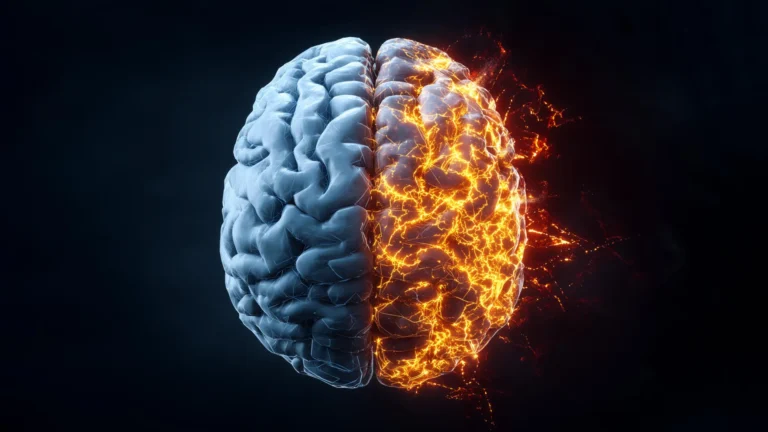
Alzheimer’s disease, a relentless neurodegenerative condition, is widely recognized for its profound impact on cognitive function, most notably the progressive erosion of memory. This debilitating illness systematically dismantles the intricate architecture of the brain, severing connections between neurons and compromising the neural networks essential for encoding, storing, and retrieving information. While the catastrophic outcome is well-established, the precise initial mechanisms by which this neural destruction commences have remained a subject of intense scientific inquiry and debate.
For years, a prominent hypothesis has centered on the accumulation of amyloid-beta protein fragments, which can aggregate within the brain, forming plaques and exerting toxic effects on nerve cells. However, the complexity of Alzheimer’s pathology extends far beyond this singular protein. A growing body of research has implicated a constellation of other biological factors, including the abnormal aggregation of tau proteins, dysfunctions in cellular waste disposal systems like lysosomes, chronic inflammatory processes, the activity of specialized immune cells within the brain known as microglia, and a multitude of other interconnected biological pathways.
Recent groundbreaking research, published in the esteemed journal Proceedings of the National Academy of Sciences, offers compelling new evidence that may bridge two of the most influential theories regarding Alzheimer’s disease pathogenesis. Scientists involved in this study propose that the mechanisms driven by amyloid-beta accumulation and the inflammatory response might not be independent, but rather converge upon a shared molecular pathway. This convergence, they suggest, targets a specific receptor that plays a critical role in regulating synaptic plasticity – the ability of synapses, the crucial communication junctions between neurons, to strengthen or weaken over time.
The research initiative was spearheaded by Professor Carla Shatz, a distinguished figure at the Wu Tsai Neurosciences Institute and the Sapp Family Provostial Professor, working in close collaboration with Dr. Barbara Brott, a senior research scientist within Professor Shatz’s laboratory. This significant undertaking received crucial financial backing from a Catalyst Award, part of the Knight Initiative for Brain Resilience. This initiative is dedicated to a fundamental re-evaluation of the underlying biological principles that govern neurodegenerative disorders, including Alzheimer’s disease.
A cornerstone of this investigative work builds upon Professor Shatz’s extensive prior investigations into a particular receptor, identified as LilrB2. Her laboratory had previously established in 2006 that the mouse homolog of LilrB2 is intrinsically involved in a process known as synaptic pruning. Synaptic pruning is a vital developmental mechanism that refines neural circuits during brain maturation in infancy and continues to play a role in learning and memory consolidation throughout adulthood. This sophisticated process involves the elimination of less-used or weaker synaptic connections, thereby strengthening more relevant ones.
Subsequent discoveries further solidified the connection between this LilrB2 receptor and Alzheimer’s disease pathology. In 2013, Professor Shatz’s team demonstrated that amyloid-beta peptides can directly bind to LilrB2. This interaction acts as a signal, prompting neurons to initiate the elimination of their synapses. Crucially, experimental models utilizing genetically modified mice provided compelling support for this hypothesis. When the gene encoding LilrB2 was removed, these mice exhibited a remarkable resistance to memory deficits in an animal model of Alzheimer’s disease, underscoring the receptor’s pivotal role in the disease’s memory-impairing effects.
The second major thrust of the study delved into the intricate workings of the complement cascade, a fundamental component of the innate immune system. Under normal physiological conditions, the complement system is a finely tuned defense mechanism that orchestrates the elimination of pathogens such as viruses and bacteria, as well as the clearance of damaged or senescent cells. However, chronic inflammation has long been recognized as a significant risk factor for the development and progression of Alzheimer’s disease. More recent research has increasingly linked the dysregulation of the complement cascade to excessive synaptic pruning and a spectrum of neurological disorders. These emerging insights prompted Professor Shatz to explore a provocative question: could molecules involved in the inflammatory response interact with the LilrB2 receptor in a manner analogous to amyloid-beta, thereby contributing to synaptic loss?
To rigorously test this novel hypothesis, the research team embarked on a systematic screening process, examining a panel of molecules known to be involved in the complement cascade. Their objective was to determine if any of these molecules could bind to the LilrB2 receptor. The results of this comprehensive screen revealed a single compelling candidate: the protein fragment C4d. This molecule exhibited a strong binding affinity for LilrB2, suggesting a direct role in triggering synapse elimination.
To validate these in vitro findings, the researchers proceeded to conduct experiments in living animal models. They administered C4d directly into the brains of healthy mice to meticulously observe its effects. Professor Shatz described the outcome as "quite a surprise," noting that the molecule, previously thought to be functionally inert, effectively "stripped synapses off neurons." This unexpected observation provided powerful in vivo evidence for C4d’s role in synaptic elimination.
Collectively, these findings paint a compelling picture, suggesting that both amyloid-beta accumulation and inflammatory processes may contribute to synapse loss through a unified biological mechanism mediated by the LilrB2 receptor. This convergence challenges conventional thinking and implies that the mechanisms by which Alzheimer’s disease leads to memory impairment may be more interconnected than previously appreciated.
"There’s an entire set of molecules and pathways that lead from inflammation to synapse loss that may not have received the attention they deserve," remarked Professor Shatz, who also holds professorships in Biology within the School of Humanities and Sciences and in Neurobiology at the School of Medicine. This perspective highlights the potential for overlooked therapeutic targets within the inflammatory cascade.
Furthermore, these results offer a significant recalibration of a long-held assumption within the Alzheimer’s research community. For many years, the prevailing view has been that glial cells, the brain’s resident immune cells, are the primary agents responsible for the removal of synapses in the context of Alzheimer’s disease. The current study, however, posits that neurons themselves may be more active participants in this process, directly responding to signals that lead to synaptic elimination.
"Neurons aren’t innocent bystanders," Professor Shatz emphasized, underscoring the active role these fundamental brain cells play. "They are active participants." This paradigm shift suggests that therapeutic strategies might need to consider the intrinsic responses of neurons rather than solely focusing on the actions of immune cells.
The implications of this research for the development of future Alzheimer’s therapies are potentially far-reaching. Current FDA-approved treatments for Alzheimer’s disease primarily focus on disrupting amyloid plaques, a strategy that has demonstrated limited clinical benefits and is associated with significant side effects, including headaches and intracranial hemorrhaging.
"Busting up amyloid plaques hasn’t worked that well, and there are a lot of side effects," Professor Shatz observed, referencing the adverse events. "And even if they worked well, you’re only going to solve part of the problem." This statement underscores the limitations of a singular therapeutic approach.
A more promising therapeutic avenue, suggested by this new understanding, may involve targeting receptors such as LilrB2, which directly govern the process of synapse removal. By devising strategies to protect synapses from this detrimental elimination, researchers may be able to preserve cognitive function and memory itself, offering a more holistic and potentially effective approach to combating the devastating effects of Alzheimer’s disease.
The study’s authors included Barbara Brott, Aram Raissi, Monique Mendes, Caroline Baccus, Jolie Huang, and Carla Shatz from Stanford University’s Department of Biology, Stanford Medicine’s Department of Neurobiology, and Bio-X; Kristina Micheva from Stanford’s Department of Molecular and Cellular Physiology; and Jost Vielmetter from the California Institute of Technology. Funding for this research was generously provided by the National Institutes of Health (grants 1R01AG065206 and 1R01EY02858), the Sapp Family Foundation, the Champalimaud Foundation, the Harold and Leila Y. Mathers Charitable Foundation, the Ruth K. Broad Biomedical Research Foundation, and the Phil and Penny Knight Initiative for Brain Resilience at the Wu Tsai Neuroscience Institute, Stanford University. The critical provision of human Alzheimer’s disease tissue samples was facilitated by the Neurodegenerative Disease Brain Bank at the University of California, San Francisco, which receives support from the NIH (grants P01AG019724 and P50AG023501), the Consortium for Frontotemporal Dementia Research, and the Tau Consortium.
About the Author