For centuries, the concept of human sensory experience has been largely confined to the five distinct modalities articulated by the ancient Greek philosopher Aristotle: sight, hearing, touch, taste, and smell. This foundational framework, while historically significant, is increasingly being challenged and expanded upon by contemporary scientific inquiry. Modern neuroscience now postulates that the human body may possess a far more intricate network of perceptual pathways, potentially encompassing dozens of unique senses that intricately converge to form our rich, unified experience of the world and our internal states. This re-evaluation necessitates a profound shift in how we comprehend our interaction with reality.
The prevailing scientific consensus today posits that perception is inherently multisensory. Rather than processing visual data, auditory stimuli, olfactory information, or tactile sensations in isolated channels, our brains seamlessly integrate these inputs. This sophisticated neurological synthesis creates a cohesive and holistic understanding, where individual sensory streams are not merely additive but deeply interactive and mutually influential. The implications of this interconnectedness are vast, revealing that what we perceive through one sense can profoundly alter or even create perceptions in another.
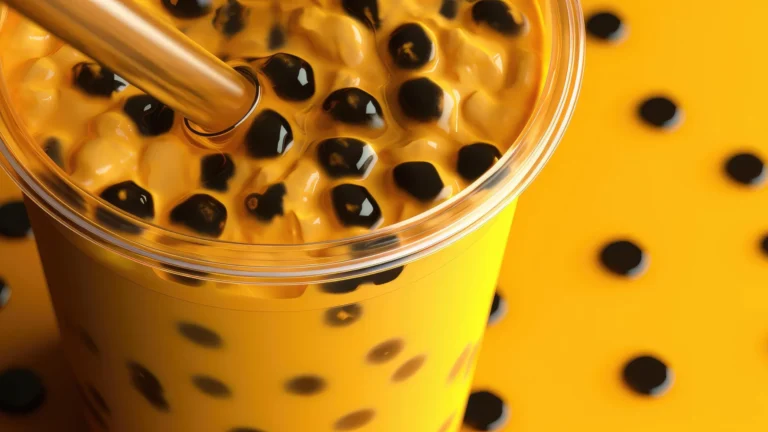
Consider, for instance, the complex phenomenon of flavor. While often attributed solely to the tongue’s taste receptors, true flavor perception is, in fact, a remarkable symphony orchestrated by multiple senses. Our gustatory system, responsible for detecting basic tastes like sweet, sour, salty, bitter, and umami, plays a role, but it is the retronasal olfaction—the sensing of volatile odor compounds that travel from the mouth to the nasal passages during chewing and swallowing—that contributes the lion’s share to the nuances we identify as distinct flavors like raspberry, mint, or mango. The tongue lacks specific receptors for these complex profiles; instead, the brain combines the basic taste signals with the detailed olfactory information to construct the rich tapestry of flavor. Beyond taste and smell, tactile sensations within the mouth, such as viscosity, temperature, and texture (e.g., the creaminess of chocolate or the crispness of an apple), further bind these elements together, influencing our preferences and overall enjoyment of food and drink. Research has even demonstrated that certain odors can modify our perception of texture; for example, a rose fragrance can make hair feel silkier, or specific aromas can make low-fat yogurts seem thicker and richer on the palate, even without alterations to their physical properties.
Beyond the traditional five, a wealth of specialized sensory systems operates continuously, often below the threshold of conscious awareness, yet are fundamental to our existence. Proprioception, for instance, provides us with an intrinsic understanding of our body’s position and movement in space without needing visual confirmation. This internal mapping allows us to perform complex motor tasks, like walking in the dark or touching our nose with our eyes closed, by constantly feeding information about muscle stretch, joint angles, and limb orientation back to the brain. Its disruption can lead to profound difficulties in coordination and spatial awareness.
Closely related is the vestibular system, located within the inner ear, which is paramount for our sense of balance and spatial orientation. This intricate biological gyroscope detects head movements and gravitational forces, relaying critical data to the brain that allows us to maintain equilibrium, stabilize our gaze during movement, and understand our body’s acceleration and deceleration. The vestibular system works in concert with visual input and proprioceptive information to prevent falls and enable fluid movement. The profound interplay between these systems is evident in everyday experiences: imagine being in an aircraft during takeoff. The visual perspective down the cabin might suggest the front is higher than your position, even though optically, its relation to you remains constant. This "visual" perception is heavily influenced by your vestibular system signaling that your body is tilting backward, demonstrating how our sense of balance directly shapes what we "see."
Interoception represents another vital, yet often overlooked, sensory domain—our capacity to perceive and interpret internal bodily sensations. This includes awareness of our heart rate, breathing patterns, hunger pangs, thirst, core body temperature fluctuations, and visceral discomfort. Interoception plays a crucial role in regulating physiological states, emotional processing, and even self-awareness. A subtle increase in heart rate might signal anxiety, while a rumbling stomach prompts us to seek nourishment. Disruptions in interoceptive processing are implicated in various psychological conditions, highlighting its importance for overall well-being.

Furthermore, our sensory repertoire includes more abstract yet equally fundamental experiences, such as the sense of agency and the sense of ownership. The sense of agency refers to the subjective feeling of initiating and controlling one’s own actions, the conviction that "I am the one causing this movement." This feeling emerges from a complex integration of motor commands sent from the brain and the sensory feedback received as the action unfolds. In neurological conditions like stroke, patients may experience a profound disruption of this sense, sometimes leading to the unsettling belief that an external force, or even another person, is moving their arm. Similarly, the sense of ownership pertains to the feeling that a particular body part belongs to oneself. This deep-seated conviction can also be challenged in stroke patients, who, despite still feeling sensations in a limb, may perceive it as alien or detached from their own body.
The re-evaluation of human sensation is not merely an academic exercise but a vibrant, interdisciplinary field of research. Institutions like the Centre for the Study of the Senses at the University of London’s School of Advanced Study, and the Crossmodal Laboratory at Oxford, have become epicenters for philosophers, neuroscientists, and psychologists collaborating to unravel these intricate mysteries. Pioneering projects, such as the "Rethinking the Senses" initiative, spearheaded by figures like the late Professor Sir Colin Blakemore, have generated groundbreaking insights into crossmodal perception.
For example, researchers have discovered how manipulating the auditory feedback of one’s own footsteps can alter the perceived weight of the body, making it feel lighter or heavier. In another fascinating study, audioguides at Tate Britain art museum that presented artwork descriptions as if the depicted figures were speaking directly to the visitor significantly enhanced the retention of visual details about the paintings. These findings underscore the profound influence of multisensory integration on memory and cognitive processing.
Perhaps one of the most widely recognized examples of crossmodal influence comes from the aviation industry: the peculiar phenomenon of why tomato juice often tastes better on an airplane. Studies have revealed that the pervasive white noise environment inside an aircraft cabin significantly diminishes our perception of salty, sweet, and sour tastes. However, the perception of umami—the savory taste—remains largely unaffected and can even be subtly enhanced. Since tomatoes and tomato juice are particularly rich in umami, the diminished perception of other tastes effectively allows the savory notes to come to the forefront, making the drink more palatable and enjoyable in an otherwise sensory-deprived setting. This research has tangible implications, guiding food scientists and airlines in developing more appealing in-flight culinary experiences.
To bring these complex scientific concepts to a wider audience, interactive exhibitions like "Senses Unwrapped" at Coal Drops Yard in London have been created. These installations allow visitors to personally experience the counter-intuitive workings of their own perceptual systems. A classic demonstration, the size-weight illusion, exemplifies this: participants are invited to lift a set of small, medium, and large curling stones, all of which are identical in weight. Despite the objective equality, the smallest stone consistently feels the heaviest, illustrating how our brain integrates visual cues about an object’s size with proprioceptive feedback, leading to a subjective misperception of its mass.
In essence, our sensory apparatus is far more sophisticated and interconnected than previously imagined. The traditional five senses represent only a superficial layer of a deeply integrated and constantly interacting network. From the subtle awareness of our internal bodily functions to the intricate ballet of senses that creates the flavor of a meal, every moment of our conscious experience is a testament to this expanded sensory landscape. By pausing to consciously acknowledge this complex interplay, whether appreciating the nuanced flavors of food or navigating our physical environment, we can gain a richer, more profound appreciation for the extraordinary capabilities of the human mind and body. The journey to fully map and understand these myriad perceptual pathways is ongoing, continually redefining the very boundaries of human experience.
About the Author