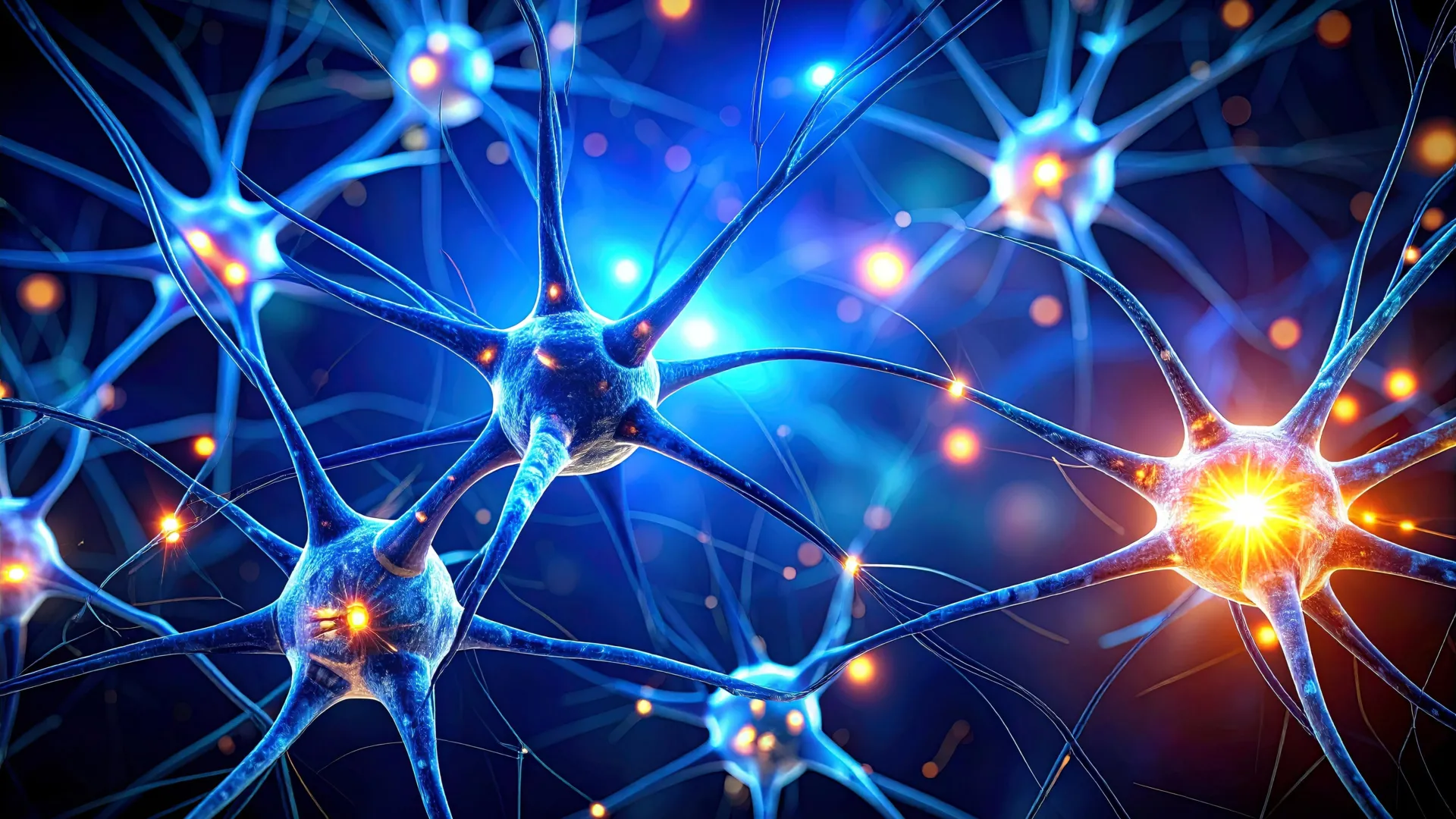
Scientists have engineered a sophisticated protein capable of precisely monitoring the chemical messages that brain cells receive, a significant departure from previous methods that primarily focused on the signals they transmit. This groundbreaking development offers an unprecedented view into the intricate inbound communications that shape neural processing. These crucial incoming signals are initiated when nerve cells, or neurons, release glutamate, a fundamental neurotransmitter indispensable for the complex symphony of brain activity. While glutamate is pivotal for cognitive functions such as learning and memory formation, its fleeting and subtle nature has historically rendered its activity exceedingly challenging to quantify.
The advent of this novel protein sensor fundamentally alters this landscape, empowering researchers to detect these delicate chemical exchanges as they arrive at neuronal destinations. This capability grants access to a previously obscured dimension of neural communication, akin to deciphering the full context of a conversation rather than merely overhearing fragments. This breakthrough promises to revolutionize our understanding of how the brain processes information, as each neuron is bombarded with thousands of inputs from its neighbors. The way a neuron integrates these myriad signals ultimately dictates its decision to generate an outgoing signal, a fundamental mechanism believed to underpin our thoughts, decisions, and memories. The ability to directly observe this integration process could unlock profound insights into the computational power of the brain.
Furthermore, this scientific leap opens promising new avenues for investigating a spectrum of neurological and psychiatric disorders. Aberrations in glutamate signaling pathways have been implicated in a range of debilitating conditions, including Alzheimer’s disease, schizophrenia, autism spectrum disorders, and epilepsy. By enabling more accurate and granular measurement of these critical signals, researchers may finally pinpoint the underlying biological mechanisms driving these diseases, paving the way for more targeted interventions. The implications for pharmaceutical development are equally significant; this new sensor provides drug developers with a powerful means to assess the real-time impact of experimental therapeutics on synaptic activity. This direct observation could dramatically accelerate the discovery and refinement of more effective treatments for neurological conditions.
The protein, christened iGluSnFR4, is the product of collaborative efforts between researchers at the Allen Institute and HHMI’s Janelia Research Campus, with its pronunciation suggested as ‘glue sniffer.’ This engineered molecule functions as a highly sensitive molecular "glutamate indicator." Its remarkable sensitivity allows it to discern even the faintest incoming signals exchanged between neurons, providing a level of detail previously unattainable. By precisely mapping the release and uptake of glutamate, iGluSnFR4 offers a novel perspective on the dynamic patterns of neural activity that underpin learning, memory, and emotional processing. It allows scientists to witness the intricate dance of neuronal communication within the living brain in real-time, a significant advancement captured in a recent publication in Nature Methods. This development is poised to fundamentally reshape the methodologies employed for measuring and analyzing neural activity in the field of neuroscience.
To fully appreciate the magnitude of this advancement, it is essential to understand the fundamental principles of neuronal interaction. The human brain is comprised of billions of neurons, specialized cells that communicate through a complex network of electrical and chemical signals. Electrical impulses travel along elongated projections called axons, and upon reaching the axon terminal, they must bridge a minuscule gap known as a synapse to reach the next neuron. This transmission across the synaptic cleft is facilitated by chemical messengers called neurotransmitters. Glutamate stands out as the most prevalent excitatory neurotransmitter in the central nervous system, playing a crucial role in synaptic plasticity, learning, and memory. When glutamate binds to receptors on the postsynaptic neuron, it can either excite or inhibit that neuron, thereby propagating the signal through the neural circuit.
The intricate process of neuronal communication can be metaphorically likened to a complex cascade, but it is far more nuanced. Each individual neuron receives inputs from potentially thousands of other neurons. The decision of whether a receiving neuron will fire an action potential – its own outgoing signal – depends on the precise summation and pattern of these incoming signals. Prior to the development of iGluSnFR4, observing these incoming signals in living brain tissue presented a formidable challenge. Existing technologies were either too slow to capture the rapid fluctuations of synaptic transmission or lacked the necessary sensitivity to resolve activity at individual synapses. Consequently, researchers were often limited to observing only isolated components of the communication process, akin to reading individual words without understanding the sentence structure or the overall narrative. This new protein sensor, however, allows for the capture of the entire communicative exchange, providing a holistic view of neuronal dialogue.
The lead author of the study, Dr. Kaspar Podgorski, a senior scientist at the Allen Institute, articulated the significance of this breakthrough by drawing an analogy. He described the previous state of research as akin to "reading a book with all the words scrambled and not understanding the order of the words or how they’re arranged." He elaborated that the current work "is adding the connections between those neurons and by doing that, we now understand the order of the words on the pages, and what they mean." Historically, neuroscientists possessed robust methods for assessing the structural connectivity between neurons and for measuring the aggregate activity of neuronal populations. However, integrating these two types of information to understand which specific neurons were communicating with which other specific neurons remained a significant hurdle. Dr. Podgorski emphasized that the invention of iGluSnFR4 provides "a way of measuring information that comes into neurons from different sources, and that’s been a critical part missing from neuroscience research."
The success of iGluSnFR4 is attributed to a synergistic collaboration that originated at HHMI’s Janelia Research Campus. Dr. Jeremy Hasseman, a scientist at HHMI’s Janelia Research Campus, highlighted the "close collaboration started at HHMI’s Janelia Research Campus between the GENIE Project team and Kaspar’s lab." He further noted that this foundational work was augmented by "the phenomenal in vivo characterization work done by the Allen Institute’s Neural Dynamics group." This inter-institutional partnership exemplifies how collaborative efforts across diverse research environments can drive significant advancements in scientific understanding.
The development of iGluSnFR4 effectively overcomes a long-standing limitation in contemporary neuroscience, enabling the direct observation of how neurons process incoming information. With iGluSnFR4 now accessible to the scientific community through distribution by Addgene, researchers are equipped with a potent new instrument to probe the complexities of brain function with unprecedented detail. As this technology becomes more widely adopted and integrated into research workflows, it holds the potential to illuminate answers to some of the most enduring and profound questions about the human brain.
About the Author