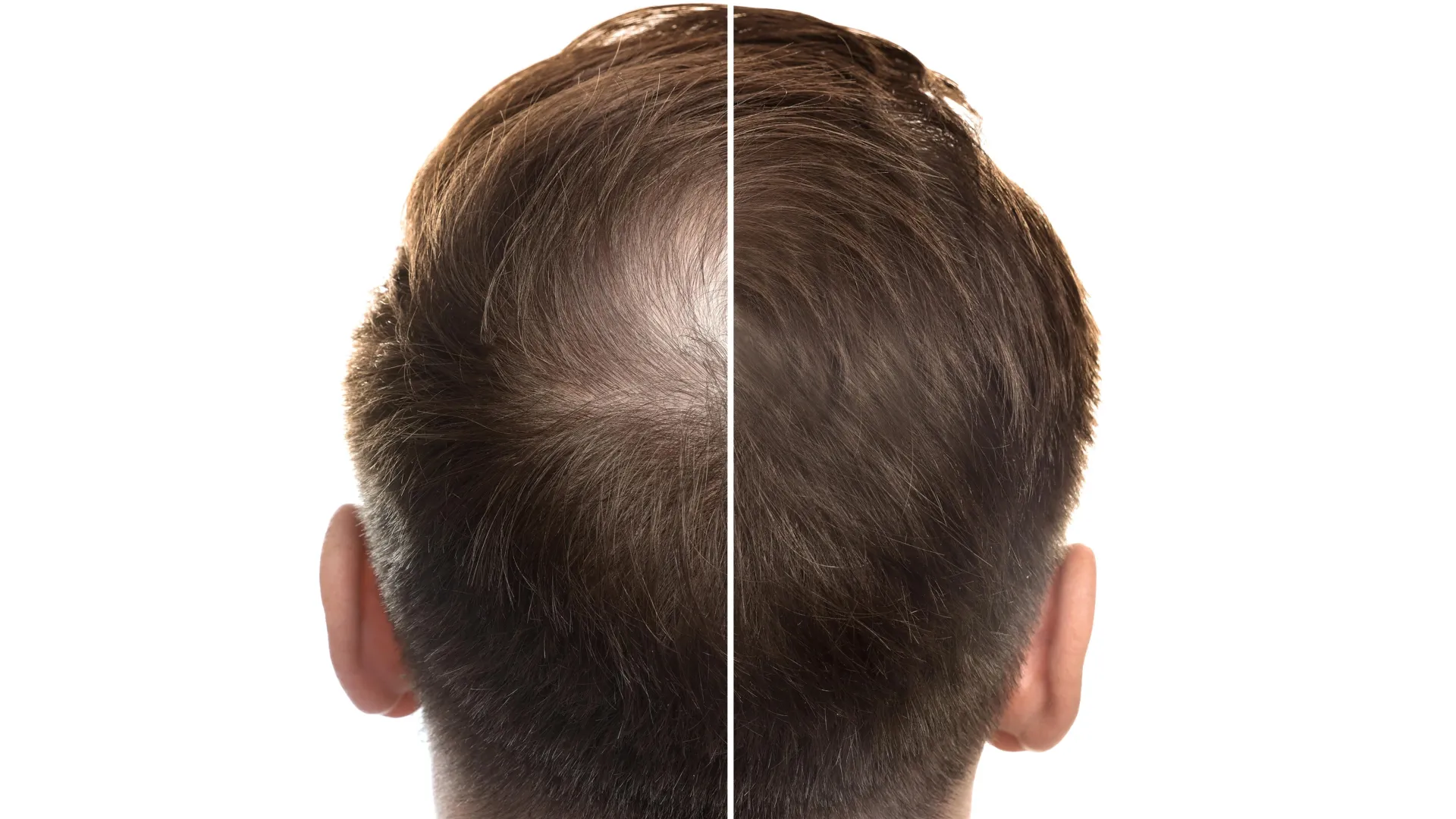
A comprehensive scientific evaluation has illuminated the potential of a centuries-old botanical remedy, traditionally revered in China for its purported hair-enhancing properties, to offer a novel and holistic approach to combating a prevalent form of hair thinning. Androgenetic alopecia (AGA), a condition affecting a significant portion of the global population, has long been addressed with pharmaceutical interventions like finasteride and minoxidil; however, growing apprehension regarding their potential adverse effects and the implications of sustained use has spurred a search for gentler, more integrated therapeutic avenues. The reviewed research strongly suggests that Polygonum multiflorum, a root steeped in over a millennium of medicinal practice for its capacity to "blacken hair and nourish essence," may emerge as a compelling alternative in the management of AGA.
This traditional herb distinguishes itself from conventional hair loss treatments by engaging a spectrum of biological mechanisms rather than targeting a singular pathway. The scholarly review indicates that Polygonum multiflorum exerts its influence across multiple physiological processes simultaneously. A key action involves mitigating the detrimental impact of dihydrotestosterone (DHT), a potent androgen intricately linked to the miniaturization of hair follicles, while concurrently providing a protective shield for hair follicle cells against premature programmed cell death. Furthermore, the herb appears to stimulate crucial signaling cascades fundamental to hair growth, specifically the Wnt and Shh pathways, while also enhancing vascular circulation within the scalp, a factor that can significantly improve the delivery of vital oxygen and nutrients to the hair-producing structures.
This convergence of ancient knowledge with contemporary scientific understanding represents a significant stride in the field. As articulated by Han Bixian, the principal author of the review published in the Journal of Holistic Integrative Pharmacy, the research endeavor successfully bridges the gap between historical empirical wisdom and the rigorous methodologies of modern biology. The researchers expressed particular astonishment at the remarkable consistency with which historical texts, dating back to the Tang Dynasty, documented effects that precisely mirror current biological insights into hair follicle function. This alignment suggests that the perceived benefits are not merely anecdotal folklore but are grounded in verifiable pharmacological activity.
The investigative process undertaken by the researchers involved a meticulous examination of a broad array of evidence, encompassing meticulously controlled laboratory experiments, detailed clinical observations, and extensive archival research into classical herbal pharmacopoeias. The aggregated data from these diverse sources collaboratively construct a compelling narrative of a treatment that extends beyond merely slowing the progression of hair thinning, hinting at a more restorative capacity.
The review places considerable emphasis on the prospect that Polygonum multiflorum might actively foster hair regeneration. Instead of solely serving to decelerate further loss, the herb appears to stimulate renewed growth by modulating a complex interplay of growth factors and signaling pathways that govern the intricate hair growth cycle. This multifaceted mode of action holds the potential to render it a more potent and comprehensive solution compared to interventions that concentrate on a single biological target.
The safety profile of Polygonum multiflorum, particularly when subjected to the meticulous processing techniques integral to its traditional preparation, emerges as a significant advantage. This traditional refinement ensures a favorable safety profile, rendering it a more palatable option for individuals seeking relief from hair loss who are understandably concerned about side effects such as sexual dysfunction or localized scalp irritation, which have been associated with contemporary pharmaceutical treatments. This aspect of the research underscores the potential for a therapy that is both effective and well-tolerated.
Despite the promising findings, the authors are unequivocal in their assertion that further rigorous, large-scale clinical investigations are imperative. Such trials are essential to definitively corroborate these preliminary findings and to establish precise dosage regimens and optimal application protocols. Nevertheless, this comprehensive review serves as a powerful testament to the profound value that can be unlocked by applying systematic scientific scrutiny to traditional healing modalities, potentially paving the way for innovative therapeutic strategies for widely prevalent conditions like androgenetic alopecia. The deep well of traditional medicine continues to offer fertile ground for modern scientific exploration, promising new avenues for health and well-being. The exploration into Polygonum multiflorum exemplifies this synergistic approach, highlighting how ancient practices, when validated by contemporary science, can yield profound benefits for human health.
About the Author