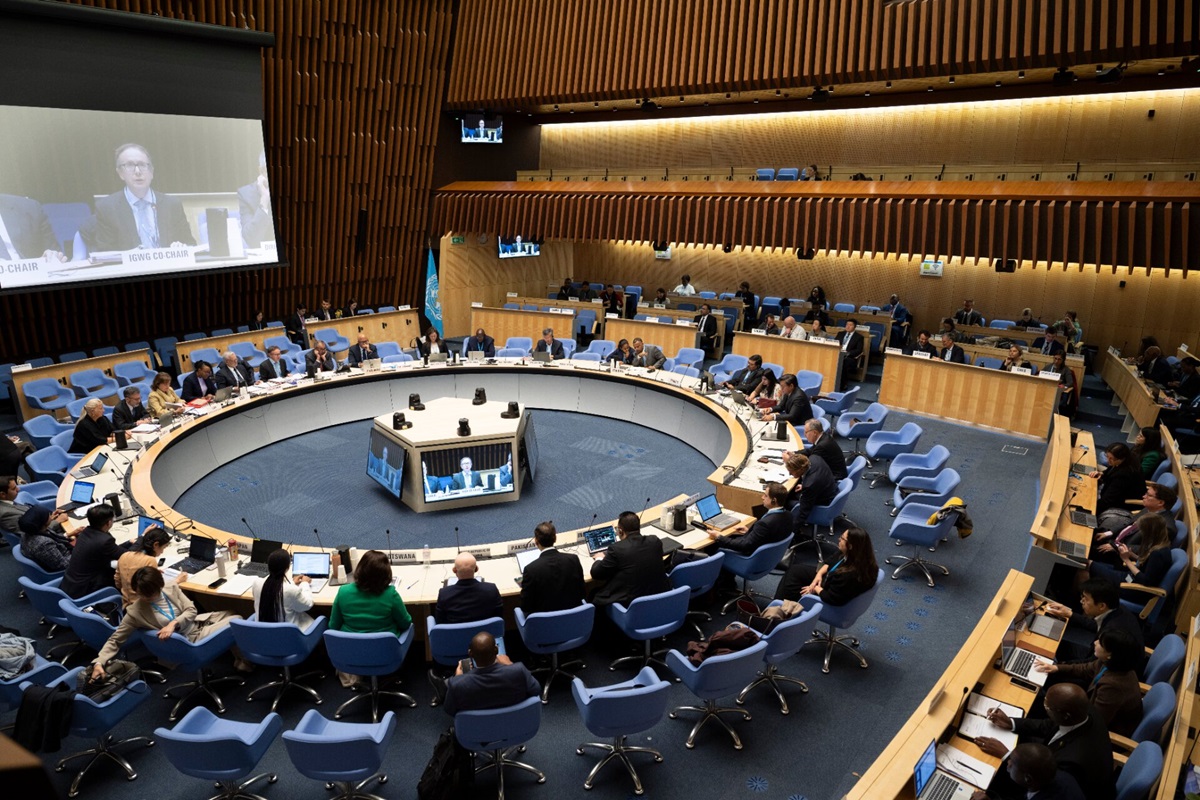
The global community recently concluded a pivotal round of negotiations, marking a significant stride towards establishing a robust international framework for pandemic preparedness and response. From February 9th to 14th, 2026, representatives from member states of the World Health Organization (WHO) convened for the fifth session of the Intergovernmental Negotiating Body (INB), specifically focusing on the draft annex for Pathogen Access and Benefit Sharing (PABS). This intricate component is deemed essential for the overarching WHO Pandemic Agreement, a landmark accord designed to fortify global health security against future outbreaks. The discussions, held under considerable international scrutiny and urgency, underscored both the collective determination to prevent a recurrence of past crises and the persistent complexities inherent in achieving truly equitable global health solutions.
The impetus for this ambitious undertaking stems directly from the profound and multifaceted failures exposed by the COVID-19 pandemic. The rapid spread of SARS-CoV-2 laid bare critical vulnerabilities in international cooperation, including fragmented data sharing, inadequate access to vital medical countermeasures, and glaring inequities in vaccine distribution. In response to this unprecedented global health crisis, the World Health Assembly (WHA), the WHO’s supreme decision-making body, initiated the process in 2021 to draft a new, legally binding international instrument. This instrument, now known as the WHO Pandemic Agreement, aims to rectify these systemic weaknesses by establishing a comprehensive legal framework for coordinated action, ensuring that the world is better equipped to detect, prevent, and respond to future pandemics collectively and equitably. It represents a paradigm shift from reactive, siloed responses to a proactive, globally synchronized strategy.
At the very heart of this new accord lies the Pathogen Access and Benefit Sharing (PABS) mechanism, a concept critical for operationalizing the principles of fairness and solidarity. PABS is fundamentally designed to address the crucial link between the rapid identification and sharing of novel pathogens and the equitable distribution of the life-saving tools developed from that knowledge. On one side, "pathogen access" mandates the swift detection of pathogens with pandemic potential and the immediate sharing of their genetic sequence information and, where appropriate, biological materials. This rapid data exchange is not merely an academic exercise; it is the cornerstone upon which scientists worldwide can accelerate the development of essential public health interventions, including diagnostic tests, therapeutic agents, and vaccines. Without timely access to pathogen data, the global scientific community operates at a significant disadvantage, delaying the response at critical early stages of an outbreak.
Conversely, "benefit sharing" seeks to ensure that the advantages derived from this shared access are distributed fairly, particularly to countries that may lack the advanced research and manufacturing capacities of wealthier nations. This involves a broad spectrum of benefits, ranging from preferential access to diagnostic tools, treatments, and vaccines, to technology transfer for local manufacturing, intellectual property waivers in times of crisis, and financial contributions to support preparedness efforts in low- and middle-income countries. The core principle guiding PABS is "equitable access based on public health need," moving beyond market-driven approaches to prioritize global well-being. This aspect of the negotiations often proves to be the most contentious, as it touches upon issues of national sovereignty, economic interests, and the commercial rights of pharmaceutical companies.
The Intergovernmental Negotiating Body, established by the WHA, has been meticulously working through successive rounds of discussions to bridge these divides. Its mandate is to craft a consensus text that satisfies the diverse interests and capacities of all 194 member states. The recent fifth meeting of this working group was heralded as productive, yielding discernible progress in streamlining the complex draft text. However, as acknowledged by co-chairs, significant divergences persist, particularly concerning the more intricate and politically sensitive elements of the PABS annex. These discussions are a delicate balance between the urgency of the public health imperative and the varied national interests, legal frameworks, and economic realities of sovereign states.
Key sticking points in the PABS negotiations often revolve around several critical areas. Developing nations, many of whom experienced severe inequities in accessing COVID-19 vaccines and therapeutics, advocate strongly for robust, legally enforceable mechanisms for technology transfer, intellectual property flexibility, and guaranteed supplies of countermeasures. They emphasize that the benefits must be concrete and directly address their needs for self-sufficiency and health security. Conversely, some developed nations and pharmaceutical industry representatives express concerns about the potential impact on innovation, arguing that strong intellectual property protections are necessary to incentivize research and development. The scope of "benefits" to be shared, the triggers for such sharing, the financial contributions required from wealthier nations, and the governance mechanisms for PABS are all subjects of intense debate. Finding common ground requires innovative diplomatic solutions that respect diverse perspectives while upholding the fundamental goal of global health equity.
Ambassador Tovar da Silva Nunes of Brazil, co-chair of the IGWG Bureau, commended the steadfast commitment demonstrated by countries throughout the recent session. He articulated a clear vision emerging for text streamlining, suggesting that negotiators are successfully clarifying less contentious provisions while strategically identifying and earmarking the more challenging elements for deeper, more focused consultation. Echoing this sentiment, Mr. Matthew Harpur of the United Kingdom, also a co-chair, praised delegations for their serious and constructive engagement. He candidly acknowledged the persistence of important differences but emphasized a shared understanding among all parties regarding the monumental stakes involved in these discussions. Both chairs underscored that with time rapidly diminishing, the ensuing weeks would be absolutely critical for bridging remaining gaps and ultimately delivering a PABS annex that is not only fair and effective but also genuinely fit for its intended purpose.
The urgency surrounding these negotiations is amplified by the impending May deadline, when the outcomes of the IGWG’s work are scheduled to be presented to the World Health Assembly. The WHA provides the ultimate forum for member states to adopt the final agreement, transforming it from a draft into a legally binding international instrument. Failure to reach a consensus by this crucial deadline could significantly delay the implementation of a much-needed global health security framework, leaving the world vulnerable to future pandemics and eroding trust in multilateral cooperation. Dr. Tedros Adhanom Ghebreyesus, WHO Director-General, highlighted that the adoption of the broader Pandemic Agreement last year was a powerful testament to global cooperation, emphasizing the need to sustain that momentum. He stressed that robust multilateralism remains indispensable as nations must confront future pandemics collaboratively. Expressing confidence in the steady progress observed, Dr. Tedros affirmed his belief that an agreement on the PABS annex would be achieved in time for the May World Health Assembly.
Crucially, the negotiation process extends beyond governmental delegations. During the recent meeting, member states actively engaged with a diverse array of relevant stakeholders. Representatives from the private sector, academic institutions, specialized laboratories, and genetic sequence information databases participated in dialogues aimed at fostering consensus and ensuring the practicality and feasibility of the proposed mechanisms. Their input is invaluable, as these entities are at the forefront of pathogen detection, research, development, and manufacturing, playing a critical role in the global health ecosystem. Their perspectives are vital for crafting an agreement that is not only legally sound but also scientifically informed and operationally viable.
The successful conclusion of the PABS annex negotiations and the broader Pandemic Agreement will signify a monumental leap forward in global health governance. It promises a future where rapid pathogen detection is matched by equitable access to life-saving tools, where solidarity transcends national borders, and where the devastating inequities witnessed during COVID-19 become a relic of the past. Conversely, a failure to forge a comprehensive and equitable agreement risks perpetuating the vulnerabilities and injustices that defined the last pandemic, leaving humanity exposed to the inevitable next global health threat. The ongoing negotiations are therefore not merely diplomatic exercises; they are a profound test of global collective will and a defining moment for the future of international public health security.
About the Author