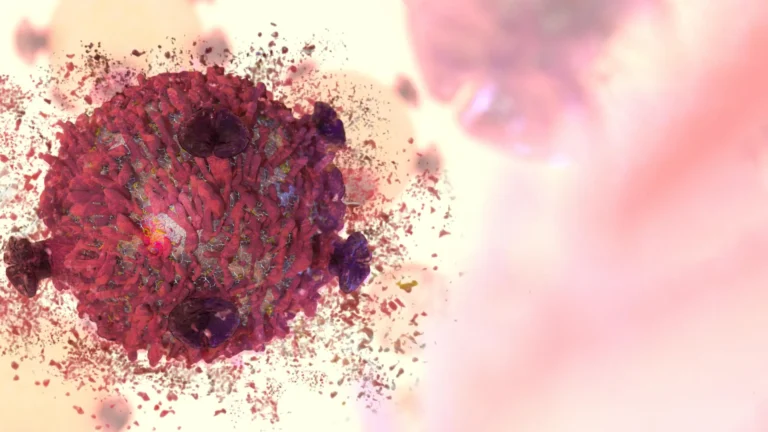
For the first time in scientific history, researchers have successfully reconstructed the genetic blueprints of ancient Human betaherpesvirus 6A and 6B (HHV-6A/B) by meticulously extracting and analyzing DNA fragments from human skeletal remains predating recorded history by over two millennia. This groundbreaking research, a collaborative effort spearheaded by scientific teams at the University of Vienna and the University of Tartu in Estonia, and prominently featured in the esteemed journal Science Advances, unequivocally demonstrates an enduring and intricate partnership between these viral agents and humanity, stretching back at least to the Iron Age. The findings not only corroborate a profound evolutionary connection but also unveil a remarkable divergence: one specific strain, HHV-6A, appears to have relinquished its capacity for integration into the human genetic code early in its historical trajectory.
The ubiquitous nature of HHV-6B is widely acknowledged within the medical community, with approximately 90% of children contracting it by their second year of life. It is most famously associated with roseola infantum, commonly referred to as "sixth disease," a prevalent cause of fever-induced convulsions in very young children. In tandem with its closely related counterpart, HHV-6A, this virus belongs to an expansive genus of herpesviruses, typically manifesting as a relatively benign initial infection before entering a dormant state within the host’s system for the remainder of their existence. What distinguishes these particular viruses is their extraordinary aptitude for seamlessly embedding their genetic material directly into the human chromosomal structure. This remarkable biological mechanism allows the viral presence to remain quiescent for extended durations and, in infrequent instances, facilitates its transmission from parent to offspring as an integral component of the human genome. Currently, an estimated one percent of the global population carries these hereditary viral remnants. While the scientific conjecture that such viral integrations originated in the distant past has persisted for years, concrete genetic corroboration remained elusive until the advent of this transformative study.
The quest for this definitive evidence necessitated an extensive and systematic examination of viral genetic material within ancient human biological samples. An international consortium, marshaled under the leadership of the University of Vienna and the University of Tartu, and further fortified by the expertise of researchers from the University of Cambridge and University College London, embarked on an ambitious project. Their investigation encompassed the meticulous analysis of nearly 4,000 human skeletal specimens sourced from diverse archaeological excavations across the European continent. This colossal undertaking yielded remarkable success, with the research team ultimately identifying and comprehensively reconstructing eleven distinct ancient herpesvirus genomes.
The oldest recovered viral genome originated from the remains of a young female who lived in Iron Age Italy, with her life spanning the period between 1100 and 600 BCE. The temporal and geographical scope of the analyzed samples extended significantly beyond this initial discovery, encompassing a broad spectrum of European locales and historical epochs. Evidence of both HHV-6A and HHV-6B was detected in skeletal fragments dating from the medieval period and recovered from sites in England, Belgium, and Estonia. Furthermore, HHV-6B was identified in samples from ancient Italy and early historical Russia. Notably, several individuals unearthed from English archaeological contexts harbored inherited forms of HHV-6B, thereby representing the earliest documented instances of chromosomally integrated human herpesviruses. The archaeological site of Sint-Truiden in Belgium emerged as a particularly rich source of data, yielding an unusually high number of positive cases and compelling evidence that both viral species coexisted and circulated within the same localized community.
Meriam Guellil, the lead researcher on the study from the Department of Evolutionary Anthropology at the University of Vienna, elaborated on the challenges and significance of their findings. She explained that while HHV-6 infects nearly 90% of the human population at some stage in their lives, only a small fraction, around 1%, carries the virus in every cell of their body due to inheritance from their parents. Identifying these rare inherited viral sequences within ancient DNA proved to be a demanding task. However, Guellil highlighted that their data now enables the tracing of the viruses’ evolutionary trajectory across Europe for more than 2,500 years, utilizing genomes that span from the 8th to 6th centuries BCE right up to contemporary genetic profiles.
The reconstruction of these ancient viral genomes provided scientists with an unprecedented ability to pinpoint the precise locations where these viruses had integrated into the human chromosomal architecture. A comparative analysis with modern genetic data revealed that certain viral integrations occurred millennia ago and have been faithfully transmitted through numerous subsequent generations, underscoring the profound persistence of these viral elements within the human lineage.
The detailed analysis also illuminated divergent evolutionary pathways undertaken by HHV-6A and HHV-6B. It became apparent that HHV-6A, over the course of its coevolution with human hosts, seemingly underwent a process of losing its inherent capability to integrate into human DNA. This observation suggests a dynamic interplay where the virus’s interaction with its human hosts has evolved significantly over time.
The implications of these ancient viral discoveries extend to contemporary health considerations. Charlotte Houldcroft, affiliated with the Department of Genetics at the University of Cambridge, pointed out that the presence of HHV-6B integrated into one’s genome has been associated with an increased risk of angina and heart disease. She further noted that inherited forms of HHV-6A and B are presently more prevalent in the United Kingdom compared to other parts of Europe, and this research provides the inaugural genetic evidence of ancient carriers from Britain.
The discovery of these ancient HHV-6 genomes marks a pivotal moment, offering the first time-stamped genetic confirmation of the long-term coevolution between viruses and humans at the fundamental level of DNA. This research also powerfully illustrates the immense potential of ancient DNA studies to illuminate the deep historical narrative of infectious diseases, demonstrating how seemingly transient childhood infections can ultimately become permanently embedded within the human genetic endowment.
Although HHV-6A and HHV-6B were only formally identified and characterized in the 1980s, this significant research effectively pushes back the documented presence of these viruses to the Iron Age. Guellil posited that modern genetic analyses had previously hinted at a potential coevolutionary history between HHV-6 and humans dating back to humanity’s early migrations out of Africa. The recovered ancient genomes, she concluded, now furnish the crucial and concrete evidence substantiating their deep-rooted presence within the human past.
About the Author