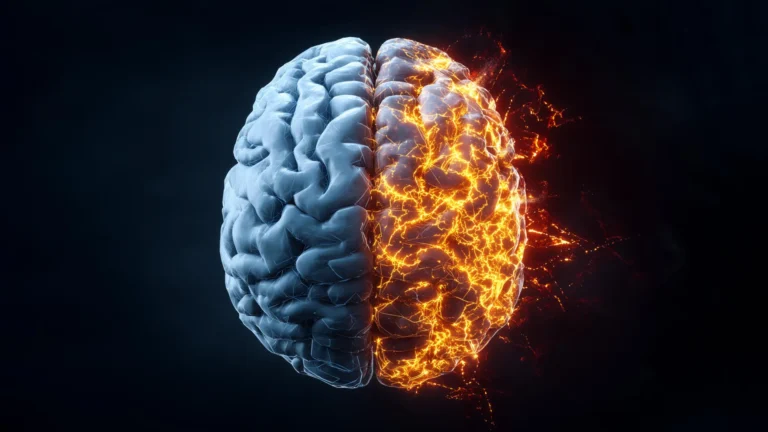
Our daily existence is intrinsically woven with the fabric of conscious awareness, a phenomenon that colors our perceptions with both the gentle hues of pleasant sensations and the stark contrasts of discomfort and distress. From the simple joy of sunlight warming the skin or the melodic chirping of birds to the profound ache of physical injury or the persistent shadows of emotional hardship, sentience presents a complex spectrum of subjective experience. This omnipresence compels a profound inquiry: what evolutionary pressures might have necessitated the development of such a nuanced capacity for feeling, awareness, and suffering among living organisms?
Philosophers and neuroscientists Albert Newen and Carlos Montemayor propose a tripartite model of consciousness, delineating three distinct evolutionary strata, each fulfilling a unique adaptive function. The most foundational, they posit, is basic arousal. This primal form of awareness, predating more sophisticated cognitive abilities, served as an immediate alarm system for organisms facing existential threats. As Newen elaborates, the fundamental role of basic arousal was to catapult the organism into a state of heightened vigilance when confronted with life-or-death scenarios, thereby bolstering its chances of survival. Pain, in this context, emerges as an exceptionally potent and direct mechanism for signaling physical damage and communicating the grave implications of such harm to an organism’s continued existence, often eliciting immediate defensive reactions like flight or immobility.
A subsequent evolutionary milestone is the emergence of general alertness. This advanced form of consciousness equips individuals with the sophisticated ability to selectively attend to salient information while simultaneously suppressing extraneous stimuli. Consider the scenario of engaging in a conversation and abruptly detecting the acrid scent of smoke; attention would instantaneously pivot to the smoke, prompting a search for its origin. Carlos Montemayor further elucidates that this targeted focus facilitates the acquisition of knowledge regarding novel correlations. Initially, this might encompass straightforward, causal relationships, such as the direct link between smoke and fire, indicating the location of a blaze. However, this capacity for focused alertness also empowers organisms to discern more intricate, abstract, and even scientific patterns within their environment.
Ascending to a more complex tier, humans and a select group of other animals exhibit reflexive (self-)consciousness. In its more elaborate manifestations, this cognitive faculty enables individuals to engage in introspection, recall past events, and project into the future. It underpins the construction of a mental self-representation, which subsequently guides decision-making and strategic planning. Newen observes that rudimentary forms of reflexive consciousness likely evolved in parallel with the more basic layers of awareness. In such instances, conscious experience shifts its focus away from external environmental perception towards the internal registration of one’s own states. These internal aspects encompass physiological conditions, sensory inputs, emotional sensations, cognitive processes, and volitional actions.
A readily understandable illustration of reflexive consciousness is the recognition of one’s own image in a reflective surface. This developmental milestone is typically achieved by human infants around 18 months of age. Similar capacities have been documented in various animal species, including chimpanzees, dolphins, and magpies. At its conceptual core, the experience of reflexive consciousness serves to foster social cohesion and coordinated interaction among individuals, thereby enhancing their efficacy within group dynamics.
Intriguing research conducted by Gianmarco Maldarelli and Onur Güntürkün suggests that avian species may also possess foundational levels of conscious perception. Their investigations highlight three principal domains wherein birds exhibit striking parallels with mammalian consciousness: sensory awareness, underlying neural architecture, and specific forms of self-awareness.
Evidence pointing towards sensory experience in birds indicates that their responses to stimuli transcend mere automatic reactions. Instead, they appear to engage in subjective qualitative experiences. When presented with visually ambiguous imagery, pigeons exhibit a phenomenon akin to human perceptual alternation, shifting between differing interpretations. Further corroboration emerges from studies involving corvids. Specific patterns of neural signaling within their brains are demonstrably correlated with the animal’s subjective perception of stimuli, rather than solely reflecting the external physical properties of those stimuli. In instances where a crow consciously registers a stimulus and in others where it does not, distinct neuronal populations activate in accordance with this internal perceptual state.
Furthermore, avian brains harbor neural structures that are implicated in the processing of conscious information, notwithstanding their anatomical divergence from mammalian counterparts. Güntürkün points out that the avian analogue of the mammalian prefrontal cortex, known as the NCL, is characterized by extensive interconnectedness, facilitating the integration and dynamic processing of information within the brain. He further elaborates that the connectome of the avian forebrain, which comprehensively maps the informational pathways between different brain regions, shares considerable commonalities with mammalian brain connectomes. Consequently, birds satisfy numerous criteria stipulated by established theories of consciousness, such as the Global Neuronal Workspace theory.
More recent experimental endeavors have yielded indications that birds may also exhibit rudimentary forms of self-perception. While certain corvid species have successfully navigated the classic mirror self-recognition test, other studies have employed alternative methodologies designed to more accurately reflect the natural behavioral repertoires of avian subjects. These alternative experiments have uncovered additional manifestations of self-consciousness across a variety of bird species. Güntürkün notes that experimental findings suggest that pigeons and chickens can differentiate between their own reflection in a mirror and an actual conspecific, and adjust their behavioral responses accordingly based on the contextual cues. This capacity is interpreted as a discernible indicator of situational, foundational self-consciousness.
Collectively, these converging lines of evidence strongly imply that consciousness is not a recent evolutionary innovation confined solely to the human lineage. Rather, it appears to represent an ancient and pervasive characteristic woven into the tapestry of life’s evolutionary progression. The findings concerning birds underscore the remarkable possibility that sophisticated conscious processing can occur in the absence of a cerebral cortex, and that disparate neural architectures can ultimately converge upon analogous functional outcomes in the realm of subjective experience.
About the Author