As individuals navigate the landscape of their later years, the paradigm of physical fitness undergoes a profound redefinition, shifting from peak performance metrics to the cultivation of sustained functional capacity and robust independence. For those aged sixty and beyond, the measure of true vitality often resides not in speed or raw power, but in the enduring ability to maintain activity with control and resilience. This evolving understanding underscores the critical importance of standing endurance—a multifaceted attribute that simultaneously challenges an individual’s muscular strength, equilibrium, coordination, and cardiovascular efficiency without the inherent support of a seated or prone position. Unlike traditional assessments that might isolate specific physical components, exercises performed continuously while upright demand a holistic engagement of the body’s systems, mirroring the dynamic and unpredictable requirements of daily life.
The human body, remarkably adaptable, undergoes various physiological transformations with age that can influence stamina and stability. Sarcopenia, the progressive loss of muscle mass and strength, becomes more prevalent, directly impacting the capacity to generate and sustain effort. Concurrently, bone density may diminish, joint cartilage can degrade, and the efficiency of the cardiovascular system might subtly decline. Neurological changes can affect proprioception—the body’s sense of its position in space—and reaction times, thereby compromising balance. These interconnected shifts collectively highlight why a focus on integrated, functional movement is paramount. Maintaining standing endurance directly counteracts these age-related declines, fostering not only physical prowess but also a profound sense of self-reliance and confidence.
Historically, fitness evaluations often involved a series of discrete movements, allowing for brief recuperation periods between segments. However, a more rigorous assessment of functional endurance, particularly relevant for an aging population, emerges when consecutive exercises are performed without interruption. This continuous flow forces the body to manage accumulating fatigue, adapt to shifting demands, and maintain composure across varied movement patterns. It simulates scenarios such as extended periods of standing, navigating complex environments, or performing multiple household tasks sequentially—real-world challenges where the luxury of immediate rest is often unavailable. The capacity to seamlessly transition through a series of standing movements, sustaining proper form and rhythm, serves as a powerful indicator of comprehensive physical resilience.
To gauge this critical aspect of fitness, a specific sequence of four standing exercises, executed consecutively without rest, offers a revealing benchmark. Successfully navigating this circuit demonstrates not merely isolated strength or balance, but a well-integrated system capable of sustained effort under dynamic conditions.
1. Sustained Marching in Place
What might appear as a deceptively simple action, marching in place, particularly when maintained for an extended duration, rapidly evolves into a significant test of stamina. The continuous elevation of the knees, combined with the need to maintain an upright posture, places a consistent demand on the hip flexors, quadriceps, gluteal muscles, and core stabilizers. This rhythmic, low-impact activity steadily elevates the heart rate, engaging the cardiovascular system without imposing excessive stress on joints. The true measure of endurance here lies in the ability to uphold a consistent pace, controlled limb elevation, and erect spinal alignment as muscular fatigue begins to set in. Deviations in rhythm or posture often signal a decline in integrated control. Functionally, this exercise directly translates to improved walking mechanics, gait stability, and the ability to stand for prolonged periods without undue strain. For optimal execution, individuals should strive to maintain a tall stance, consciously avoiding any tendency to lean backward as the knees ascend, ensuring the core muscles remain actively engaged throughout the duration. A recommended target involves a continuous set lasting between 60 to 90 seconds.
2. Consecutive Bodyweight Squats
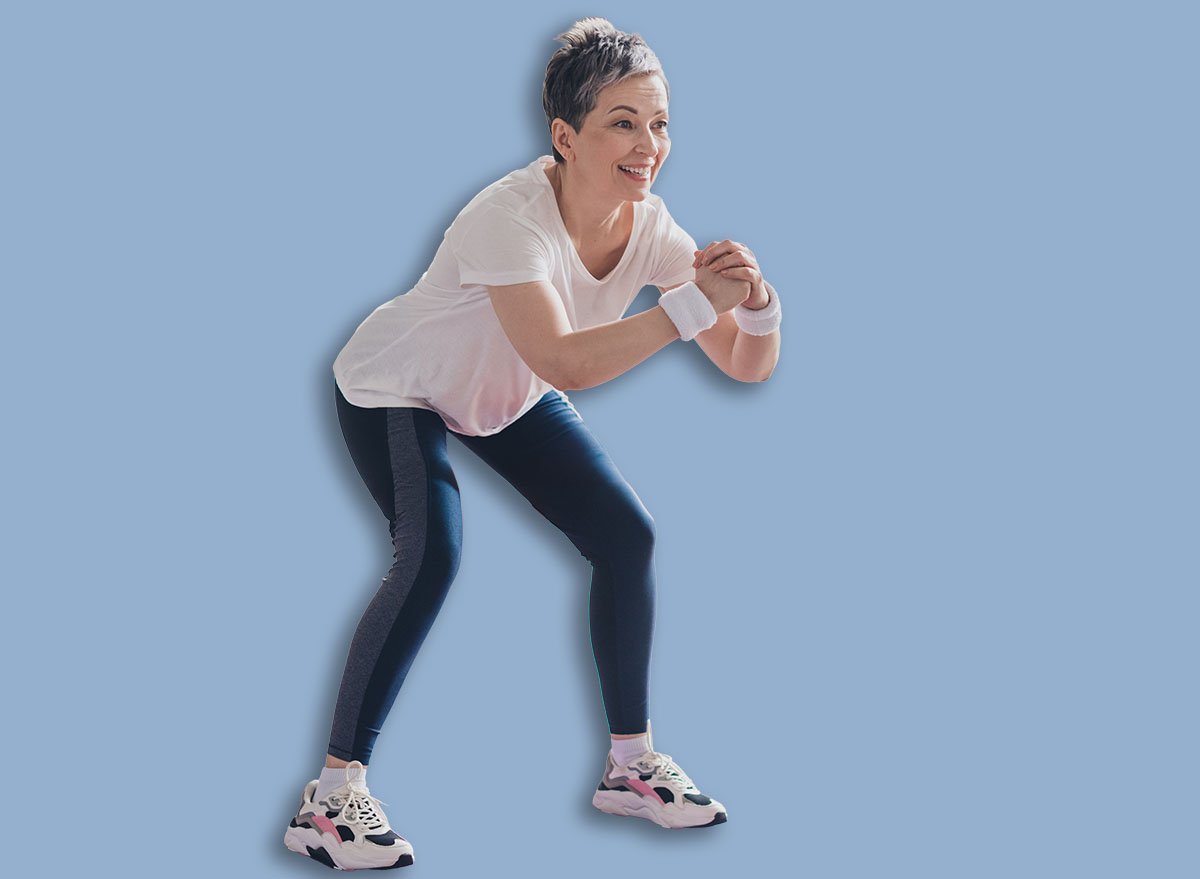
The bodyweight squat is a foundational human movement, essential for countless daily activities, from rising from a chair to retrieving an object from the floor. As an endurance challenge, repeated bodyweight squats engage the largest muscle groups in the lower body—the quadriceps, glutes, and hamstrings—along with significant core stabilization. Each repetition requires coordinated effort, demanding steady respiration and precise joint control through the hips, knees, and ankles. Over a sustained set, this exercise transcends mere strength, becoming a full-body cardiovascular and muscular endurance trial. The capacity to perform multiple repetitions while preserving proper form—maintaining a neutral spine, keeping heels grounded, and allowing knees to track over the toes—is indicative of robust lower body and core stamina. It reinforces efficient movement patterns vital for preventing injury and supporting independence. A key form cue involves exhaling deliberately as one ascends from the squat, which aids in managing intra-abdominal pressure and combating fatigue. Aiming for 15 to 25 continuous repetitions without compromising form offers a solid assessment.
3. Dynamic Standing Knee-to-Elbow Crunch
This exercise introduces a crucial element of dynamic balance and rotational core strength into the endurance equation. The act of bringing an opposite knee and elbow together in a standing position necessitates continuous engagement of the abdominal obliques, hip flexors, and shoulder stabilizers. More importantly, it challenges the body’s proprioceptive system and balance mechanisms, as stability must be actively maintained on one leg while the torso rotates and limbs move. This complex coordination elevates the heart rate more rapidly than static exercises, pushing both cardiovascular and muscular endurance simultaneously. The assessment of endurance here focuses on the individual’s ability to sustain a smooth, controlled rhythm, demonstrating efficient neuromuscular control even as fatigue accumulates. Jerky movements or a loss of balance indicate a breakdown in this integrated coordination. Proper technique emphasizes rotation through the torso rather than pulling on the neck, ensuring the core is the primary driver of the movement. Executing 20 to 30 total repetitions in a continuous flow provides a challenging measure of integrated endurance.
4. Alternating Reverse Lunges
Alternating reverse lunges offer a powerful test of unilateral leg strength, stability, and endurance, with the added benefit of being generally gentler on the knee joints compared to their forward counterparts. Each lunge requires one leg to bear the majority of the body’s weight while the other steps back, demanding significant stabilization from the glutes, quadriceps, and hamstrings of the standing leg, alongside core engagement for overall balance. As repetitions accumulate, the cardiovascular system is challenged, and muscular fatigue builds in the lower body. The continuous alternation between legs ensures that neither side receives prolonged rest, thereby intensifying the endurance demand. The critical indicators of robust endurance in this exercise are the ability to maintain consistent depth in each lunge, controlled balance throughout the movement, and precise knee alignment (front knee stacked over the ankle) without needing to pause or reset. Successfully completing 16 to 24 total repetitions continuously signifies formidable lower body and core endurance, crucial for navigating stairs, uneven terrain, and recovering from minor stumbles.
Achieving the ability to complete this entire sequence without rest signifies not merely good fitness, but an exceptional level of functional endurance that often surpasses the general population within the senior demographic. This capacity speaks to well-preserved muscle strength, efficient cardiovascular conditioning, superior balance, and refined neuromuscular control.
Cultivating Elite Standing Endurance Beyond 60
Developing and maintaining this caliber of standing endurance in later life demands a strategic and consistent approach. The principle of progressive overload is fundamental: gradually increasing the duration, repetitions, or intensity of exercises over time. This could involve extending the marching duration, adding more squat repetitions, or incorporating light weights as tolerated. Consistency is paramount; regular engagement with functional movements, ideally several times a week, reinforces neural pathways and muscular adaptations.
Furthermore, integrating a variety of physical activities beyond these specific exercises can contribute significantly. Walking, swimming, cycling, or even dance can enhance cardiovascular health and overall stamina, creating a robust foundation for more specific standing challenges. Paying meticulous attention to form is crucial, as improper technique not only reduces the effectiveness of an exercise but also increases the risk of injury, potentially derailing progress. Prioritizing recovery through adequate sleep, balanced nutrition, and hydration also plays a vital role in enabling the body to adapt and strengthen. Listening to one’s body, recognizing the difference between challenge and pain, and consulting with healthcare professionals or certified fitness trainers specializing in older adults can provide personalized guidance and ensure safety.
Ultimately, cultivating elite standing endurance past the age of sixty is more than a physical achievement; it is an investment in sustained independence, enhanced quality of life, and the profound freedom to engage fully with the world. It underscores a commitment to active aging, transforming chronological age into a mere number, while functional vitality shines as the true measure of well-being.
About the Author