As individuals navigate the landscape of midlife and beyond, maintaining robust core strength becomes increasingly pivotal, not merely for aesthetic considerations but for overall functional independence and well-being. The natural physiological shifts that accompany aging, such as a gradual decline in muscle mass—a phenomenon known as sarcopenia—and alterations in metabolic rate, often contribute to changes in body composition, including a tendency for increased fat storage in the abdominal region. While the desire for a flatter abdomen is a common aspiration, the deeper imperative lies in cultivating a resilient and supportive core that underpins daily movements, enhances posture, and mitigates the risk of musculoskeletal issues. This article explores a targeted approach to abdominal strengthening, specifically through four accessible chair-based exercises, designed to foster core vitality for those over 55, offering a joint-friendly alternative to more traditional, high-impact routines.
The concept of "spot reduction," or selectively burning fat from a specific body area through exercise, has largely been debunked by scientific consensus. Achieving a more toned abdominal appearance is fundamentally a product of a multi-faceted strategy that combines systemic fat loss through diet and overall activity with specific muscle development. For older adults, this means focusing on strengthening the underlying abdominal musculature to improve tone and support, alongside maintaining an active lifestyle that boosts metabolism and contributes to a healthier body composition. Chair exercises emerge as a particularly advantageous method in this context, providing a stable, supportive environment that minimizes stress on the spine and joints, making them suitable for a wide range of fitness levels and physical conditions.
A strong core is the cornerstone of human movement, acting as a central stabilizer for the entire body. It plays a critical role in almost every physical activity, from standing and walking to lifting and bending. For individuals past their mid-fifties, the benefits extend significantly. Enhanced core strength directly translates to improved balance, reducing the likelihood of falls, which can have severe consequences in later life. Furthermore, a well-supported core helps to alleviate lower back pain by distributing forces more evenly across the spine and pelvis, promoting better posture, and fostering efficient movement patterns. Traditional exercises like planks, while highly effective, can sometimes place undue strain on the neck, shoulders, and lower back, especially for those with pre-existing conditions or limited core awareness. Seated core exercises offer a distinct advantage by allowing for focused muscle engagement with reduced gravitational and compressive forces, facilitating safer and more controlled movements.
The efficacy of these chair-based movements stems from their ability to maintain constant tension on the abdominal muscles while simultaneously engaging the hip flexors. This sustained engagement is crucial for developing endurance and strength in the deeper core stabilizers and the rectus abdominis, particularly its lower fibers. By moving the legs away from the body’s center while seated, the core is compelled to work continuously to stabilize the torso, fostering a heightened mind-muscle connection. This approach not only sculpts the abdominal region but also cultivates better hip control, an essential component for mobility and gait stability as one ages. Integrating these specific exercises with consistent, moderate daily physical activity, such as walking, creates a synergistic routine that supports lean muscle retention, manages blood sugar levels, and ultimately contributes to improved overall physical resilience.
1. Seated Flutter Kicks: Sustained Lower Abdominal Engagement
Seated flutter kicks are an excellent starting point for targeting the lower abdominal complex. This exercise effectively maintains consistent tension on the region below the navel, promoting muscle firmness and endurance. The independent movement of each leg demands continuous stabilization from the core, requiring the abdominal muscles to counteract momentum and control the motion throughout the exercise. This process activates the deeper fibers of the rectus abdominis without imposing excessive stress on the spinal column. Beyond core benefits, seated flutter kicks also contribute to strengthening the hip flexors, which are integral for efficient walking mechanics and maintaining an upright posture.
To perform seated flutter kicks, position yourself on the edge of a sturdy chair with your back straight and your feet flat on the floor. Lightly grasp the sides of the chair for support, ensuring your shoulders remain relaxed and your chest is open. Lean back slightly from your hips, engaging your abdominal muscles to prevent slouching. Lift both feet a few inches off the floor. From this elevated position, alternately perform small, controlled up-and-down movements with your legs, mimicking a swimming kick. The key is to keep the movement fluid and controlled, avoiding jerky motions. Focus on maintaining a tall spine and engaging your lower abs throughout. For enhanced challenge, explore variations such as bent-knee flutter kicks to reduce lever length, slow-tempo flutter kicks to increase time under tension, or hands-free flutter kicks (if balance permits) to further intensify core demand. Aim for three sets of 20 to 30 alternating kicks, incorporating a 30-second rest period between each set to allow for partial recovery. This exercise strengthens the lower abdominals, hip flexors, quadriceps, and deep core stabilizers.
2. Seated Scissor Kicks: Enhancing Rotational Core Stability
Building upon the foundation of flutter kicks, seated scissor kicks introduce a longer range of motion and an element of rotational resistance, significantly challenging the lower abdominal muscles. The act of crossing the legs requires the core to actively resist rotation, thereby increasing the recruitment of various abdominal muscle groups, including the obliques. This dynamic pattern develops strength that directly translates to essential everyday movements such as stepping, turning, and climbing stairs, which often involve rotational forces. Executing the movement with deliberate slowness intensifies the workload on the abdominal muscles, forcing them to control the motion rather than relying on momentum.
To execute seated scissor kicks, sit at the front edge of a stable chair, maintaining an upright posture. Lean back marginally from your hips, bracing your core, and lightly hold the chair sides for stability. Elevate both feet a few inches off the ground. From this position, slowly cross one leg over the other, then uncross and cross the opposite leg over, in a continuous, controlled "scissoring" motion. The emphasis should be on smooth, deliberate movements where your abdominal muscles dictate the pace. Ensure your lower back remains stable and does not arch or round excessively. Modifying the exercise can involve bent-knee scissor kicks for reduced difficulty, pausing briefly at the crossover point for increased isometric tension, or alternating between slow and faster repetitions to challenge muscle endurance and power. Perform three sets of 16 to 20 total crosses, resting for 30 seconds between sets. This exercise targets the lower abdominals, hip flexors, inner thighs, and deep core stabilizers.
3. Seated Knee Tucks: Developing Core Bracing and Hip Coordination
Seated knee tucks are an effective exercise for concentrically and eccentrically loading the lower abdominal muscles, promoting both strength and control. The action of drawing the knees towards the chest inherently reinforces proper core bracing—the act of tightening the abdominal muscles to stabilize the spine—and refines hip coordination. This movement is particularly valuable as it teaches the crucial skill of engaging the core before initiating leg movement, a fundamental principle for safeguarding the lower back during various activities. Over time, mastering this coordination can make a wide range of everyday movements feel considerably easier and safer.
To perform seated knee tucks, sit tall on the edge of your chair with your hands gripping the sides. Engage your core, then lean back slightly, extending your legs forward without letting your feet touch the floor. In a controlled manner, simultaneously draw both knees towards your chest, crunching your lower abdominals. As your knees come in, consciously exhale to deepen the core engagement. Then, slowly extend your legs back to the starting position. Focus on maintaining control throughout the entire range of motion, avoiding any swinging or momentum. For variations, consider single-knee tucks for independent leg strength, slow-tempo knee tucks for increased time under tension, or extended-pause knee tucks to build isometric strength at the peak contraction. Complete three sets of 10 to 15 repetitions, allowing for a 45-second rest interval between sets. This exercise engages the lower abdominals, hip flexors, rectus abdominis, and deep core stabilizers.
4. Seated Leg Raise: Isolating Lower Abdominal Strength
The seated leg raise offers a potent way to isolate the lower abdominal muscles while actively minimizing reliance on momentum. The challenge of lifting both legs simultaneously compels the core to exert significant effort in stabilizing the pelvis and lumbar spine. Beyond its primary effect on the lower abdominals, this exercise also considerably strengthens the hip flexors, which are instrumental in improving balance and enhancing the efficiency and stability of one’s gait. Its inherent simplicity belies its effectiveness, and the exercise is readily scalable to accommodate improvements in strength.
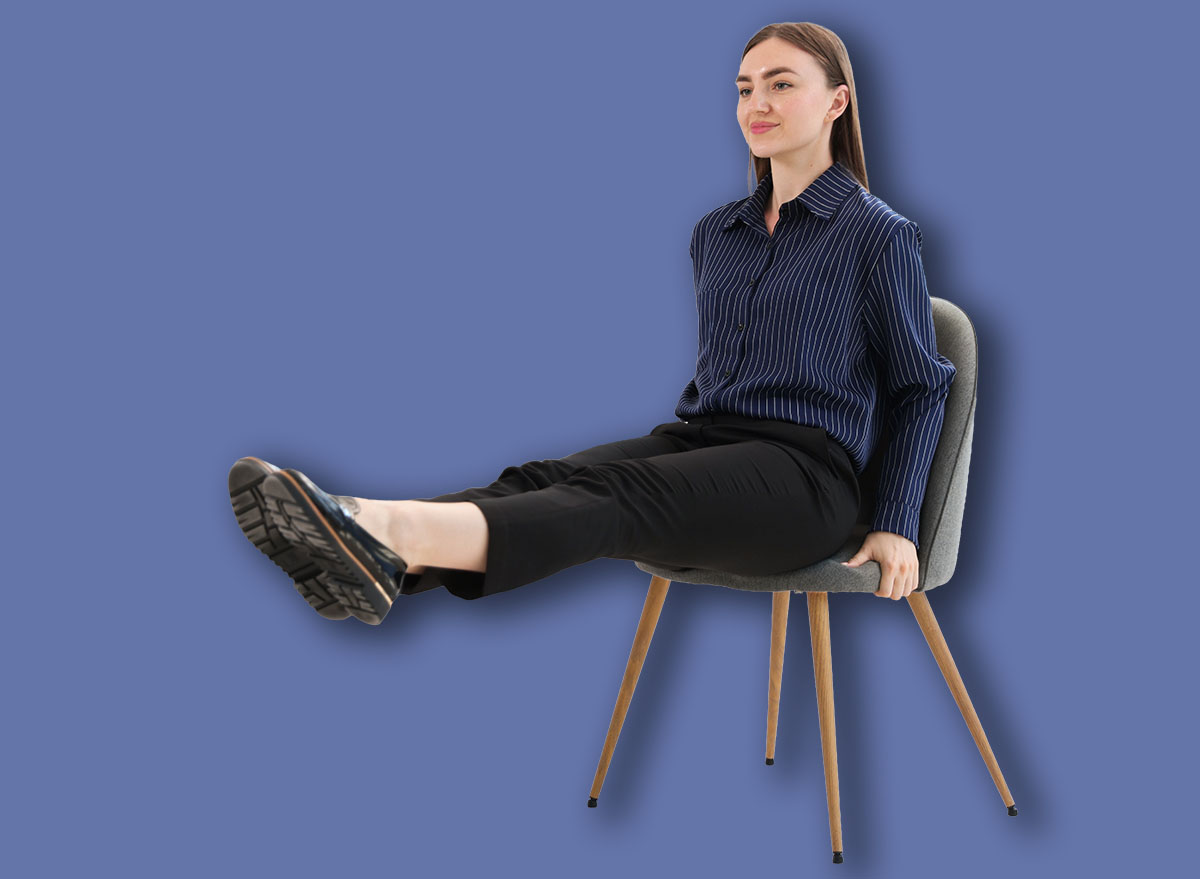
To execute the seated leg raise, sit upright on a sturdy chair, gripping the sides for support. Lean back slightly, maintaining a strong, engaged core. Extend your legs forward, keeping them straight and together, lifted just a few inches off the floor. From this starting position, slowly lift both legs upward as high as comfort and core control allow, focusing on pulling them up using your abdominal muscles rather than just your hip flexors. Avoid arching your lower back. Gently lower your legs back to the starting position, maintaining control and preventing them from dropping quickly. Modifications include bent-knee leg lifts for reduced intensity, alternating leg lifts for continuous core engagement, or extended-hold leg lifts at the peak of the movement to build isometric strength. Aim for three sets of 8 to 12 repetitions, with a 45-second rest period between sets. This exercise primarily targets the lower abdominals, hip flexors, quadriceps, and core stabilizers.
To maximize the benefits derived from these chair-based core workouts, it is crucial to approach them with the same dedication and focus as any other strength training regimen. Prioritize the quality of each repetition over the sheer quantity. Cultivate a strong mind-muscle connection, consciously feeling the engagement of your abdominal muscles throughout each movement. Controlled breathing, exhaling during the most challenging part of the exercise, further enhances core activation and stability. Slowing down the tempo of each repetition significantly increases the time under tension, a key factor in muscle development and improved control.
Consistency stands as a more powerful determinant of long-term body composition and strength improvements than sporadic bursts of intense effort. Integrate these chair exercises into a regular routine, perhaps as part of your daily movement breaks or as a warm-up before other activities. Complementing these targeted core exercises with daily walking or light strength training ensures continued metabolic activity and holistic fitness benefits. Building a stronger, more defined lower abdominal region after 55 is a journey of consistent, intelligent habits. These chair-based exercises provide an accessible and effective entry point, with optimal results realized when they are part of a comprehensive approach to health and well-being. By committing to these movements and maintaining an active lifestyle, individuals can expect to experience a core that feels stronger, tighter, and more resilient, significantly contributing to an enhanced quality of life.
About the Author