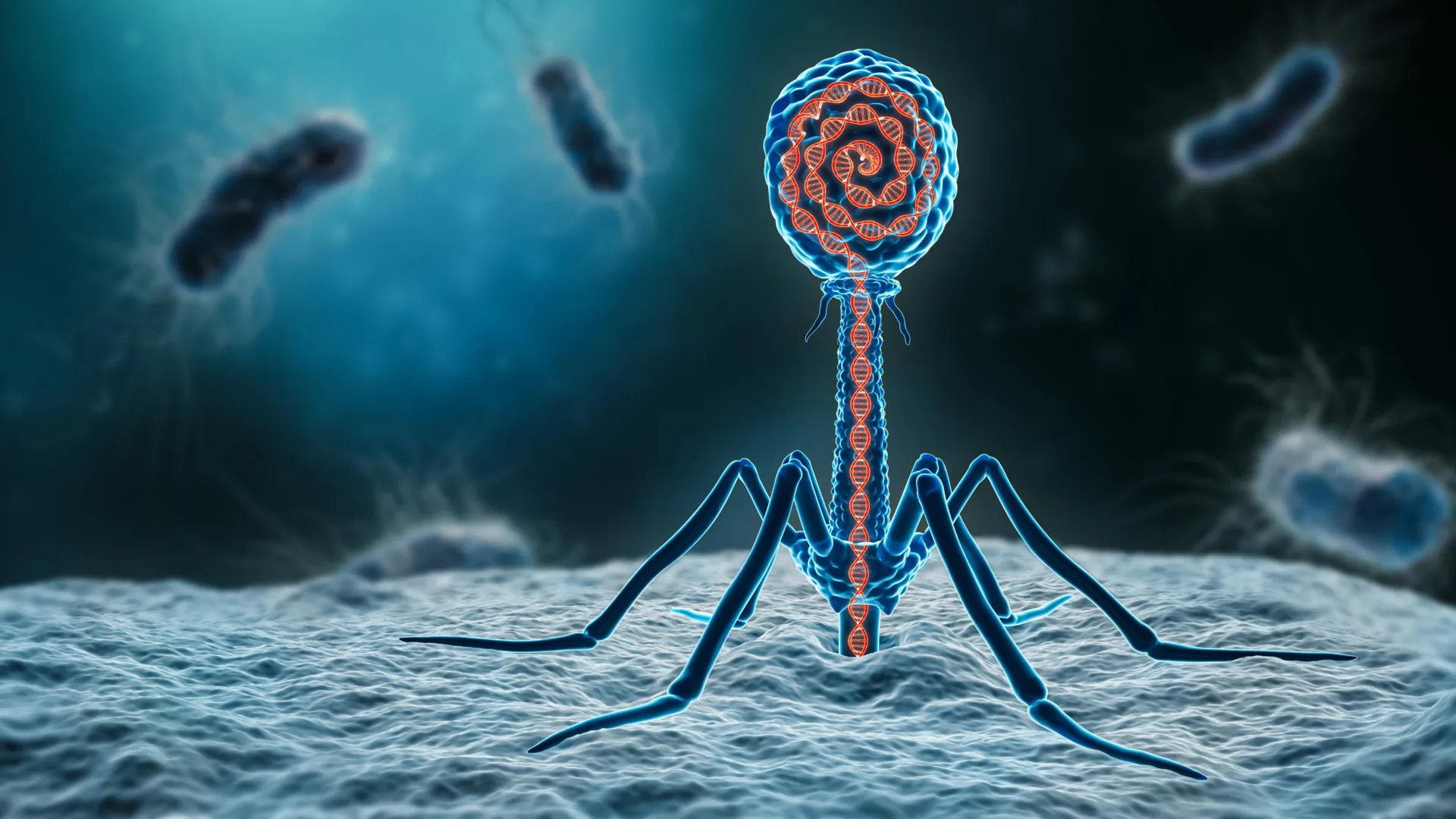
For over a century, bacteriophages – viruses that prey exclusively on bacteria – have held a place in the medical arsenal for combating bacterial infections. This historical therapeutic modality is experiencing a resurgence in interest, driven by the escalating global crisis of antibiotic resistance, a formidable threat to public health. However, the advancement of phage-based therapies has been historically constrained by the inherent limitations of working with naturally occurring phages. Conventional methods for modifying these viruses are characterized by their laborious nature, intricate protocols, and significant challenges in achieving scalable production.
In a groundbreaking development reported in the latest issue of the Proceedings of the National Academy of Sciences (PNAS), a collaborative effort between scientists at New England Biolabs (NEB) and Yale University has unveiled the first fully synthetic platform dedicated to engineering bacteriophages. This innovative system is specifically designed to target Pseudomonas aeruginosa, a bacterium notorious for its high levels of antibiotic resistance and its status as a critical global health concern. The cornerstone of this revolutionary approach is NEB’s proprietary High-Complexity Golden Gate Assembly (HC-GGA) platform. This sophisticated technology empowers researchers to design and construct entirely new phage genomes from digital DNA sequence data, thereby circumventing the need to rely on pre-existing viral samples.
Leveraging this cutting-edge system, the research team successfully assembled a P. aeruginosa-targeting phage from a meticulously designed set of 28 synthetic DNA fragments. This custom-built virus was then endowed with novel functionalities through the precise introduction of single-point mutations, as well as strategic insertions and deletions of DNA sequences. These carefully orchestrated genetic modifications enabled the researchers to achieve remarkable feats, such as altering the tail fiber genes to direct the phage’s infectivity towards specific bacterial species and incorporating fluorescent reporter genes, which allowed for real-time visualization of infection events.
Andy Sikkema, a Research Scientist at NEB and a co-first author of the study, elaborated on the transformative impact of this synthetic methodology. He noted that, historically, the engineering of bacteriophages has been an exceptionally resource-intensive endeavor, with researchers dedicating entire careers to developing processes for modifying specific model bacteriophages within host bacteria. Sikkema emphasized that the newly developed synthetic method represents a significant technological leap, offering unparalleled advantages in terms of simplicity, inherent safety, and accelerated pace, thereby opening new avenues for both fundamental biological discovery and the development of novel therapeutic agents.
The foundation of this synthetic phage construction lies in NEB’s advanced Golden Gate Assembly platform. This technology facilitates the precise assembly of an entire phage genome ex vivo, utilizing synthesized DNA fragments. Crucially, all intended genetic modifications can be incorporated during the initial construction phase. Once the synthetic genome is fully assembled, it is introduced into a secure laboratory bacterial strain, where it is then replicated and matures into an active bacteriophage.
This elegantly designed strategy effectively bypasses numerous long-standing impediments that have historically hampered phage research. Traditional methodologies are heavily dependent on the meticulous maintenance of physical phage stocks and the utilization of specialized host bacteria. This reliance can become particularly problematic when working with phages that target highly pathogenic bacteria posing significant risks to human health. The novel synthetic approach, in contrast, liberates researchers from these constraints, eliminating the necessity for laborious, iterative rounds of genetic screening or piecemeal genetic editing within living cellular environments.
The distinct advantages of the Golden Gate Assembly method are central to its efficacy. Unlike other DNA assembly techniques that typically involve combining fewer, but larger, DNA fragments, the Golden Gate Assembly system employs the precise concatenation of numerous shorter DNA segments. These shorter constituent pieces are not only more readily synthesized but also exhibit reduced toxicity to host cells and a lower propensity for incorporating errors. Furthermore, this method demonstrates remarkable robustness and efficiency even when dealing with phage genomes that possess challenging characteristics, such as extensive repetitive DNA sequences or extreme guanine-cytosine (GC) content – features that frequently complicate conventional DNA assembly processes.
By streamlining the engineering workflow and expanding the realm of technical possibilities, this innovative approach significantly amplifies the potential for developing bacteriophages as highly targeted and effective therapeutics against the escalating threat of antibiotic-resistant infections.
The genesis of this rapid, synthetic phage engineering system is a testament to the power of sustained collaboration. It emerged from a close and productive partnership between the dedicated scientists at NEB and leading bacteriophage researchers at Yale University. NEB had invested years in meticulously refining the Golden Gate Assembly methodology, ensuring its capacity to reliably assemble large and complex DNA targets composed of numerous individual fragments. Recognizing the profound implications of these advanced tools for the field of phage biology, the Yale research team proactively engaged with NEB to explore the potential for more ambitious and groundbreaking applications.
The initial optimization of the Golden Gate Assembly method was undertaken by NEB scientists using Escherichia coli phage T7, a well-characterized and extensively studied model virus. Building upon this successful foundation, collaborative teams subsequently extended the application of this technique to non-model phages, specifically those capable of targeting some of the most formidable antibiotic-resistant bacteria currently known.
Further underscoring the versatility and broad applicability of this Golden Gate approach, related research has demonstrated its utility in constructing high-GC content Mycobacterium phages. This work, published in PNAS in November 2025, was a collaborative endeavor with the Hatfull Lab at the University of Pittsburgh and Ansa Biotechnologies. In another compelling example of its diverse applications, researchers from Cornell University partnered with NEB to engineer synthetic T7 phages that function as highly sensitive biosensors for the detection of E. coli in drinking water. This innovative application was detailed in an ACS study published in December 2025.
Greg Lohman, Senior Principal Investigator at NEB and a co-author of the PNAS study, aptly described the synergy between tool development and application. He stated that his lab often develops specialized tools, metaphorically referred to as "weird hammers," and then seeks out the appropriate challenges, or "nails," upon which they can be effectively applied. In this particular instance, the phage therapy community expressed profound enthusiasm, recognizing this engineered phage system as precisely the innovative tool they had been eagerly awaiting to address critical unmet needs in combating bacterial infections.
About the Author