As individuals navigate the landscape of fitness beyond the age of fifty, the approach to body composition management and overall well-being often requires thoughtful recalibration. While the desire to maintain a lean physique and robust health remains strong, the physiological realities of aging necessitate a shift from high-intensity, potentially joint-straining regimens to more sustainable, joint-friendly modalities. This exploration delves into the rationale behind prioritizing consistent, low-impact physical activity as a superior strategy for optimizing metabolic health and reducing adiposity in later life, contrasting it with the often-touted but sometimes counterproductive high-intensity interval training (HIIT) for this demographic.
The human body undergoes a series of natural transformations as it ages, impacting how it responds to exercise and recovers from physical stress. Muscle mass, crucial for metabolic rate and strength, typically begins to decline in a process known as sarcopenia from around age 30, accelerating after 50. Connective tissues, including tendons and ligaments, lose some of their elasticity, and cartilage in joints can show signs of wear, making them more susceptible to injury from high-impact activities. Furthermore, hormonal shifts can influence fat storage patterns and reduce the body’s overall capacity for stress adaptation and recovery. The endocrine system, responsible for regulating hormones like cortisol (a stress hormone) and growth hormone, becomes less efficient, meaning recovery from strenuous exertion takes longer and is less complete. For older adults, repeated bouts of maximal effort, characteristic of many HIIT protocols, can push these systems beyond their adaptive capacity, potentially leading to increased inflammation, elevated cortisol levels, diminished immune function, and a higher risk of musculoskeletal injuries. Instead of fostering fat loss, such an approach can paradoxically stall progress by inducing chronic stress and overtraining symptoms, making consistent adherence difficult.
In contrast, a paradigm centered on daily, moderate, and low-impact movement harnesses the body’s natural ability to burn fat and build resilience without incurring excessive physiological cost. This strategy acknowledges that sustained, consistent energy expenditure, coupled with improved movement quality and joint health, forms a more robust foundation for long-term body composition improvements. Low-impact activities allow for a steady-state elevation of heart rate, which promotes fat oxidation as a primary fuel source, and can enhance insulin sensitivity, a critical factor in metabolic health that often declines with age. By avoiding the extreme peaks of intensity, these routines minimize the release of stress hormones and reduce the cumulative wear and tear on joints. The emphasis shifts from maximal effort to mindful engagement, focusing on proper form, controlled tension, and continuous movement across the entire body. This approach not only supports sustained metabolic activity but also cultivates better body awareness, balance, and coordination, all vital components of healthy aging.
Here are six foundational low-impact movement patterns that, when integrated into a daily routine, can significantly contribute to enhanced metabolic function and sustainable fat reduction for individuals over fifty:
1. Dynamic Ambulatory Movement with Propulsive Arm Engagement:
This exercise elevates the foundational act of walking into a comprehensive, full-body metabolic stimulus. Merely strolling might not suffice for significant caloric expenditure, but intentionally incorporating a vigorous, rhythmic arm swing transforms it. Actively driving the arms forward and backward from the shoulders engages the upper body musculature, including the shoulders, back, and core, without adding impact. This coordinated motion naturally increases heart rate and oxygen consumption, boosting calorie burn. The focus is not on speed, but on the deliberate engagement of the entire kinetic chain, maintaining an upright posture and a purposeful gait. Regular practice of this enhanced walking technique not only encourages the body to utilize fat reserves for energy but also reinforces healthy joint mechanics in the hips, knees, and ankles, while simultaneously building cardiovascular endurance and core stability. Over time, this consistent, gentle challenge surpasses the sporadic, high-risk benefits often associated with more aggressive training methods by fostering sustainable progress and minimizing recovery demands.
2. Controlled Unilateral Leg Lifts with Core Stabilization:
The standing march, when performed with precision and a braced core, serves as a powerful yet gentle means to stimulate metabolic demand and improve functional strength. This movement involves lifting one knee towards the chest while maintaining balance on the opposing leg. The "core brace" aspect is critical: actively engaging the abdominal muscles to stabilize the trunk prevents compensatory movements and ensures that the hips, glutes, and core musculature bear the intended workload. This unilateral (single-leg) loading is a fundamental pattern for daily activities and strengthens the muscles responsible for balance and gait. By elevating the heart rate through continuous, controlled leg movements and simultaneously challenging core stability, this exercise promotes fat metabolism without subjecting the joints to jarring forces. Executed with a mindful, slower tempo, it enhances effectiveness by requiring greater control and sustained muscular tension, rather than relying on momentum.
3. Posterior Step Flow with Upper Body Integration:
Stepping backward into a modified lunge or flow pattern offers distinct advantages for individuals seeking to reduce joint stress while increasing muscular engagement. Unlike forward lunges, which can place greater shear force on the knee, stepping backward often feels more natural and protective for the knee joint. This exercise involves a continuous, fluid motion where one leg steps back, the body descends slightly, and then returns to the starting position, followed by the other leg. Integrating arm movements, such as a gentle reach or swing as the leg steps back, further increases the total muscular workload and cardiovascular demand. This rhythmic, non-impact sequence activates the large muscles of the hips, glutes, and thighs, sustaining calorie expenditure without the need for explosive movements. Consistent daily performance of this flow significantly enhances lower body strength, improves flexibility in the hip flexors, and boosts cardiovascular efficiency, enabling longer periods of activity which are often more effective for fat loss than short, intense bursts in an older population.
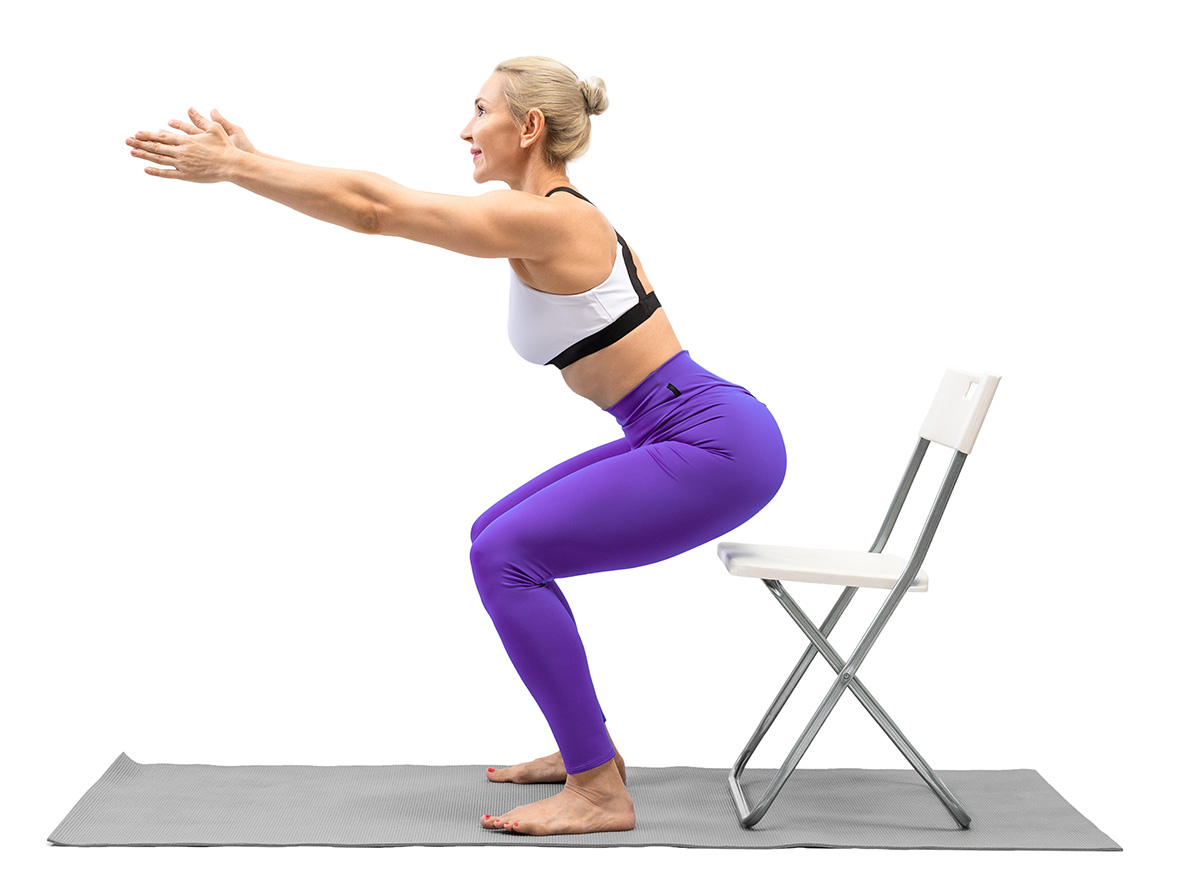
4. Supported Articulated Lower Body Descent and Ascent:
Squats are indispensable for building and maintaining lower body strength, a cornerstone of metabolic health and functional independence. For individuals over fifty, achieving proper depth and maintaining form can sometimes be challenging or lead to joint discomfort. Utilizing a chair or bench for assistance provides a controlled environment for consistent practice. The "chair-assisted squat rhythm" involves sitting down onto the chair and then standing back up, focusing on a smooth, controlled descent and ascent. The chair acts as a guide, ensuring appropriate depth and allowing for momentary rest if needed, thus minimizing joint irritation. This repetitive, controlled activation of the glutes, quadriceps, and hamstrings effectively elevates metabolism and reinforces correct movement patterns without high impact. By placing these large muscle groups under steady tension, this method builds muscular endurance and encourages the body to tap into fat stores for energy. Over time, consistent engagement with supported squats transforms the lower body into a more efficient metabolic engine, supporting long-term fat reduction and enhancing daily mobility.
5. Standing Multi-Planar Torso Rotations with Reaching Extension:
Rotational movements are often overlooked in low-impact routines but are crucial for core strength, spinal health, and overall functional fitness. The "standing cross-body reaches" engage the core, shoulders, and hips simultaneously, promoting an elevated heart rate and targeting the oblique muscles responsible for waist definition. This exercise involves standing upright and rotating the torso to reach across the body with one arm while the opposite arm extends back, mimicking a gentle, controlled twist. The standing posture inherently challenges balance and coordination, further enhancing neural pathways without placing undue stress on the joints. Daily incorporation of these rotational movements improves movement efficiency, increases total energy expenditure, and enhances spinal mobility. This makes it an exceptionally powerful tool for fat loss, particularly around the midsection, without the significant recovery costs associated with explosive, high-intensity core training.
6. Weighted Proprioceptive Gait Enhancement:
The "loaded carry march," a variation of the classic farmer’s carry, combines strength, balance, and endurance into a highly effective, low-impact routine. This exercise involves walking while holding a moderate weight (such as dumbbells, kettlebells, or even weighted bags) in one or both hands. The act of carrying weight immediately elevates heart rate and demands full-body tension, particularly engaging the core, grip, shoulders, and back to maintain an upright posture. Unlike HIIT, where intensity fluctuates wildly, the loaded carry provides a manageable yet challenging intensity that can be sustained and repeated daily. This consistent muscular involvement boosts calorie burn and reinforces crucial postural and bracing mechanics, which are vital for preventing injuries and improving functional strength in everyday life. Even short sessions of weighted carries create a powerful metabolic effect without imposing excessive strain on the joints, making them an excellent choice for building resilient strength and promoting fat loss in the over-50 demographic.
In conclusion, for individuals seeking effective and sustainable strategies for body fat management and overall wellness beyond the age of fifty, a shift towards consistent, low-impact daily movements offers a compelling alternative to high-intensity paradigms. These six foundational exercises, when practiced regularly and with mindful attention to form, leverage the body’s natural capacities for fat oxidation, muscle maintenance, and joint preservation. By prioritizing continuity over extreme effort, and focusing on quality of movement rather than sheer speed or power, older adults can cultivate a fitness regimen that not only yields tangible improvements in body composition but also significantly enhances mobility, reduces pain, boosts mental well-being, and ultimately contributes to a higher quality of life for years to come. The journey to optimal health in later life is best navigated through consistent, intelligent movement that respects the body’s evolving needs and capabilities.
About the Author