As individuals navigate the landscape of life beyond the age of 55, maintaining robust physical health becomes increasingly vital for preserving independence, enhancing quality of life, and mitigating the natural physiological declines associated with aging. A primary concern in this demographic is sarcopenia, the progressive loss of muscle mass and strength, which can significantly impair mobility, increase fall risk, and reduce metabolic efficiency. Concurrently, bone mineral density often decreases, making the skeletal system more vulnerable. While traditional gym-based strength training offers undeniable benefits, it is not always the most accessible or preferred option for everyone. Fortunately, one of humanity’s most fundamental movements—walking—can be strategically transformed into a potent tool for muscular development, joint health, and overall functional fitness, often surpassing the practical benefits of more conventional workouts for this age group when executed with intention and structure.
The perception of walking often relegates it to purely cardiovascular exercise or casual ambulation. However, by introducing specific modifications and adopting a deliberate approach, walking transcends its basic form to become a comprehensive regimen that challenges the musculoskeletal system. This intentional engagement fosters adaptation, leading to measurable gains in strength, stability, and power. The inherent advantages of walking-based strength protocols include their low impact nature, ease of integration into daily routines, and the utilization of movement patterns that directly translate to real-world activities. This approach prioritizes frequent, controlled loading within natural ranges of motion, aligning perfectly with the physiological demands of mature bodies.
Consistency emerges as a cornerstone of effective strength building, particularly in later adulthood. Unlike infrequent, high-intensity gym sessions that can lead to soreness or overtraining, strategically modified walking offers a sustainable pathway to stimulate muscle tissue regularly. These frequent, smaller doses of muscular work accumulate over time, yielding substantial improvements in strength, endurance, and coordination through the principle of progressive volume and repetition, without the associated fatigue or joint stress often encountered with heavier lifting. This method ensures that the body receives continuous signals to adapt and fortify itself, fostering a foundation of resilience that supports active living for decades.
To unlock the full potential of walking as a strength-building modality, consider incorporating specialized drills that introduce targeted challenges. These enhancements are designed to amplify muscle activation, improve balance, and boost overall functional capacity without requiring complex equipment or specialized facilities. The following four protocols offer diverse methods to elevate your daily stroll into a powerful fitness intervention.
1. Augmented Resistance Ambles (Weighted Vest Walks)
The concept of progressive overload is fundamental to strength development, and for walking, a weighted vest provides a highly effective and joint-friendly means to apply this principle. By donning a vest with additional mass, every step taken demands greater muscular effort from the lower body and core. The added gravitational burden forces the quadriceps, hamstrings, glutes, and calves to work harder against resistance, intensifying their contraction during both the stance and swing phases of gait. Simultaneously, the core musculature, including the abdominal and back stabilizers, must engage more robustly to maintain an upright posture and counteract the increased load, thereby enhancing trunk stability.
This continuous, distributed tension promotes hypertrophy—the growth of muscle fibers—and significantly contributes to improved bone mineral density through axial loading, a critical factor in combating osteoporosis. Unlike carrying weights in hand, a vest distributes the load evenly across the torso, minimizing strain on individual joints and allowing for natural arm swing.
To implement this: Select a vest with adjustable weight increments, starting with a manageable load (e.g., 5-10% of body weight) and gradually increasing as strength improves. Integrate 2-4 walking sessions of 10-20 minutes each, allowing for a brief 60-second recovery period between bouts if desired. Focus on maintaining an elongated spine and stable rib cage throughout the movement, ensuring that the added weight enhances rather than compromises your natural gait. Benefits extend to improved leg power, core resilience, and skeletal integrity.
2. Integrated Compound Movements (Squats or Lunges within Walks)
Incorporating compound exercises like squats or lunges into a walking routine introduces bursts of multi-joint, higher-intensity muscular work that directly translates to essential daily functions. These movements demand deeper articular flexion, engaging major muscle groups through a greater range of motion than standard walking. Performing squats or lunges intermittently during a walk provides direct loading to the glutes, quadriceps, and hamstrings, challenging them to generate significant force from a static or near-static position. This dynamic interruption also places considerable demands on balance and proprioception, enhancing neuromuscular coordination.

The strategic combination of steady ambulation with intermittent, strength-focused pauses ensures continuous muscular activation while preventing excessive fatigue. This protocol directly improves the functional strength required for common tasks such as rising from a seated position, ascending stairs, or safely lowering oneself to the ground.
To implement this: During your walk, identify natural checkpoints or intervals (e.g., every five minutes, or after a specific number of steps). Stop and perform 8-12 repetitions of squats or lunges (alternating legs for lunges). After a brief 30-second recovery, resume walking. Consider variations such as chair-assisted squats for added support or reverse lunges to emphasize posterior chain muscles and reduce knee stress. Concentrate on a controlled eccentric (lowering) phase and maintaining balanced foot placement to maximize effectiveness and minimize injury risk.
3. Ascending Gradient Expeditions (Incline Walking)
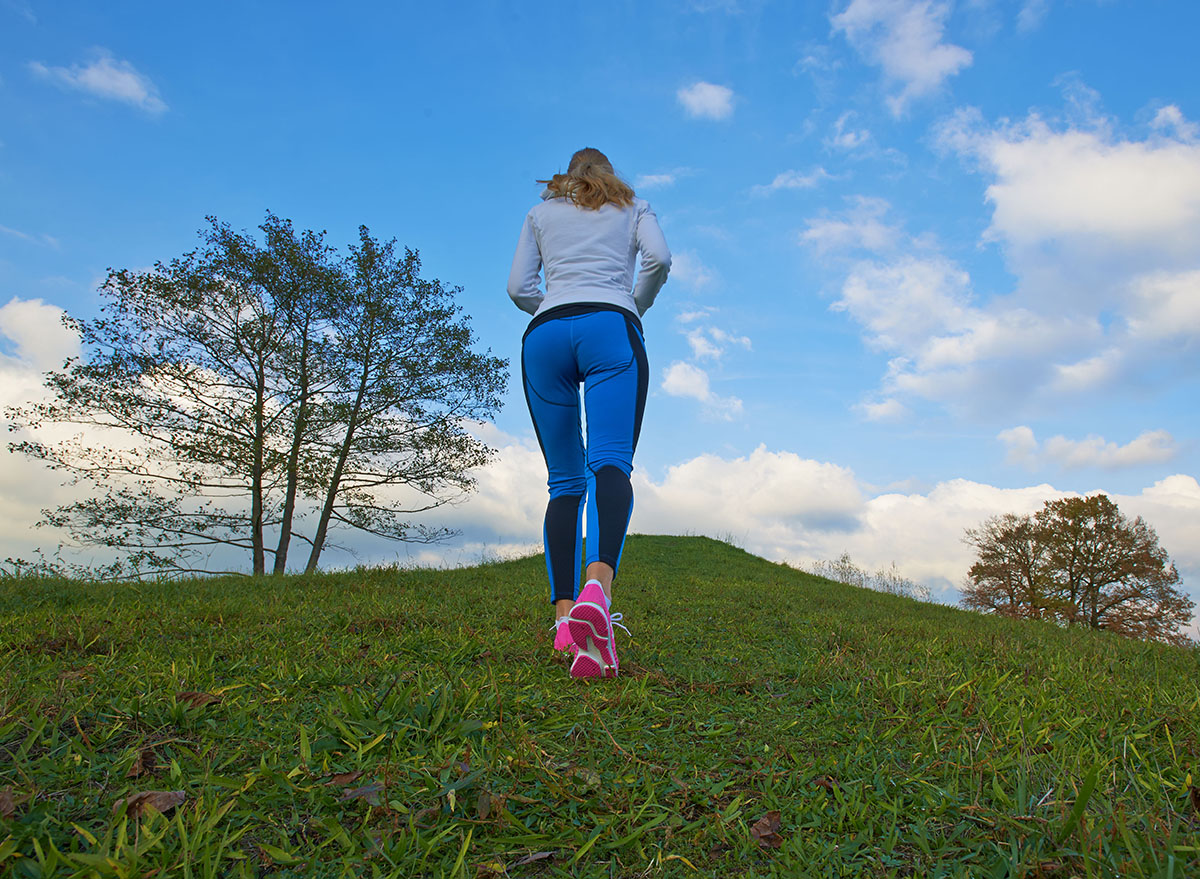
Introducing an incline, whether on a natural hill or a treadmill, fundamentally alters the biomechanics of walking, shifting the primary workload to the posterior kinetic chain—specifically the glutes and hamstrings—while maintaining a low-impact profile. As you ascend, gravity necessitates greater hip extension and knee flexion with each step, demanding significantly more propulsive force from the powerful muscles of the hips and posterior thighs. This targeted activation is crucial for developing strength in muscle groups vital for maintaining upright posture, preventing falls, and enhancing overall balance and gait efficiency.
Beyond muscular benefits, incline walking also offers a potent cardiovascular stimulus. It elevates heart rate and improves cardiorespiratory endurance more effectively than flat walking, often at a lower perceived exertion level compared to running, making it an excellent option for improving stamina without excessive joint stress.
To implement this: Seek out long, gradual hills in your neighborhood or utilize the incline function on a treadmill. Perform 3-5 incline walking segments, each lasting 3-5 minutes, with a 60-second recovery period of flat walking or rest between efforts. Focus on pushing the ground behind you rather than leaning excessively forward, which can strain the lower back. This emphasis on hip drive optimizes gluteal activation and ensures efficient force transfer.
4. Intermittent High-Intensity Locomotion (Power Walking Intervals)
Power walking intervals represent a form of interval training tailored for walking, designed to enhance both muscular power and cardiovascular capacity without resorting to running. By alternating periods of brisk, vigorous walking with periods of recovery at a moderate pace, this drill recruits a broader spectrum of muscle fibers, including the fast-twitch fibers often underutilized in steady-state ambulation. Faster walking demands increased force output from the legs and necessitates a more active arm drive and quicker cadence, thereby challenging coordination and rhythm.
These short bursts of intensified effort contribute significantly to leg strength, improve gait speed, and refine overall movement efficiency. Furthermore, the intermittent nature of this training method elevates cardiovascular endurance by pushing the heart and lungs to adapt to fluctuating demands, leading to improved stamina and the ability to respond quickly to dynamic environmental challenges.
To implement this: Incorporate 6-10 intervals of power walking, each lasting 30-60 seconds, followed by 60-90 seconds of recovery at a comfortable pace. Focus on increasing your speed by accelerating your arm swing and taking quicker, more deliberate steps, rather than overstriding, which can be inefficient and increase impact. Examples include short uphill bursts, timed street block intervals, or treadmill speed adjustments. This method is excellent for developing reactive strength and improving the overall fluidity and robustness of your gait.
Cultivating Enduring Strength Through Structured Walking
To maximize the benefits of these advanced walking protocols, it is essential to approach them with the same intentionality and discipline typically applied to traditional strength training. Viewing walking not merely as a form of casual movement but as a strategic exercise regimen is paramount.
- Systematic Progression: Gradually increase the duration, intensity (e.g., vest weight, incline steepness, interval speed), or frequency of your drills as your strength and endurance improve. Avoid sudden jumps in difficulty that could lead to injury or discouragement.
- Prioritize Biomechanical Alignment: Pay close attention to your posture and movement mechanics during each drill. Maintaining an upright torso, engaged core, and balanced foot strike not only enhances effectiveness but also prevents compensatory movements and potential strain.
- Listen to Physiological Feedback: Distinguish between muscle fatigue, which is a sign of effective training, and joint pain, which indicates potential injury. Adjust your intensity or take rest days as needed, honoring your body’s signals.
- Supportive Footwear: Invest in comfortable, supportive walking shoes that provide adequate cushioning and stability to protect your joints and optimize performance.
- Hydration and Nutritional Synergy: Ensure adequate hydration before, during, and after your walks. A balanced diet rich in protein supports muscle repair and growth, complementing your training efforts.
- Professional Guidance: For individuals with pre-existing health conditions, or those new to structured exercise, consulting a healthcare provider or a certified fitness professional is advisable to tailor these protocols safely and effectively to individual needs.
By systematically integrating these advanced walking techniques, individuals over 55 can transcend the limitations often associated with aging, building significant muscular strength, enhancing functional mobility, and fostering a profound sense of independence. This structured approach to ambulation transforms an everyday activity into a powerful, sustainable habit that supports a vibrant and active lifestyle for years to come.
About the Author