As the global population ages, the imperative to maintain physical robustness and autonomy throughout later life has never been more pronounced. For men navigating the physiological shifts that accompany the passage of the mid-fifties, proactive engagement in targeted physical conditioning becomes a cornerstone of sustained vitality. While the natural aging process inherently involves a gradual decline in muscle mass and strength, a phenomenon scientifically termed sarcopenia, this trajectory is not inevitable. Instead, evidence overwhelmingly supports the transformative power of resistance training as a potent antidote, preserving not just physical capabilities but also significantly enhancing overall quality of life and independence.
Sarcopenia, characterized by the progressive and generalized loss of skeletal muscle mass, strength, and function, typically commences around the age of 30, accelerating significantly after 50. This isn’t merely about diminished aesthetic appeal; the implications are far-reaching, affecting everything from metabolic health and bone density to balance and mobility. Reduced muscle strength can compromise the ability to perform routine daily activities, such as ascending stairs, carrying groceries, rising from a seated position, or even maintaining equilibrium, thereby increasing the risk of falls and subsequent injuries. The cumulative effect can be a substantial reduction in an individual’s capacity to live independently, necessitating assistance and potentially leading to a more sedentary lifestyle, which further exacerbates muscle atrophy.
In this context, resistance training emerges as the most effective intervention. Unlike cardiovascular exercise, which primarily targets the heart and circulatory system, resistance training directly stimulates muscle tissue, prompting adaptation and growth. It challenges muscles against an external load—be it free weights, resistance bands, or machines—causing microscopic tears in the muscle fibers. The body then repairs these fibers, making them stronger and often larger, a process known as hypertrophy. Beyond muscle size, resistance training also enhances neuromuscular efficiency, improving the brain’s ability to activate muscle units, leading to significant strength gains even without substantial increases in muscle mass. Furthermore, it plays a critical role in bolstering bone mineral density, a crucial defense against osteoporosis and fractures, and improves joint stability, reducing the likelihood of injury.
According to Domenic Angelino, a Certified Personal Trainer (CPT) affiliated with the International Personal Trainer Academy, the foundational principle behind effective strength building for older adults lies in providing the body with a compelling reason to generate substantial force. "When you produce a lot of force," Angelino explains, "your muscles will adapt and get stronger." He advocates for resistance training exercises, emphasizing both traditional gym machines and free weights like barbells, dumbbells, and kettlebells, as the optimal modalities for fostering muscle growth and maintenance in men over 55. This approach capitalizes on the body’s remarkable adaptive capacity, ensuring that muscles remain robust and responsive to the demands of daily living.
For individuals seeking to embark on or reinvigorate their strength training journey, consistency and proper form are paramount. While the original article suggested daily engagement, it’s generally understood that resistance training for muscle growth typically requires rest days for recovery and adaptation. Therefore, incorporating these exercises into a regular, consistent regimen of 2-4 times per week, allowing for adequate muscle recovery, is a more sustainable and effective strategy. Consulting with a healthcare professional before starting any new exercise program is also highly recommended, especially for those with pre-existing conditions.
Here are five strategically selected resistance exercises, championed by experts like Angelino, that form a robust framework for building and sustaining strength in men over 55:
1. Dumbbell Goblet Squats: Foundations of Lower Body Power
The squat is often hailed as the "king of exercises" for good reason, engaging a vast array of lower body and core muscles. For older adults, mastering a safe and effective squat is critical for maintaining functional independence. The dumbbell goblet squat stands out as an exceptionally beneficial variation, particularly for those who might be new to squatting or have concerns about coordination. By holding a single dumbbell vertically against the chest, the goblet squat naturally encourages an upright torso, shifts the center of gravity, and often allows for a deeper, more comfortable squat pattern compared to barbell squats.
Angelino highlights its unique ability to fortify leg muscles in a manner that proactively addresses common age-related musculoskeletal issues. Beyond its primary role in strengthening the quadriceps, hamstrings, and glutes, this exercise also demands significant engagement from the core muscles to maintain stability and an upright posture. Furthermore, holding the dumbbell in the goblet position provides an isometric challenge to the muscles of the arms, chest, and shoulders, thereby contributing to upper body endurance and stability. Its user-friendly nature allows individuals to safely handle substantial weight, accelerating strength gains while minimizing the risk associated with more complex squat variations. The functional carryover to daily activities like standing up from a chair, climbing stairs, or bending to pick something up from the floor is immense.
2. Dumbbell Single-Arm Bent-Over Row: Cultivating Back Strength and Postural Integrity
A strong back is indispensable for good posture, spinal health, and the ability to perform pulling movements essential in daily life, such as opening heavy doors or pulling garden tools. The dumbbell single-arm bent-over row is an accessible yet highly effective exercise that targets the latissimus dorsi (lats), rhomboids, and biceps. Its unilateral nature means that each side of the body works independently, helping to identify and correct muscular imbalances, which are common and can contribute to postural issues.
Angelino emphasizes the ease of learning this exercise and its potent effects on the back muscles and biceps. A key advantage of the single-arm variation is the ability to use the inactive hand for support on a bench or sturdy object, which significantly reduces strain on the lower back. This protective mechanism allows individuals to progressively increase the load safely, leading to faster strength development in the pulling muscles compared to unsupported rowing exercises. Furthermore, it actively engages the muscles responsible for stabilizing the shoulder blades, crucial for overall shoulder health and preventing rounded shoulders, a common postural concern with aging.

3. Dumbbell Bench Press: Comprehensive Upper Body Pushing Power
The dumbbell bench press is a foundational exercise for developing strength in the chest (pectorals), triceps, and anterior shoulders (deltoids). While the barbell bench press is popular, dumbbells offer a greater range of motion and require more stabilizing muscle engagement, making them an excellent choice for older adults. This exercise is highly time-efficient, as it simultaneously works multiple large muscle groups involved in pushing movements.
Angelino points out its comprehensive nature, stating that it "lets you train your chest, triceps, and shoulder muscles all in one," making it an efficient use of training time. The ability to push objects away from the body is a fundamental human movement pattern, relevant to tasks like pushing open heavy doors, pushing a lawnmower, or even getting up from the floor after a fall. By regularly performing this exercise, men over 55 can ensure they maintain robust pushing strength, which contributes significantly to both functional capacity and upper body definition. It also complements the pulling movements of the row, ensuring balanced development of the torso.
4. Dumbbell Overhead Press: Preserving Vertical Mobility and Shoulder Health
The ability to lift objects overhead is a critical functional capacity that often diminishes with age, leading to significant inconveniences, such as struggling to place items on high shelves or reaching for overhead compartments. The dumbbell overhead press is a powerful exercise designed to specifically target the shoulders (deltoids) and triceps, while also demanding significant core stability.
Angelino underscores the preventative nature of this exercise, noting that it builds strength in a way that directly counters a common future challenge for older men. "As men age," he explains, "many get to a point, usually in their 70s or later, where they struggle to lift things overhead. If you strengthen muscles responsible for this type of action early, you’ll be able to mitigate the risk of ever having to deal with it." Beyond developing robust shoulder strength, the overhead press mandates strong engagement of the stabilizer muscles throughout the torso and spine to maintain a rigid, safe position. This simultaneous training of prime movers and stabilizers enhances overall body control and reduces the risk of injury during overhead movements in daily life.
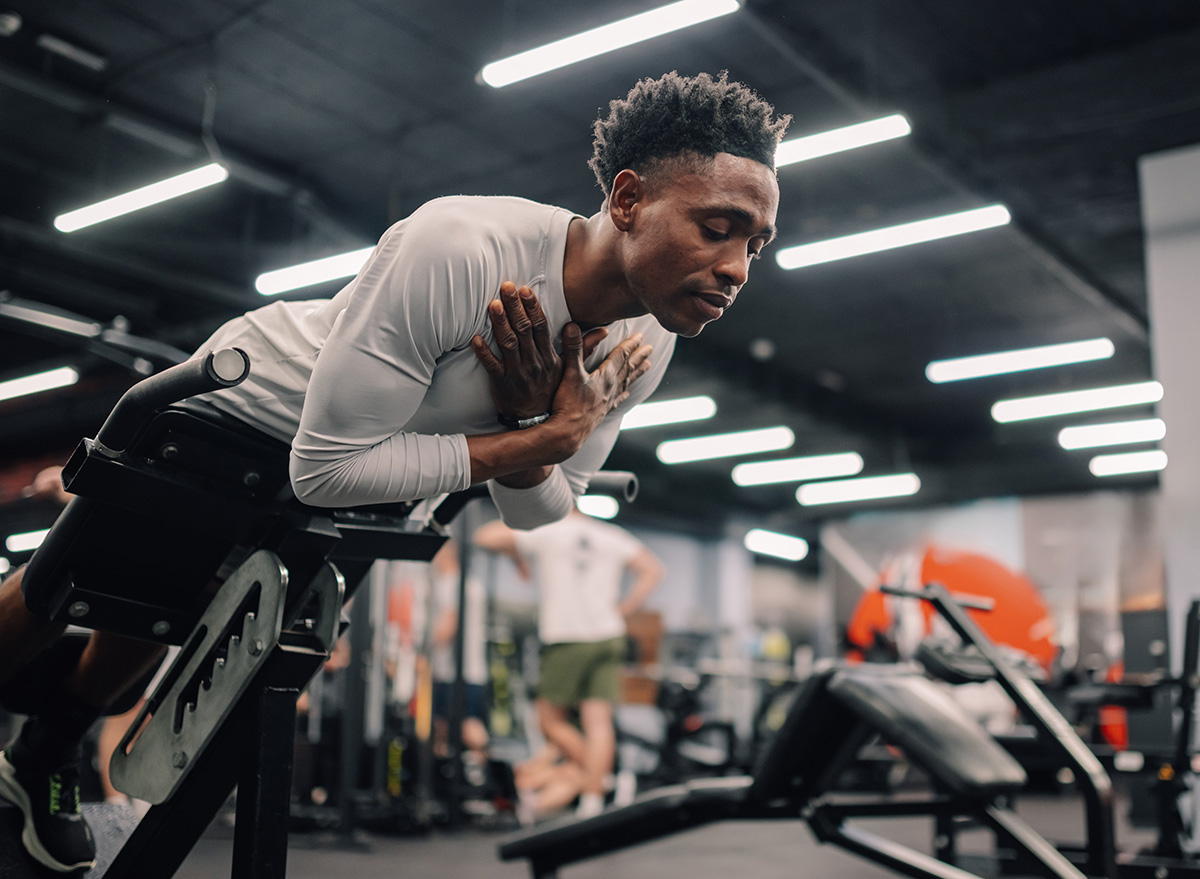
5. Back Extension Machine: Targeted Spinal Fortification
While often considered less conventional than free-weight exercises, the back extension machine offers a unique and highly beneficial approach to directly strengthening the muscles of the lower back (erector spinae). For older adults, maintaining a strong and resilient lower back is paramount for preventing pain, improving posture, and supporting all other movements.
Angelino characterizes this as an "unconventional pick at first glance" but highlights its exceptional benefits due to its ability to isolate the lower back muscles with minimal risk. Machine-based exercises typically offer a more controlled movement pattern and provide external support, making them particularly suitable for individuals who may have concerns about spinal loading or form during free-weight movements. The back extension machine allows for a direct, safe, and progressive overload of the erector spinae, which are crucial for spinal stability and preventing lower back discomfort. Strengthening these muscles directly contributes to improved core strength, better posture, and a reduced likelihood of common age-related back issues.
Beyond the Exercises: A Holistic Approach
While these five exercises form a formidable core for a strength training regimen, their effectiveness is amplified when integrated into a holistic approach to health and wellness. Adequate nutrition, particularly sufficient protein intake, is crucial for muscle repair and growth. Rest and recovery are equally vital, allowing muscles to rebuild and adapt stronger. Hydration, quality sleep, and stress management also play significant roles in overall physical performance and recovery. Furthermore, progressive overload – gradually increasing the weight, repetitions, or sets over time – is essential to ensure continued adaptation and strength gains. Without this progressive challenge, muscles will plateau.
In conclusion, for men over 55, engaging in strategic resistance training is not merely an optional activity; it is a critical investment in long-term health, functional independence, and an enhanced quality of life. By consistently challenging the body with these foundational strength-building movements, individuals can effectively combat the effects of sarcopenia, bolster their physical resilience, and navigate the later decades with confidence, vigor, and sustained autonomy. It’s a testament to the body’s enduring capacity for adaptation and growth, proving that strength can indeed be built and maintained well beyond midlife.
About the Author