The pursuit of a healthy physique and robust well-being often shifts focus as individuals navigate the aging process. For many over the age of 55, a common challenge emerges in the form of what is colloquially known as an "apron belly," or clinically, a pannus stomach. This condition refers to an accumulation of excess adipose tissue and, in some instances, distended skin that hangs over the lower abdominal region, potentially extending towards the groin or even the upper thighs. Its development is multifaceted, often stemming from significant weight fluctuations, pervasive obesity, or inherent genetic predispositions. While surgical intervention remains the definitive solution for addressing substantial amounts of stretched, redundant skin, a strategically designed exercise regimen can profoundly influence body composition and significantly improve abdominal contour. This article delves into an expert-backed approach, emphasizing targeted movements that engage deep core musculature and the posterior chain, offering a more efficacious path to abdominal health than conventional, prolonged cardiovascular workouts for this demographic.
Understanding the specific nature of abdominal fat, particularly in the later stages of life, is paramount. The accumulation of fat around the midsection can be particularly stubborn and is often influenced by hormonal shifts that become more pronounced after 55. As metabolism naturally decelerates and hormonal balances, such as estrogen and testosterone, begin to alter, the body may preferentially store fat in the abdominal area. This type of fat is not merely a cosmetic concern; it can contribute to discomfort, affect posture, and potentially indicate underlying metabolic health considerations. Addressing it effectively requires an understanding of these physiological nuances and an exercise strategy tailored to them.
Cara D’Orazio, a highly regarded certified personal trainer, group fitness instructor, and specialist in sports conditioning accredited by the American College of Sports Medicine, advocates for a distinct exercise philosophy for individuals seeking to refine their abdominal profile post-55. She contends that while aerobic activities like treadmill walking possess inherent benefits for cardiovascular health, they are not always the most direct or efficient means to tackle persistent lower abdominal fat. D’Orazio explains that this specific fat distribution is often hormonally mediated and highly sensitive to stress responses within the body. Prolonged, repetitive cardio, particularly when performed by an individual experiencing stress or insufficient recovery, can paradoxically elevate cortisol levels. Cortisol, a stress hormone, is known to promote fat storage, especially in the abdominal region, thereby hindering progress towards a flatter stomach. Instead, D’Orazio champions a focus on muscle signaling and the recruitment of major muscle groups, particularly the deep core and glutes, through exercises designed to enhance posture, reduce abdominal tension, and avoid detrimental cortisol spikes.
The efficacy of D’Orazio’s recommended exercises lies in their ability to activate the deep stabilizing muscles of the core, often referred to as the body’s natural corset, and to strengthen the gluteal complex. These movements foster improved intra-abdominal pressure regulation and contribute to better pelvic alignment, both of which are critical for a more defined midsection. Furthermore, by engaging multiple large muscle groups, these exercises enhance metabolic activity without placing undue stress on joints, making them ideal for older adults.
1. Glute Bridges: Foundation for Pelvic Stability
Often underestimated due to its apparent simplicity, the glute bridge is a foundational exercise with profound benefits for core and abdominal health. D’Orazio highlights its critical role, stating that robust gluteal muscles are instrumental in alleviating strain on the lower back and promoting optimal pelvic positioning. A well-aligned pelvis directly translates to a more favorable abdominal profile. When the glutes are strong, they help stabilize the pelvis, which in turn allows the deep core muscles to function more effectively, preventing the anterior pelvic tilt that can make the lower belly appear more prominent. This exercise involves lying on your back with knees bent and feet flat on the floor, then lifting the hips off the ground until the body forms a straight line from shoulders to knees. The focus is on controlled movement and squeezing the glutes at the top of the movement, rather than simply lifting as high as possible. This controlled activation builds the posterior chain strength necessary to support a flatter abdomen.
2. Standing March: Dynamic Core Control and Unilateral Stability
Unlike the passive engagement of walking on a treadmill, the standing march is a dynamic exercise that actively challenges core control and unilateral stability. D’Orazio emphasizes that this movement is about precision and stability, not speed. As one leg lifts off the ground, the deep core musculature, particularly the transverse abdominis and obliques, must engage intensely to stabilize the trunk and prevent unwanted rotation or tilting. This continuous, controlled stabilization is precisely what conventional treadmill routines often overlook. To perform a standing march, stand tall with good posture, then slowly lift one knee towards your chest, holding briefly at the top while maintaining a stable torso, before gently lowering it and repeating on the other side. The deliberate, controlled nature of this exercise significantly enhances proprioception and strengthens the deep abdominal wall, contributing to improved posture and a firmer midsection.
3. Chair Squats: Functional Strength for Major Muscle Groups
Squats, when executed with correct form, are exceptionally potent for targeting abdominal fat, particularly in the over-55 demographic, due to their ability to recruit large muscle groups without excessively burdening joints. Chair squats offer a modified, joint-friendly version of this fundamental movement pattern, making them accessible and safe. D’Orazio points out that engaging the quadriceps, hamstrings, and glutes simultaneously elevates metabolic demand and fosters overall body strength. This compound movement contributes to calorie expenditure and muscle development, both crucial for fat loss. To perform a chair squat, stand in front of a sturdy chair as if you are about to sit down. Slowly lower your hips back and down, keeping your chest up and core engaged, until your glutes lightly tap the chair, then stand back up. This exercise not only strengthens the lower body but also demands significant core engagement to maintain an upright posture throughout the movement.
4. Dead Bug: Precision Training for the Transverse Abdominis
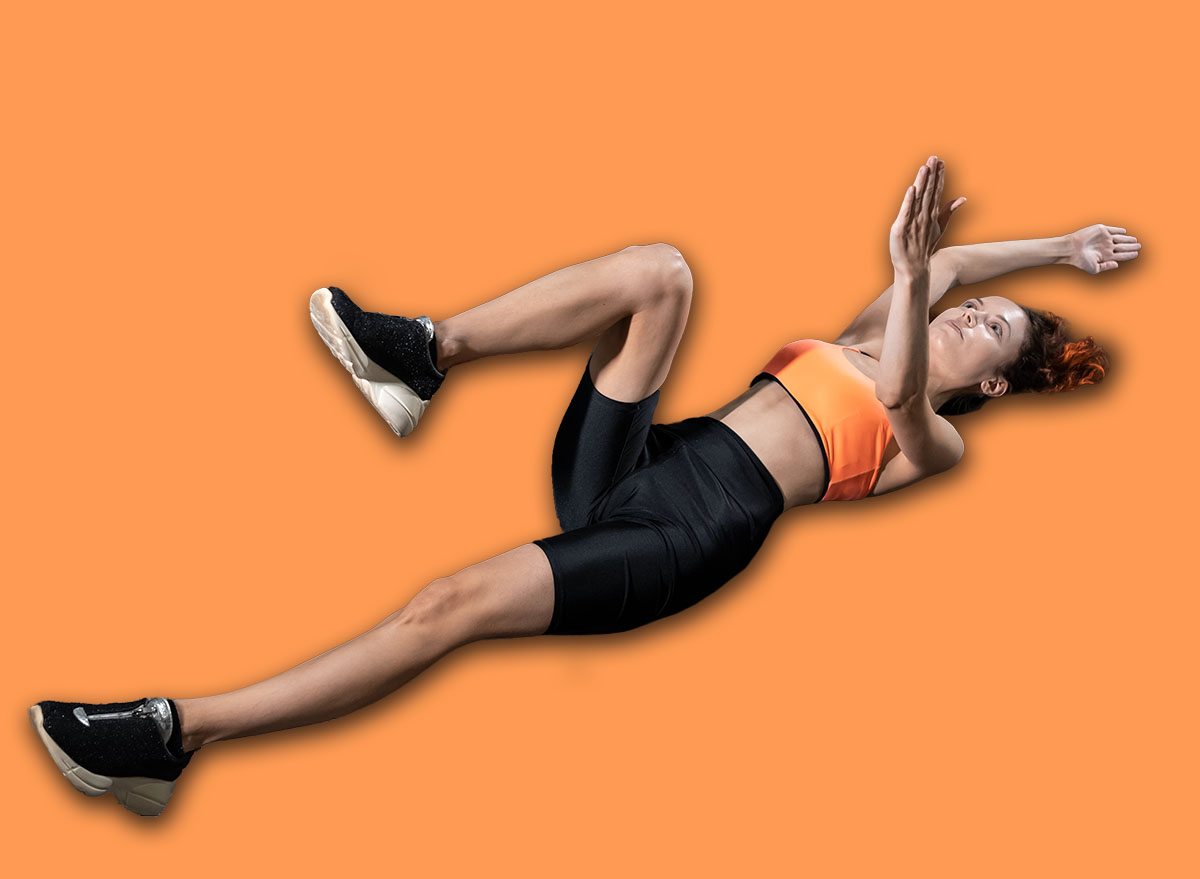
Heralded by D’Orazio as "one of the best exercises there are," the dead bug is a superior choice for specifically training the transverse abdominis (TVA), the deepest abdominal muscle that acts as the body’s natural corset. This exercise focuses on anti-extension and anti-rotation, challenging core stability without putting strain on the spine. It teaches the body to maintain a neutral spine while the limbs move independently, a crucial skill for everyday functional movements and preventing lower back pain. To execute the dead bug, lie on your back with knees bent at a 90-degree angle and arms extended straight up towards the ceiling. Slowly extend one arm overhead and the opposite leg towards the floor, keeping your lower back pressed into the ground, then return to the starting position and alternate sides. The deliberate, controlled nature of the dead bug ensures maximal engagement of the TVA, significantly contributing to core strength and a flatter abdominal appearance.
5. Incline Pushups: Full-Body Tension and Upper Body Integration
The importance of upper body strength often goes unrecognized in the context of abdominal flattening, but incline pushups prove its relevance. D’Orazio explains that pushups demand full-body tension, engaging not only the arms, chest, and shoulders but also the core muscles isometrically to maintain a rigid plank position. Incline pushups provide a scalable option, reducing the overall body weight lifted by performing them against an elevated surface (like a wall or sturdy table). This allows individuals to build strength progressively while still recruiting a significant amount of muscle mass and fostering the full-body tension that translates into a stronger, more stable core. Maintaining a straight line from head to heels throughout the movement is key, ensuring the core works hard to prevent the hips from sagging or rising.
Ultimately, achieving optimal abdominal health after 55 extends beyond isolated exercises; it necessitates a holistic approach. While these targeted exercises form the cornerstone of an effective physical regimen, their impact is amplified when combined with a balanced nutritional strategy that emphasizes whole foods, adequate protein intake, and sufficient hydration. Moreover, managing stress levels, prioritizing restorative sleep, and maintaining a generally active lifestyle all contribute significantly to hormonal balance and overall fat reduction. By embracing a strategic, functional approach to fitness that prioritizes deep core and glute activation, individuals over 55 can not only improve their abdominal contour but also enhance their functional strength, posture, and overall quality of life.
About the Author