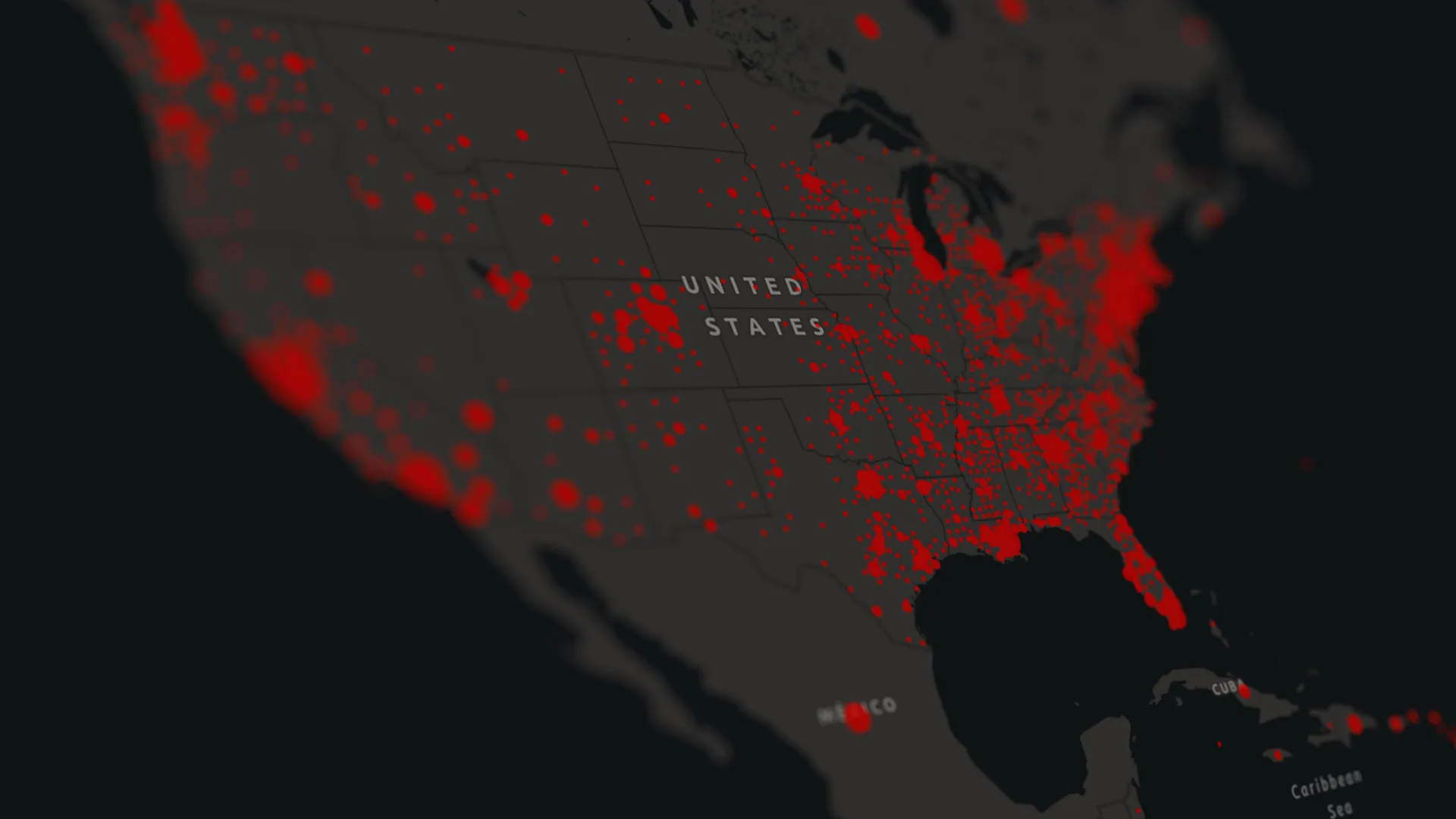
The formidable challenge of containing novel respiratory pathogens, once they breach national borders, has been starkly illuminated by recent global health crises. A groundbreaking investigation spearheaded by public health scientists at the Columbia University Mailman School of Public Health has leveraged sophisticated computational models to reconstruct the early dissemination patterns of two pivotal pandemics within the United States: the 2009 H1N1 influenza outbreak and the 2020 COVID-19 pandemic. Their findings, published in the esteemed journal Proceedings of the National Academy of Sciences, offer critical insights into the astonishing rapidity with which such diseases can permeate metropolitan areas and underscore the inherent complexities in establishing timely control measures. This research marks a significant milestone as the inaugural direct comparative analysis of how these distinct viral threats traversed America’s urban landscapes.
Both epidemiological events, while differing in their specific viral characteristics and overall severity, exacted immense human and societal tolls across the United States. The 2009 H1N1 influenza pandemic, a novel strain of swine-origin influenza A virus, triggered a significant public health emergency, leading to an estimated 274,304 hospitalizations and 12,469 fatalities within the nation. A little over a decade later, the emergence of the SARS-CoV-2 virus, the causative agent of COVID-19, initiated a catastrophe of unparalleled scale in modern times. The pandemic’s impact has been profoundly more devastating, with confirmed deaths surpassing 1.2 million in the U.S. alone, accompanied by widespread social disruption, economic upheaval, and an immense burden on healthcare systems. Understanding the mechanisms behind their respective spreads is therefore not merely an academic exercise but a crucial endeavor for future global health security.
To unravel the intricate geographical spread of these pandemics, the research team employed an advanced epidemiological modeling framework. This comprehensive approach meticulously integrated specific biological parameters governing each virus’s transmission dynamics with granular data on human mobility patterns across the country. The scientists meticulously mapped how individuals move through their daily lives and across vast distances, accounting for diverse factors such as routine daily commuting between residential areas and workplaces, long-distance air travel connecting major population centers, and the probabilistic occurrence of superspreading events—instances where a single infected individual transmits the pathogen to an unusually large number of secondary contacts. The analytical scope of this ambitious project encompassed over 300 distinct metropolitan areas across the United States, providing a highly detailed and geographically extensive picture of early pandemic propagation.
The simulations yielded a stark and compelling revelation: both the 2009 H1N1 and 2020 COVID-19 pandemics were already circulating extensively within the vast majority of U.S. metropolitan regions within a remarkably short timeframe, often mere weeks from their initial introduction. Crucially, this widespread community transmission frequently occurred before the implementation of widespread diagnostic testing, official case detection mechanisms, or the deployment of significant governmental public health interventions. This "invisible" phase of early, rapid dissemination underscores the inherent challenge in containing novel pathogens once they gain a foothold. While the specific pathways these two viruses took between individual locations exhibited some variations, the study confirmed that both relied heavily on a network of shared transmission hubs, with major urban centers like New York City and Atlanta serving as critical nodes for outward spread.
Further dissecting the mechanics of this rapid expansion, the research unequivocally demonstrated the outsized role of air travel in driving the swift, nationwide dissemination of both pathogens. Commercial flights effectively acted as highly efficient conduits, rapidly transporting infected individuals and thus the virus itself, across vast geographical distances in a matter of hours. This dramatically contrasted with the comparatively localized impact of daily commuting, which primarily facilitates spread within a contiguous urban or regional area. The capacity of air travel to bridge distant populations meant that an outbreak in one major city could quickly seed new clusters hundreds or thousands of miles away, bypassing traditional geographical barriers. Adding another layer of complexity, the models also highlighted the significant role of unpredictable transmission patterns. These stochastic elements introduced considerable uncertainty into real-time forecasting efforts, making it exceedingly difficult for public health authorities to precisely anticipate where the next significant outbreak might emerge.
Dr. Sen Pei, a senior author of the study and Assistant Professor of Environmental Health Sciences at Columbia Mailman School, emphasized the gravity of these findings. "The rapid and uncertain spread observed in both the 2009 H1N1 flu and 2020 COVID-19 pandemics profoundly illustrates the formidable challenges associated with achieving timely detection and effective control," Dr. Pei stated. He further suggested proactive strategies for bolstering future pandemic preparedness: "Expanding the coverage and utilization of wastewater surveillance systems, coupled with the consistent implementation of robust infection control protocols, holds the potential to significantly decelerate the initial spread of future pandemics." This expert commentary underscores the urgent need for innovative and scalable solutions.
The concept of wastewater surveillance has emerged as a particularly promising tool in the arsenal against infectious diseases. This methodology involves monitoring raw sewage for genetic material from pathogens, providing a population-level snapshot of viral activity within a community. Unlike individual clinical testing, which relies on symptomatic presentation or access to healthcare, wastewater analysis can detect the presence of a virus even from asymptomatic individuals or those in the very early stages of infection. Previous research has consistently highlighted the immense value of wastewater monitoring as an early warning system, capable of signaling an increase in viral circulation days or even weeks before a corresponding surge in reported clinical cases. This new Columbia study lends further empirical support to this approach, demonstrating that a widespread and integrated wastewater monitoring infrastructure could play a pivotal role in enhancing national pandemic preparedness and crucially, in slowing down the critical early phase of transmission, thereby buying invaluable time for public health responses.
Beyond merely reconstructing the historical trajectories of the last two major pandemics, the research team has developed a highly adaptable and flexible analytical framework. This innovative modeling system is not limited to H1N1 or COVID-19 but can be readily applied to study the early stages of a wide array of other infectious disease outbreaks. This versatility is a significant contribution, offering a foundational tool for rapidly assessing the spread potential of emergent pathogens and informing initial containment strategies. By providing a generic yet robust platform, scientists and public health officials can more effectively simulate various outbreak scenarios, test hypothetical interventions, and allocate resources strategically in the critical nascent phase of a new epidemic.
While the study definitively establishes human movement, particularly via air travel, as a predominant catalyst for pandemic spread, the researchers also meticulously noted that the unfolding trajectory of outbreaks is a complex interplay of multiple contributing factors. These include nuanced population demographics, such as density and age distribution within urban centers, which influence local transmission rates. Furthermore, seasonal and societal rhythms play a significant role; school calendars and major public holidays, particularly winter celebrations, often correlate with increased travel and larger social gatherings, creating ripe conditions for accelerated viral dissemination. Even environmental variables, such as prevailing weather patterns, can influence viral viability, transmission efficiency, and human behavior (e.g., spending more time indoors during colder months), all of which collectively shape how an outbreak evolves.
This seminal work is the product of extensive collaborative efforts. Renquan Zhang of Dalian University of Technology in China served as the study’s first author, working alongside Rui Deng and Sitong Liu from the same institution. From Columbia University, Qing Yao and Jeffrey Shaman made significant contributions, while Bryan T. Grenfell from Princeton University and Cécile Viboud from the National Institutes of Health also played crucial roles. This multi-institutional and international collaboration underscores the complex nature of pandemic research. For over a decade, Jeffrey Shaman and his colleagues, including Dr. Sen Pei, have been at the forefront of developing and refining methodologies for tracking and simulating the spread of infectious diseases such as influenza and COVID-19. Their pioneering work in real-time forecasting tools has been instrumental in estimating outbreak growth rates, predicting potential spread vectors, and anticipating peak infection periods, thereby providing essential data and predictive power to guide critical public health decision-making during times of crisis. The insights gleaned from this latest comparative analysis further solidify their legacy of advancing epidemiological science and bolstering global preparedness against future viral threats.
About the Author