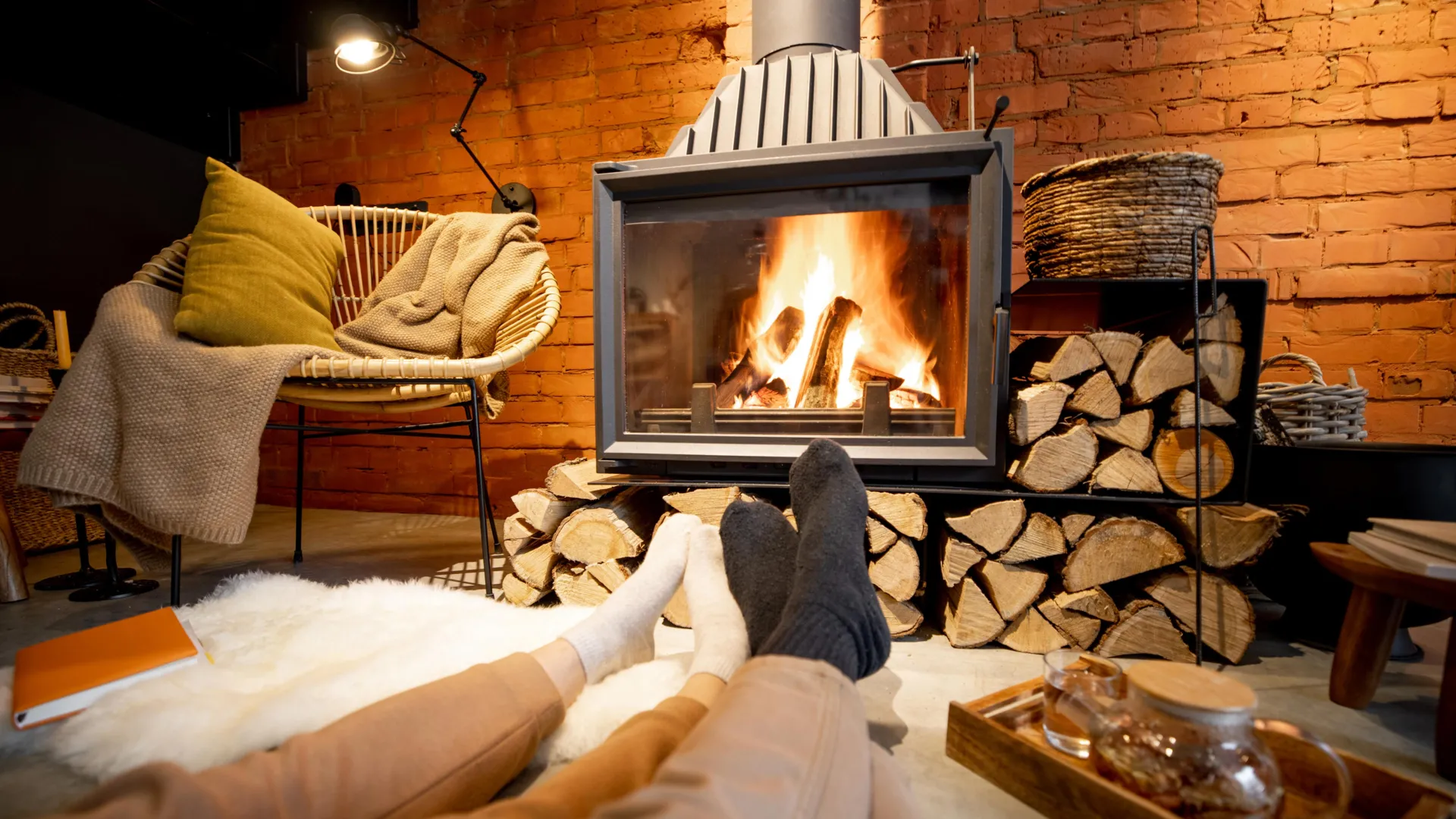
A comprehensive new investigation by researchers at Northwestern University reveals that the seemingly benign act of burning wood for warmth in residential settings contributes disproportionately to winter air pollution across the United States, particularly impacting urban populations and communities of color. Far from being a localized or minor concern, this practice is identified as a significant public health threat, responsible for a substantial portion of the fine particulate matter that permeates the air during colder months. The findings, published on January 23 in the esteemed journal Science Advances, challenge conventional understandings of major pollution sources and underscore an urgent need for reevaluation of heating practices.
At the heart of this environmental challenge lies fine particulate matter, scientifically denoted as PM2.5. These microscopic airborne particles, less than 2.5 micrometers in diameter – roughly 30 times smaller than the width of a human hair – are particularly insidious. Their minute size allows them to bypass the body’s natural defenses, penetrating deep into the respiratory system and, once lodged in the lungs, can even cross into the bloodstream. The scientific community has long established a clear link between prolonged exposure to PM2.5 and a spectrum of severe health conditions, including various forms of heart disease, chronic lung ailments, strokes, certain cancers, and even cognitive impairments. The health implications are dire, culminating in an increased risk of premature mortality.
Quantifying this pervasive threat, the Northwestern study estimates that pollution stemming from residential wood combustion is associated with approximately 8,600 early deaths each year in the United States. This staggering figure paints a vivid picture of the silent epidemic silently unfolding in communities nationwide. What makes this revelation even more compelling is the relatively small footprint of wood as a primary heating source; merely 2% of American households rely on wood for their main heating needs. Yet, this limited usage accounts for more than one-fifth (22%) of the nation’s total winter exposure to outdoor PM2.5, positioning it as one of the largest single contributors to fine particle pollution during the coldest period of the year.
Perhaps one of the study’s most unexpected and critical insights is the geographical distribution of this harm. Counter-intuitively, the research indicates that the most severe health consequences are borne by residents of urban and suburban environments, rather than the more rural areas where wood burning might be perceived as more prevalent. This paradox arises from a confluence of factors: the dynamics of atmospheric transport, population density, and existing emissions patterns. Smoke generated in surrounding suburban locales frequently drifts into densely populated city centers, where, despite fewer individual homes burning wood, a significantly greater number of people are exposed to the concentrated pollutants. Even metropolitan areas not traditionally associated with extensive wood burning can experience elevated PM2.5 levels during specific periods, such as intense cold snaps, recreational burning events, or when smoke plumes travel considerable distances.
The study further exposes a profound environmental justice issue. It highlights that the adverse health impacts of residential wood smoke fall disproportionately on communities of color. These groups experience elevated exposure levels and suffer greater health risks, despite typically contributing less to the overall emissions from wood burning. This disparity is not random; researchers attribute it to a combination of higher baseline mortality rates within these communities and the enduring, detrimental effects of historical discriminatory policies. For instance, the analysis revealed that in the Chicago metropolitan area, Black communities face over 30% higher adverse health outcomes from residential wood burning compared to the broader citywide average. This grim reality underscores how existing social and economic inequalities amplify environmental burdens. Kyan Shlipak, an undergraduate in mechanical engineering at Northwestern’s McCormick School of Engineering and a lead author of the study, emphasized this point: "People of color face both higher baseline mortality rates and higher rates of exposure to pollution from wood burning. However, people of color are correlated with lower emissions rates, indicating that a large fraction of this pollution is transported to these communities, rather than emitted by them."
This pervasive source of pollution has historically received less public and regulatory attention compared to other, more visible air quality threats. Wildfire smoke, for example, frequently dominates news cycles and public discourse due to its dramatic visual impact and widespread devastation. In contrast, the cumulative impact of daily home heating, often perceived as a cozy and traditional practice, rarely garners similar scrutiny. Daniel Horton, the study’s senior author and an associate professor of Earth, environmental and planetary sciences at Northwestern’s Weinberg College of Arts and Sciences, noted this oversight: "We frequently hear about the negative health impacts of wildfire smoke, but do not often consider the consequences of burning wood for heat in our homes. Since only a small number of homes rely on wood burning for heat, facilitating a home-heating appliance transition to cleaner burning or non-burning heat sources could lead to outsized improvements in air quality."
To systematically investigate this under-recognized pollutant, the research team embarked on a meticulous scientific journey. Their methodology began with the collection of comprehensive residential wood burning data from the National Emissions Inventory (NEI), a highly detailed and authoritative database maintained by the U.S. Environmental Protection Agency (EPA). The NEI compiles emission estimates by integrating a vast array of information, including data from household surveys, specific housing characteristics, prevailing climate conditions, and the types of heating appliances in use. This foundational dataset provided the crucial input for their subsequent analyses.
Building upon this data, the researchers employed a sophisticated high-resolution atmospheric model. This advanced computational tool was designed to simulate the complex pathways through which pollutants travel through the atmosphere. The model meticulously incorporates a multitude of environmental variables, including prevailing weather patterns, wind direction and speed, ambient temperature, intricate terrain features, and the nuanced chemistry of the atmosphere. By integrating these factors, the model could accurately estimate how air quality changes over time and space. Horton further elaborated on the atmospheric processes: "Wood burning emissions enter the atmosphere, where they are affected by meteorology. Some emissions are considered primary pollutants, such as black carbon, and some interact with the atmosphere and other constituents, and can form additional, secondary species of particulate matter pollution."
To achieve an unprecedented level of detail in identifying pollution patterns, the team divided the entire continental United States into a finely-tuned grid, composed of 4-kilometer by 4-kilometer squares. For each individual grid cell, they calculated the hourly pollutant output, traced its movement through the air, and determined where it accumulated or dispersed. This granular approach was instrumental in pinpointing specific pollution hotspots that would have been obscured or averaged out in broader city or county-level analyses, providing a much clearer picture of localized impacts. The model was run twice: once including all residential wood burning emissions, and once excluding them. By comparing these two simulated scenarios, the researchers were able to precisely isolate the contribution of residential wood burning, confirming its 22% share of wintertime PM2.5 pollution.
The implications of this research are far-reaching, signaling a critical need for policy intervention and public awareness. Reducing residential wood burning could yield substantial public health benefits, potentially preventing thousands of premature deaths annually. Strategies could include incentivizing the transition to cleaner heating alternatives, such as electric heat pumps, natural gas, or highly efficient, cleaner-burning non-wood stoves. Public education campaigns could also play a vital role in informing homeowners about the hidden dangers of their fireplaces and wood-burning appliances. Horton underscored the potential: "Since only a small number of homes rely on wood burning for heat, facilitating a home-heating appliance transition to cleaner burning or non-burning heat sources could lead to outsized improvements in air quality."
While the study offers profound insights into outdoor air quality, the researchers acknowledge that their current analysis focuses exclusively on outdoor exposure to wood burning pollution. The significant health risks associated with indoor exposure to particulate matter from fireplaces and wood stoves were not quantified in this particular investigation, representing an additional layer of public health concern that warrants further exploration. This research, supported by the National Science Foundation (award number CAS-Climate-2239834), serves as a powerful call to action, urging a reevaluation of residential heating practices and a renewed commitment to safeguarding public health against this pervasive, yet often overlooked, environmental threat.
About the Author