The silent progression of sarcopenia, the age-related decline in skeletal muscle mass, strength, and function, represents a significant challenge to health and independence for men entering and navigating their seventh decade. This physiological shift, often unnoticed in its early stages, can profoundly impact an individual’s ability to perform daily tasks, maintain metabolic health, and preserve overall quality of life. While muscle loss does not manifest abruptly, its acceleration typically correlates with diminished physical activity patterns, a sedentary lifestyle, and a decreased engagement with resistance-based movements. The prevailing misconception that significant strength training is exclusively for younger demographics or elite athletes often deters older adults from proactive measures, inadvertently contributing to a cycle where reduced movement leads to further muscle atrophy. However, emerging research and practical applications in exercise science underscore that consistent, targeted physical activation, rather than sporadic intense bouts, serves as a powerful antidote to this age-related decline, fostering muscle restoration and sustained functional capacity.
Maintaining robust muscle mass beyond the age of sixty extends far beyond aesthetic considerations; it forms a cornerstone of holistic well-being. Strong musculature is indispensable for preserving bone density, thereby mitigating the risk of fractures often associated with osteoporosis. It plays a critical role in metabolic regulation, enhancing insulin sensitivity and contributing to better management of blood glucose levels, which is crucial for preventing or managing type 2 diabetes. Furthermore, adequate muscle strength is a primary determinant of balance and gait stability, directly influencing the ability to prevent falls—a leading cause of injury and disability among older adults. Functional independence, from rising from a chair and carrying groceries to climbing stairs, hinges on the integrity and strength of one’s muscle groups. Thus, investing in muscle health through strategic exercise is an investment in autonomy, vitality, and a higher quality of life for the years ahead.
The paradigm for effective muscle restoration in older adults diverges somewhat from the high-intensity, maximal-load approaches often associated with bodybuilding. Instead, the emphasis shifts towards frequency, controlled execution, and comprehensive engagement of major muscle groups. Muscles respond optimally when they receive regular neural signals to contract, stabilize, and coordinate movement. A daily regimen of thoughtfully selected exercises acts as a continuous signaling mechanism, reinforcing neuromuscular pathways and stimulating protein synthesis, which is essential for muscle repair and growth. This consistent activation rebuilds fundamental strength, improves muscle tone, and enhances confidence, all without imposing undue stress on joints or prolonging recovery periods, which can be a concern for an aging physiology. The objective is not to chase extreme fatigue but to establish consistent tension and movement quality that reawakens dormant muscle fibers and reinforces efficient movement patterns.
To counteract the specific muscle groups that tend to atrophy most rapidly in men over sixty—namely, those in the legs, hips, back, shoulders, and core—a foundational set of five daily exercises can be particularly effective. These movements are chosen for their functional relevance, their ability to engage multiple muscle groups simultaneously, and their adaptability to varying fitness levels. Executed with deliberate intent and proper form, they serve to re-establish muscular tension, improve postural alignment, and enhance overall movement quality, fostering a sustainable path to muscle preservation and growth.
One cornerstone of lower body strength and functional independence is the Slow Sit-to-Stand Squat. Leg muscles are the primary drivers of total-body power and mobility, and the sit-to-stand pattern directly mimics a movement performed countless times daily. By intentionally slowing the concentric (standing up) and eccentric (sitting down) phases of this exercise, individuals significantly increase the time under tension for the quadriceps, glutes, and core musculature. This sustained engagement forces these large muscle groups to work harder throughout the entire range of motion, promoting greater muscle fiber recruitment. Unlike exercises performed on fixed-path machines, the sit-to-stand squat inherently demands active balance and coordination, which further amplifies neural activation and strengthens stabilizing muscles. Consistent daily practice of this fundamental movement progressively rebuilds leg strength, improves dynamic balance, and reinforces joint-friendly mechanics, leading to a noticeable return of muscle tone as the body’s largest muscle groups receive consistent, high-quality activation.
For addressing upper-body muscle loss, which frequently manifests in the chest, shoulders, and arms, the Standing Push-Away Press offers a highly effective solution. This exercise is particularly beneficial because it integrates core stabilization into an upper-body pressing motion. By performing the press from a standing position, the abdominal and lower back muscles must engage continuously to maintain an upright posture and prevent compensatory movements, increasing the overall demand on the body compared to seated variations. Utilizing light resistance, such as resistance bands anchored to a stable object or very light dumbbells, and focusing on a controlled tempo, this movement effectively reactivates the muscles responsible for pushing strength without placing excessive strain on the shoulder joints, which can be vulnerable in older populations. As stability and muscular endurance improve through daily practice, men typically observe an enhanced muscle tone across the chest, shoulders, and triceps, along with improved inter-segmental coordination.
The integrity of the posterior chain, particularly the muscles of the upper back, is critical for maintaining good posture and preventing the common "collapsed" or rounded-shoulder appearance often seen with age. The Standing Row with Squeeze specifically targets these essential back muscles. This variation emphasizes a deliberate, sustained contraction or "squeeze" at the peak of the movement, compelling the upper back muscles—such as the rhomboids and trapezius—to remain engaged for an extended period. Performing the row while standing eliminates external support, requiring the core and hip muscles to actively assist in maintaining stability and proper body alignment throughout the exercise. Daily incorporation of this movement helps rebuild thickness and tone in the upper back and arms, contributing significantly to improved posture. Enhanced posture is not merely an aesthetic benefit; it can alleviate back pain, improve respiratory function, and project an image of greater confidence and vitality, representing one of the fastest and most impactful visual and functional upgrades for men over sixty.
The glutes and hamstrings, collectively known as the posterior chain, are indispensable for generating power, supporting spinal health, and facilitating efficient movement patterns like bending and lifting. These crucial muscles often weaken rapidly when daily bending mechanics become less pronounced or are performed incorrectly. The Hip Hinge Hold and Return specifically trains these muscles by focusing on the fundamental hip hinge pattern without requiring heavy external loads. The exercise involves hinging at the hips while maintaining a neutral spine, followed by a brief hold at the bottom of the movement, which creates sustained tension in the glutes and hamstrings. This pause actively prevents reliance on momentum, forcing the muscles to remain engaged and work through the full range of motion. Consistent daily practice of the hip hinge restores posterior-chain strength, significantly improves posture by strengthening the muscles that counteract anterior pelvic tilt, and rebuilds muscle mass through sustained engagement rather than high-impact strain, offering robust protection for the lumbar spine.
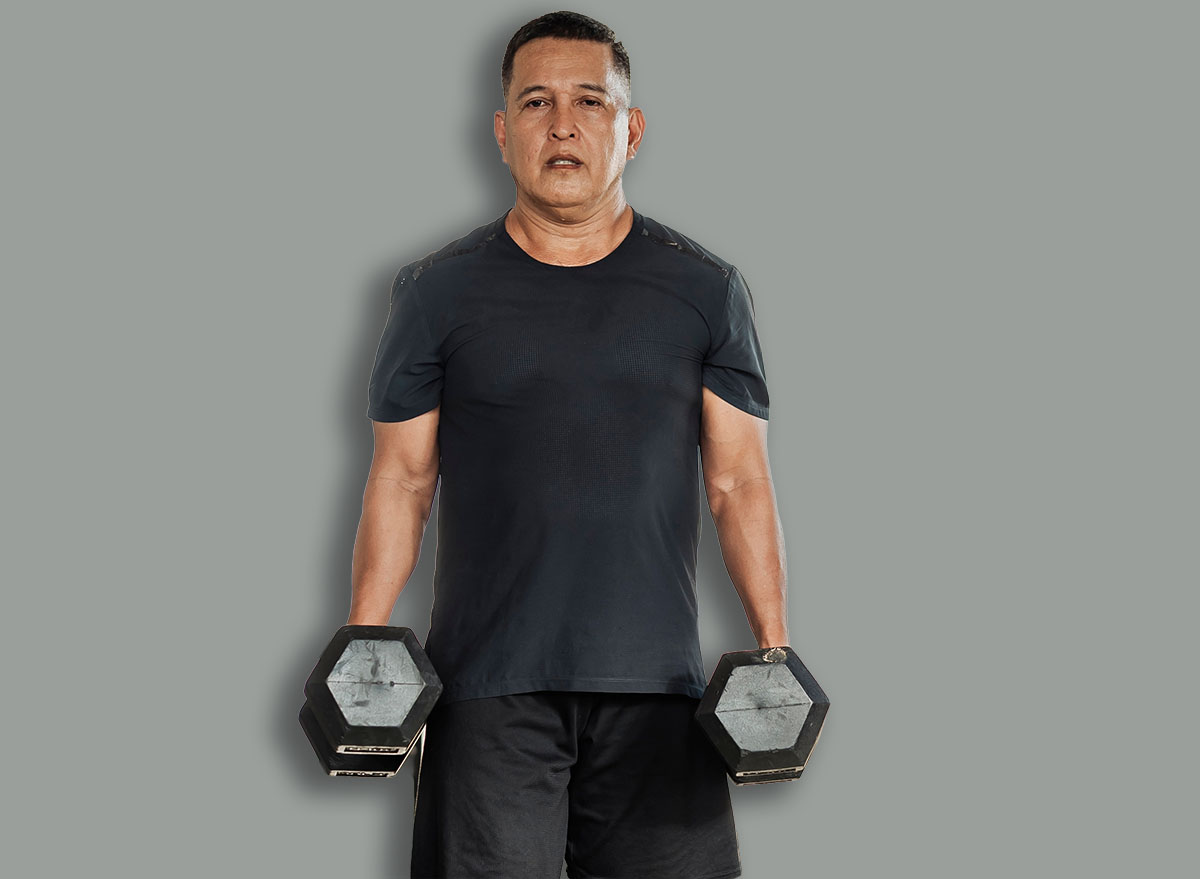
Finally, the Loaded Carry Hold stands out as an exceptionally potent, full-body exercise for rapid muscle restoration and overall functional strength. The simple act of holding a challenging but manageable weight while standing tall forces a simultaneous and synergistic engagement of numerous muscle groups: the arms, shoulders, core, and hips. This isometric contraction under load teaches the entire body to maintain tension and stability, sending a powerful signal for muscle retention and regrowth. Unlike isolated lifts, loaded carries replicate real-world demands, improving grip strength, enhancing arm tone, and significantly boosting trunk stability—all critical components of functional fitness. Performed daily, even for relatively short durations, loaded carries are remarkably effective at rebuilding strength and muscle across the entire kinetic chain, offering comprehensive benefits that often surpass those derived from more isolated movements.
Beyond these specific exercises, a holistic approach to muscle restoration and maintenance is paramount. Adequate protein intake, critical for muscle repair and synthesis, should be prioritized, with older adults often requiring more protein per kilogram of body weight than younger individuals. Proper hydration supports metabolic functions and joint health, while sufficient sleep is essential for hormonal regulation and physical recovery. While these five exercises form a robust daily foundation, it is always advisable for men over sixty to consult with a healthcare provider or a certified fitness professional before embarking on any new exercise regimen. This ensures the program is tailored to individual health status, addresses any pre-existing conditions, and can be progressively adapted for optimal and safe results. By embracing consistency, mindful movement, and a comprehensive approach to well-being, men can effectively reclaim and sustain their muscular vitality, enhancing their independence and enjoying a richer, more active life well into their later years.
About the Author