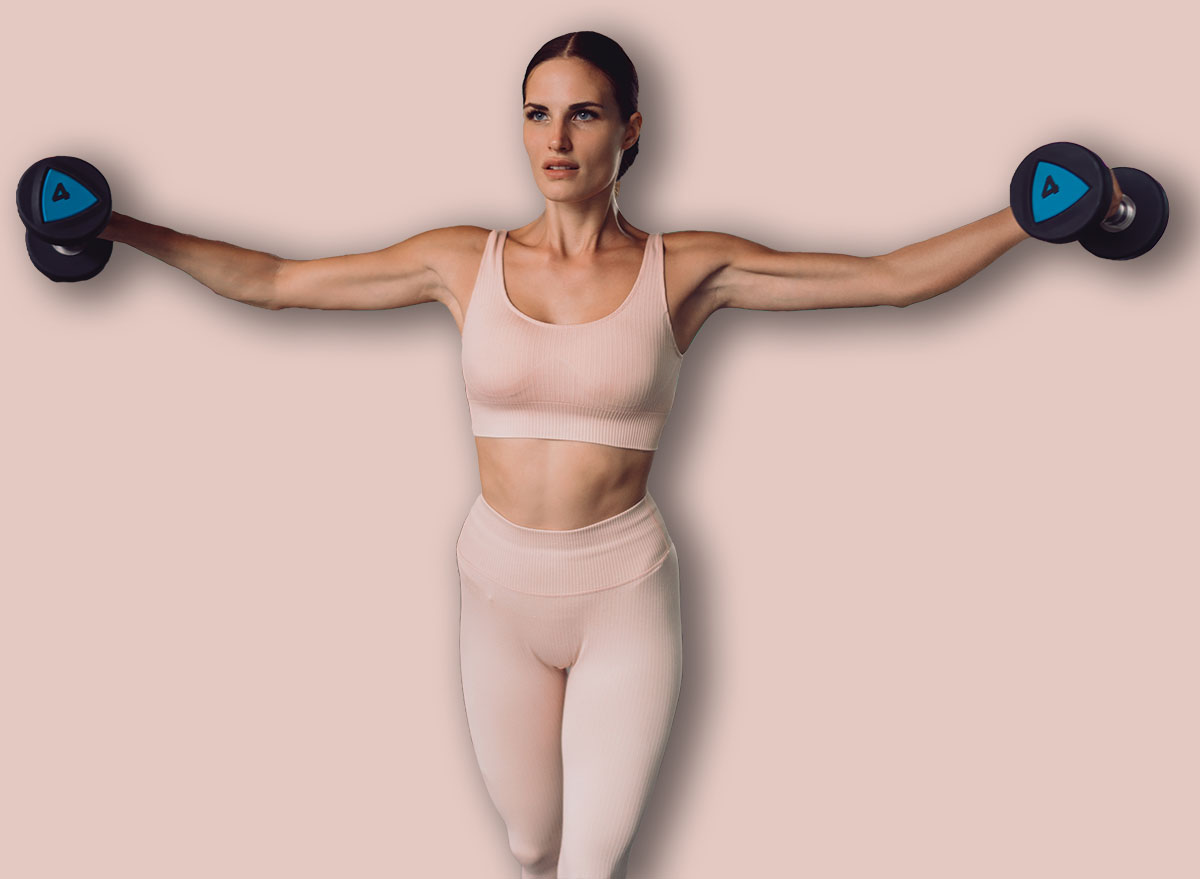
As individuals advance into their fifties and beyond, many observe distinct physiological shifts that can impact body composition, including the firmness and tone of the upper arms. This common phenomenon, often colloquially referred to as "arm jiggle" or "bingo wings," stems from a confluence of natural age-related processes rather than a singular cause. Understanding these underlying factors is the first step toward effectively addressing them through targeted interventions. Primarily, three key elements contribute to this perceived laxity: a reduction in muscle mass, alterations in fat distribution, and a decline in skin elasticity. While these changes are a normal part of aging, they are by no means irreversible, and a strategic approach to physical activity can yield significant improvements in both appearance and functional strength.
The decrease in muscle mass, medically known as sarcopenia, is a ubiquitous aspect of aging, commencing as early as the third decade of life and accelerating significantly after the age of 50. Without regular resistance training, muscle fibers, particularly the fast-twitch fibers responsible for power and strength, begin to diminish. The triceps brachii, the muscle group located on the back of the upper arm, is particularly susceptible to this weakening if not consistently engaged. Concurrently, the body’s fat distribution patterns tend to shift with age, often leading to increased fat accumulation in areas such as the upper arms. This combination of dwindling muscle volume and localized fat deposits can create a softer, less defined contour. Furthermore, hormonal fluctuations, notably those experienced during menopause, contribute to a reduction in collagen and elastin production, the vital proteins responsible for maintaining skin’s structural integrity and elasticity. This loss of skin firmness means the overlying skin becomes less taut, making any underlying softness more pronounced. Lifestyle factors, such as prolonged periods of inactivity, poor postural habits that cause shoulders to round forward and disengage the triceps, and a general reduction in tasks requiring upper-body strength, further exacerbate muscle atrophy and reduced circulation, impacting overall tissue tone.
However, the narrative around age-related changes need not be one of resignation. Expert fitness professionals, such as Karen Ann Canham, CEO and founder of Karen Ann Wellness, advocate for specific strength training protocols designed to counteract these effects. Canham emphasizes the efficacy of standing exercises that incorporate controlled pushing, lifting, and holding actions. Her rationale is rooted in their ability to simultaneously activate multiple key muscle groups: the triceps, shoulders (deltoids), and the upper back musculature. This integrated approach is crucial because it not only targets the primary areas of concern but also enhances overall upper body stability and posture, which indirectly contributes to a more toned appearance. The benefits extend beyond aesthetics; strengthening these muscle groups improves functional capacity for daily activities, boosts metabolic health, and enhances overall body confidence. While a full transformation takes time, consistent application of these exercises can initiate visible improvements within approximately 30 days, signaling the body’s positive response to renewed muscular challenge.
The advantage of standing exercises, as highlighted by Canham, lies in their ability to engage the core musculature and challenge the body against gravity while maintaining an upright, active posture. Unlike seated exercises, standing movements demand greater stabilization from the entire body, leading to more comprehensive muscle activation and improved balance. This functional aspect is particularly beneficial for older adults, as it translates directly into enhanced capability for real-world movements, such as lifting groceries, reaching overhead, or maintaining equilibrium. Neglecting upper body strength over time can lead to a vicious cycle where reduced strength makes daily tasks harder, leading to less engagement, further muscle loss, and a decline in overall physical independence. By consciously incorporating these standing movements, individuals can reverse this trend, restoring strength, shape, and stability to their arms and upper body.
Here are four foundational standing exercises, recommended by fitness specialists, that can be integrated into a regular regimen to build upper arm strength and definition:
1. Standing Overhead Press
The standing overhead press is a fundamental exercise for building strength in the shoulders and triceps while simultaneously engaging the core for stability. This compound movement effectively addresses the primary concerns of upper arm laxity by directly strengthening the triceps and sculpting the deltoids.
- Execution: Begin by standing with feet shoulder-width apart, holding light dumbbells or using body tension (e.g., pressing palms together firmly above your head) at shoulder height, palms facing forward. Ensure your core is braced and your spine remains neutral, avoiding any arching in the lower back. Exhale as you slowly extend your arms upward, pressing the weights directly overhead until your arms are fully extended but not locked. The movement should be controlled, engaging the triceps and deltoids throughout. Inhale as you gently lower the weights back to the starting position at shoulder height.
- Muscles Targeted: Primarily works the anterior and medial deltoids (front and side of shoulders) and the triceps brachii. Secondary muscles include the trapezius (upper back) and various core stabilizers.
- Benefits: Beyond firming the back of the arms, this exercise significantly improves shoulder strength and mobility, which is crucial for overhead movements in daily life. It also reinforces good posture by strengthening the muscles that support the upper spine and helps maintain bone density in the shoulders and upper arms. The standing nature of the exercise demands core engagement, contributing to overall stability.
- Repetitions: Perform three sets of 10 repetitions, focusing on controlled movement rather than heavy weight. For those new to the exercise, starting with body tension or very light resistance bands can be an excellent way to learn the form before progressing to dumbbells.
2. Standing Arm Sweeps
Standing arm sweeps are a dynamic, low-impact exercise that not only builds endurance and tones the shoulders but also serves as an excellent warm-up, enhancing shoulder mobility and circulation.
- Execution: Stand tall with your feet hip-width apart and a slight bend in your knees. Keep your core gently engaged and shoulders relaxed, away from your ears. Extend your arms straight down by your sides, palms facing inward. Begin by smoothly sweeping your arms forward and upward in a controlled arc, reaching them overhead as if you’re making a large circle in front of you. Maintain a comfortable range of motion, avoiding any jerky movements. Once your arms are overhead, gently reverse the motion, sweeping them backward and downward to return to the starting position. The movement should be fluid and continuous.
- Muscles Targeted: Primarily engages the deltoids, rotator cuff muscles, and upper back muscles (trapezius, rhomboids).
- Benefits: This exercise is superb for improving the flexibility and range of motion in the shoulder joint, which can often stiffen with age. It promotes blood flow to the upper body, aids in warming up the muscles before more intense exercises, and helps to tone the shoulder girdle, contributing to a more defined upper arm appearance. The continuous movement also builds muscular endurance.
- Repetitions: Aim for three sets of 12 repetitions, focusing on a full, controlled sweep in both directions. This exercise can be performed with just bodyweight or by holding very light weights (e.g., 1-2 pounds) once comfortable with the movement pattern.
3. Standing Wall Pushups
The standing wall pushup offers a modified, joint-friendly alternative to traditional pushups, making it an ideal exercise for safely strengthening the triceps, chest, and shoulders without placing undue stress on wrists or elbows, which can be a concern for older adults.
- Execution: Stand facing a sturdy wall, about arm’s length away. Place your palms flat against the wall at shoulder height and slightly wider than shoulder-width apart. Ensure your body forms a straight line from your head to your heels. Keeping your core engaged and elbows tucked slightly towards your body, slowly bend your elbows and lean your chest towards the wall, maintaining the straight body alignment. You should feel the stretch in your chest and activation in your triceps. Push back through your palms to return to the starting position, straightening your arms.
- Muscles Targeted: Primarily targets the triceps brachii, pectoralis major (chest), and anterior deltoids.
- Benefits: This exercise is excellent for building foundational upper body pushing strength, particularly in the triceps, in a very safe and controlled manner. It allows individuals to gradually increase resistance by adjusting their distance from the wall (stepping further back increases difficulty) without the risk associated with floor pushups. Regular practice can lead to improved arm definition, chest strength, and overall pushing power.
- Repetitions: Complete three sets of 10 repetitions. Focus on a deliberate tempo, squeezing the triceps at the top of the movement. As strength increases, gradually move your feet further from the wall to intensify the exercise.
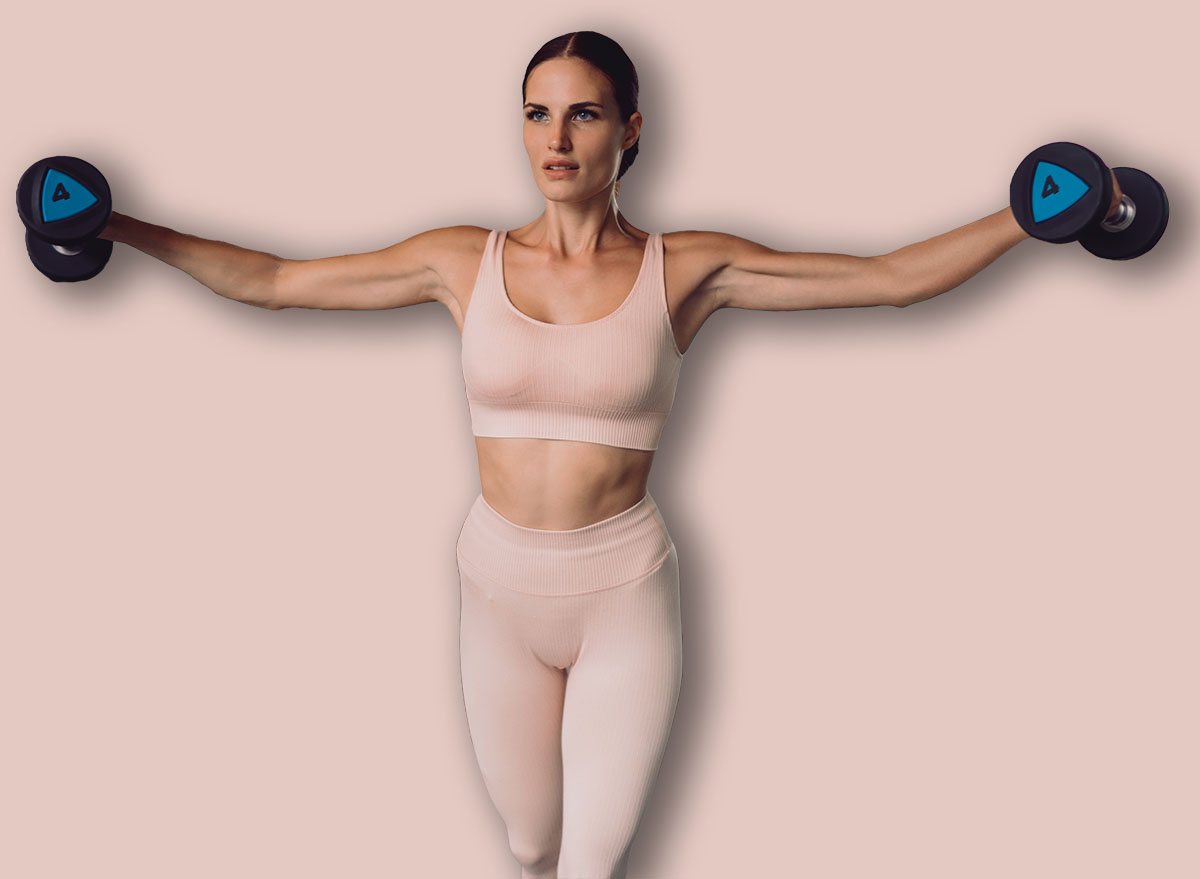
4. Standing Lateral Arm Lifts (Lateral Raises)
The standing lateral arm lift, or lateral raise, is a highly effective isolation exercise for developing the medial head of the deltoid, which broadens the shoulders and contributes significantly to the visual tightening and sculpting of the upper arms.
- Execution: Stand tall with your feet hip-width apart, knees slightly bent, and core engaged. Hold a light dumbbell in each hand, arms extended down by your sides, palms facing your body. Keeping a slight bend in your elbows (avoid locking them) and maintaining a stable torso, slowly lift the dumbbells out to the sides until your arms are parallel to the floor, forming a "T" shape with your body. The movement should originate from your shoulders, not your momentum. Pause briefly at the top, feeling the contraction in your shoulders. Gently and with control, lower the weights back to the starting position.
- Muscles Targeted: Primarily isolates the medial deltoid (side of the shoulder). Secondary engagement of the anterior deltoid and trapezius.
- Benefits: By specifically targeting the side deltoids, this exercise helps to create a more rounded and defined shoulder appearance, which in turn makes the upper arms look more sculpted and toned. It also contributes to overall shoulder health and stability. The controlled nature of the movement helps to improve proprioception and muscular control.
- Repetitions: Perform three sets of 10 repetitions. It is crucial to use light weights for this exercise to maintain proper form and prevent injury. Focus on slow, deliberate movements, avoiding swinging the weights.
Incorporating these standing exercises into a consistent fitness routine offers a robust strategy for enhancing upper arm definition and strength after the age of 50. However, exercise is most effective when viewed as part of a holistic wellness approach. Adequate protein intake is vital for muscle repair and growth, while proper hydration supports overall physiological function and skin health. Sufficient sleep allows the body to recover and rebuild, and managing stress can mitigate hormonal imbalances that impact body composition. Consistency is paramount; small, regular efforts compound over time to create significant and lasting changes. Before embarking on any new exercise program, particularly for individuals over 50 or those with pre-existing health conditions, consulting with a healthcare provider or a certified fitness professional is always recommended to ensure the exercises are appropriate and safe for individual needs. By committing to these targeted movements and embracing a comprehensive approach to well-being, individuals can confidently reclaim and enhance the strength and aesthetic appeal of their upper arms.
About the Author