As individuals advance into their later years, maintaining physical strength, particularly in the lower body, becomes a critical factor for preserving independence and overall quality of life. The natural aging process often brings with it a gradual decline in muscle mass and strength, a condition scientifically termed sarcopenia. This age-related muscle loss, if unaddressed, can significantly impede daily activities such as standing from a seated position, climbing stairs, or even maintaining balance, thereby increasing the risk of falls and subsequent injuries. While traditional strength training methods, including squats and lunges, are highly effective, they can present considerable challenges for older adults due to concerns about joint discomfort, balance issues, and recovery times. However, a highly effective and accessible alternative exists in the form of chair-based exercises, offering a safe, low-impact pathway to building robust leg muscles without undue strain on delicate joints.
The journey to sustained fitness often faces an unnecessary mental hurdle: the misconception that significant physical progress necessitates access to a fully equipped gymnasium. This belief, common across various age groups, is particularly prevalent among seniors who may feel intimidated by gym environments or perceive traditional workouts as beyond their current capabilities. Decades of experience within the fitness industry, including extensive work in educating professional trainers, consistently reveal that consistency and appropriate methodology far outweigh the extravagance of a training facility. Remarkable gains in strength and overall physical well-being are entirely attainable within the comfort and convenience of one’s home, often requiring nothing more than a sturdy chair as a fundamental piece of equipment.
The physiological changes that occur beyond the age of 65 necessitate a modified approach to exercise. The musculoskeletal system undergoes various transformations; joints, having supported the body for decades, may experience wear and tear, leading to conditions like osteoarthritis. This can make deep squats or lunges not only uncomfortable but potentially harmful. Furthermore, the body’s proprioception—its sense of position and movement—can diminish, rendering standing exercises that once felt simple into significant balance challenges. This shift often forces a diversion of energy towards maintaining equilibrium rather than effectively engaging target muscles.
Muscle synthesis and recovery rates also see a marked alteration with age. The speed at which muscle tissue repairs and grows naturally decelerates, and the body requires a longer period to recuperate from strenuous activity. What might have taken a day or two for recovery in one’s forties could now extend to three or four days, emphasizing the need for carefully structured routines that provide adequate stimulus without overtaxing the system. Joint mobility, particularly in the hips and ankles, tends to decrease, contributing to stiffness and making a full range of motion difficult or painful in conventional exercises. These factors, combined with a potential decline in confidence stemming from reduced activity levels or a fear of injury, often deter older individuals from initiating or adhering to any strength-building regimen. The beauty of chair exercises lies in their ability to circumvent these common obstacles, offering a supportive and controlled environment that empowers seniors to reclaim their strength and mobility.
The efficacy of chair-based exercises stems from their unique ability to address the specific challenges faced by older adults. By providing a stable base, a chair effectively eliminates or significantly reduces the balance component inherent in many standing exercises. This crucial advantage allows the exerciser to channel their full muscular effort into the movement itself, rather than diverting energy to maintain stability. The built-in safety mechanism of a chair means that support is always within reach, fostering a sense of security that is paramount for individuals concerned about falls or loss of control. Furthermore, the difficulty of these exercises can be precisely controlled by adjusting the degree of reliance on the chair for support, enabling a gradual and safe progression as strength improves.
From a recovery perspective, chair exercises generally induce less overall systemic fatigue compared to their standing counterparts. They still provide ample stimulus for muscle adaptation and growth but without the exhaustive aftermath that might discourage future participation. This facilitates a more consistent training schedule, which is key to long-term gains. Perhaps most critically, the support offered by a chair helps maintain optimal biomechanical alignment throughout each movement. Proper form becomes increasingly vital with age, as joints are less forgiving of poor technique. By ensuring correct positioning, chair exercises help activate the intended leg muscles effectively, preventing compensatory movements from the back or other joints that could lead to discomfort or injury.
Let us explore six foundational chair exercises that specifically target and strengthen the lower body musculature, providing a comprehensive and joint-friendly routine.
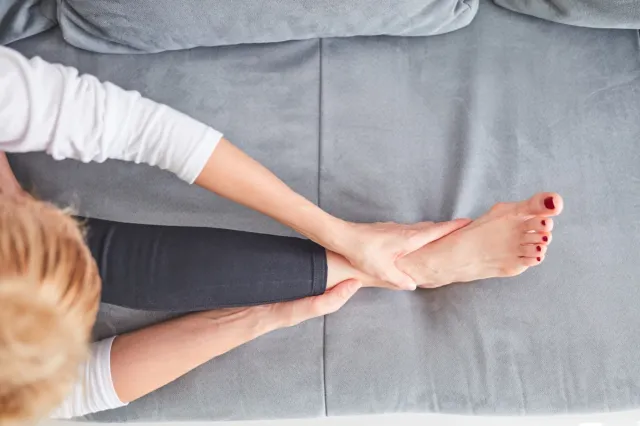
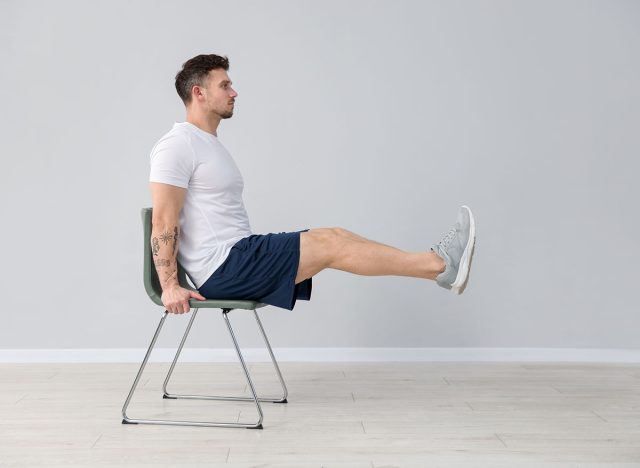
1. Seated Leg Extensions:
This exercise primarily targets the quadriceps, the powerful group of muscles located at the front of the thigh. These muscles are indispensable for everyday actions like standing up, walking, and ascending stairs, and are unfortunately among the first to show signs of age-related weakening. Seated leg extensions offer a direct and isolated way to strengthen them without placing undue stress on the knee joint.
- Muscles Engaged: Quadriceps (Rectus Femoris, Vastus Lateralis, Vastus Medialis, Vastus Intermedius).
- Execution: Sit upright in a sturdy chair with your feet flat on the floor, hip-width apart. Engage your core to maintain a straight back. Slowly extend one leg forward until it is parallel to the floor, or as high as comfortably possible, ensuring the knee is not locked. Hold briefly at the peak of the contraction, feeling the quadriceps tighten. Gradually lower the leg back to the starting position. Repeat on the same side before switching.
- Form Focus: Maintain an upright torso throughout the movement. Avoid swinging the leg; the motion should be deliberate and controlled, emphasizing the engagement of the thigh muscles.
- Progression: Increase the hold time at the top of the extension, or add light ankle weights as strength develops.
2. Sit-to-Stand:
Often considered the cornerstone of functional leg strength for seniors, the sit-to-stand exercise directly mimics one of the most vital movement patterns in daily life: transitioning from a seated to a standing position. It simultaneously engages the quadriceps, gluteal muscles, and core, significantly enhancing the ability to rise from chairs, sofas, or the toilet with greater ease and confidence.
- Muscles Engaged: Quadriceps, Gluteus Maximus, Hamstrings, Core stabilizers.
- Execution: Position yourself on the edge of a chair with your feet flat on the floor, slightly wider than hip-width, and knees bent at approximately a 90-degree angle. Lean forward slightly from the hips, keeping your chest up and back straight. Push through your heels and glutes to stand up fully, avoiding using your hands for support if possible. Once standing, slowly and with control, reverse the movement to sit back down, lightly tapping the chair before standing again, or fully sitting if needed.
- Form Focus: Ensure your knees track directly over your toes, preventing them from caving inward. Initiate the movement by pushing through your heels. Start with a higher chair if necessary, gradually progressing to lower seating surfaces as strength improves.
- Progression: Reduce reliance on hands for support, decrease the height of the chair, or perform the exercise while holding a light weight against your chest.
3. Seated Marching:
This exercise is excellent for activating the hip flexors and quadriceps, while also building endurance in the lower limbs. It offers a gentler alternative to standing marches, providing effective stamina building for walking and other daily activities without challenging balance.
- Muscles Engaged: Hip Flexors (Iliopsoas), Quadriceps.
- Execution: Sit tall in your chair with your feet flat on the floor and core engaged. Slowly lift one knee towards your chest as high as comfortably possible, maintaining a straight back. Control the descent of the foot back to the floor, then immediately repeat the motion with the opposite leg. Continue alternating legs in a rhythmic, marching fashion.
- Form Focus: Focus on lifting each knee using your hip flexors and quadriceps, not by arching your back. Keep your abdominal muscles engaged to stabilize your torso.
- Progression: Increase the speed of the march, lift the knees higher, or add light ankle weights.
4. Heel Raises (Seated):
Often overlooked, the calf muscles play a crucial role in ankle stability, propulsion during walking, and preventing falls. Seated heel raises provide a simple yet remarkably effective method for strengthening the gastrocnemius and soleus muscles, contributing to improved balance and gait.
- Muscles Engaged: Calves (Gastrocnemius, Soleus).
- Execution: Sit with your feet flat on the floor, knees bent at 90 degrees. Keep your spine erect and shoulders relaxed. While keeping the balls of your feet firmly on the ground, slowly lift both heels as high as possible, squeezing your calf muscles. Hold this elevated position briefly, then gradually lower your heels back to the floor with control.
- Form Focus: The movement should originate entirely from your calf muscles; avoid rocking your body or lifting your toes. Strive for a full range of motion, lifting as high as possible.
- Progression: Place a light weight (e.g., books) on your knees for added resistance, or perform the exercise one leg at a time.
5. Seated Hip Abduction:
This exercise specifically targets the hip abductor muscles, primarily the gluteus medius and gluteus minimus, located on the outer part of your hips and thighs. Strong hip abductors are essential for stabilizing the pelvis during walking, preventing the knees from collapsing inward, and reducing the risk of hip and knee pain.
- Muscles Engaged: Hip Abductors (Gluteus Medius, Gluteus Minimus), Tensor Fasciae Latae.
- Execution: Sit upright in your chair with your feet flat on the floor, knees bent. Keep your upper body still and core engaged. Slowly move one knee outward to the side, away from the midline of your body, as far as you can comfortably go while keeping your foot planted. Control the movement as you bring the knee back to the starting position. Repeat on the same side before switching legs.
- Form Focus: Ensure your torso remains stable and does not twist. The movement should be small and controlled, focusing on the contraction of the outer hip muscles. Keep your heel on the floor.
- Progression: Place a light resistance band around your knees to increase the challenge, or increase the duration of the hold at the widest point.
6. Seated Calf Stretch with Resistance (Dorsiflexion/Plantarflexion):
This dynamic exercise simultaneously strengthens the calf muscles and the shin muscles (tibialis anterior), while also improving crucial ankle mobility. Enhancing ankle strength and flexibility is vital for preventing trips and stumbles, contributing significantly to overall balance.
- Muscles Engaged: Calves (Gastrocnemius, Soleus), Shin Muscles (Tibialis Anterior).
- Execution: Sit on the edge of your chair with one leg extended straight out, heel on the floor. Place a resistance band around the ball of your extended foot, holding the ends of the band in your hands. Gently pull the band to create resistance as you point your toes away from you (plantarflexion), then slowly flex your foot, pulling your toes towards your shin against the band’s resistance (dorsiflexion). Perform this controlled, fluid motion, moving through the full range of ankle mobility.
- Form Focus: Concentrate on a smooth, controlled motion throughout the entire range of the ankle joint. Feel the engagement in both the front and back of your lower leg.
- Progression: Use a stronger resistance band, or increase the number of repetitions.
Structuring Your Weekly Strength Routine:
To maximize the benefits of these exercises, a structured approach to programming is essential. Begin with 2 sets of 10 repetitions for each exercise. For movements performed one leg at a time (leg extensions, hip abductions, calf stretches with resistance), complete 10 repetitions per leg. For exercises engaging both legs simultaneously (sit-to-stands, seated marching, heel raises), aim for 10 total repetitions. Allow for a brief rest period of 30-45 seconds between sets of the same exercise before moving to the next. The entire circuit should take approximately 20-25 minutes once you are comfortable with the movements.
As your strength progressively increases over the initial weeks, gradually increase the volume to 3 sets of 12 repetitions per exercise. Beyond this, implement progressive overload by making the movements more challenging. This can be achieved by slowing down the tempo of each repetition (e.g., taking 4 seconds to lift and 4 seconds to lower), reducing your reliance on the chair for support, or by carefully adding external resistance such as ankle weights or resistance bands where appropriate.

Frequency and Recovery:
For optimal muscle adaptation and growth, aim to perform this routine three times per week, ensuring at least one full rest day between sessions. A common and effective schedule might be Monday, Wednesday, and Friday. Adequate recovery time is paramount, especially for older adults, as muscles need this period to repair and strengthen. On rest days, engaging in lighter activities such as gentle walking, stretching, or upper-body exercises is perfectly acceptable, provided the legs are given a chance to recover fully. If you are new to regular exercise after a prolonged period of inactivity, consider starting with two sessions per week for the first two weeks to allow your body to gradually adapt, then transition to three times weekly.
Anticipated Transformations: A 4 to 8 Week Outlook:
Consistent adherence to this chair-based leg strengthening routine will yield significant and noticeable results, often beginning with functional improvements before visible changes become apparent.
Within 4 Weeks: You will likely experience tangible enhancements in your daily functional capacity. The effort required to stand up from a chair will feel noticeably reduced, and you may find yourself relying less on your hands for support. Climbing stairs might become less taxing, and general walking could feel less tiring. Your legs will begin to feel more stable and grounded, and that subtle unsteadiness often experienced when standing quickly or changing direction will start to diminish. This improved stability is a direct result of enhanced muscle coordination and strength, contributing to better overall balance. Perhaps most importantly, an increase in confidence regarding your physical abilities will emerge.
By 8 Weeks: The physical transformations will become more pronounced. Your leg muscles, particularly the thighs and calves, may appear more defined, and you might notice a different fit in your trousers. Others around you may comment on your improved gait, posture, or increased vitality. The strength gains will be substantial; exercises that initially felt challenging at 10 repetitions might now be comfortably performed for 15-20 repetitions. You might progress from needing significant chair assistance for sit-to-stands to performing them with minimal or no hand support. Crucially, the long-term implications extend beyond mere physical appearance. This renewed leg strength significantly contributes to maintaining an active lifestyle, reducing the risk of falls, and supporting continued independence in all aspects of life. The psychological boost from trusting your body again often motivates further activity, creating a positive feedback loop for sustained health and well-being.
Before embarking on any new exercise regimen, especially if you have pre-existing health conditions or concerns, it is always advisable to consult with a healthcare professional or a certified physical therapist to ensure the program is appropriate for your individual needs.
About the Author