As individuals navigate the journey past their mid-fifties, maintaining core strength and managing abdominal adiposity often become increasingly salient health priorities. The accumulation of visceral fat, commonly referred to as a "belly pooch," is not merely an aesthetic concern but a significant indicator of metabolic health, linked to various age-related conditions. Concurrently, the physical demands of traditional floor-based exercises—such as getting down onto and rising from a mat—can present considerable challenges, leading to reduced motivation and adherence to fitness routines. However, a growing body of expertise from certified fitness professionals highlights the profound benefits of standing core workouts, offering an accessible, efficient, and highly functional approach to abdominal strengthening that aligns perfectly with the needs of an aging population.
The shift towards upright core training represents a paradigm change in how many people approach fitness, particularly those for whom traditional floor exercises have become inconvenient or uncomfortable. The friction associated with transitioning to and from the floor can often deter individuals from even beginning their workout. Standing routines elegantly circumvent these obstacles, enabling individuals to engage their core musculature in a position that mirrors everyday life. This fundamental difference is not just about convenience; it inherently transforms the nature of the exercise, fostering a more holistic engagement of the body’s stabilizing systems.
One of the most compelling advantages of integrating standing core exercises into a regular fitness regimen, especially for those over 55, lies in their ability to foster functional strength. Unlike isolated exercises performed while lying down, standing movements compel the abdominal muscles to collaborate dynamically with the hips, legs, and intrinsic postural muscles. This integrated demand mirrors the complex movements performed in daily activities, from reaching for an object on a high shelf to maintaining balance while walking or carrying groceries. Such exercises are crucial for enhancing overall stability, preventing falls—a critical concern in later adulthood—and improving the coordination necessary for independent living. Furthermore, this multi-joint engagement naturally leads to a higher caloric expenditure compared to single-muscle isolation, thereby contributing more effectively to overall fat reduction, including stubborn abdominal fat.
Beyond the immediate physical benefits, the natural feel of standing core work significantly bolsters consistency, a cornerstone of any successful fitness journey. When movements feel intuitive and less strenuous on joints, individuals are more likely to adhere to their routine over the long term. This natural biomechanical alignment also supports easier breathing and encourages a stronger, more aligned spinal position throughout the exercise. For many, consistency in a well-executed, accessible routine far outweighs the pursuit of perfect form in a more challenging, less frequent floor workout. A brief, targeted eight-minute protocol, entirely performed upright and requiring minimal equipment, embodies this philosophy, making it an ideal candidate for integration into a busy schedule or as a complementary addition to other physical activities.
Addressing abdominal adiposity after 55 requires a nuanced understanding of physiological changes. As individuals age, particularly post-menopause in women and with declining androgen levels in men, there’s a tendency for fat to redistribute from subcutaneous areas (under the skin) to visceral areas (around internal organs). Visceral fat is metabolically active and produces inflammatory substances, increasing the risk of cardiovascular disease, type 2 diabetes, and certain cancers. While no exercise can spot-reduce fat from a specific area, a comprehensive approach that includes total body movements, cardiovascular activity, and strength training, coupled with a healthy diet, effectively targets overall fat reduction, including visceral fat. Standing core exercises contribute significantly to this holistic strategy by increasing muscle mass, boosting metabolism, and enhancing functional movement patterns that support daily physical activity.
A highly effective eight-minute standing core sequence, developed by experts in exercise physiology, focuses on engaging the core from multiple angles while subtly elevating the heart rate. This program requires only a light to moderate dumbbell or kettlebell for one segment and a small, unobstructed space for movement. It can serve as a standalone workout to kickstart the day, a quick energizer, or an efficient finisher following a walk or strength training session. The emphasis is on controlled movements, maintaining core engagement throughout each interval, and smooth transitions between exercises, prioritizing steady breathing and good posture.
The protocol typically includes movements such as:
-
Standing Marching: This foundational exercise is instrumental in training the deep core stabilizers, specifically the transverse abdominis and multifidus, to support the pelvis and spine as the legs move. For individuals over 55, this coordination is vital, as a decline in these stabilizing muscles can contribute to a forward tilt of the pelvis and a more pronounced "belly pooch." Standing marching re-establishes rhythmic coordination, significantly enhances balance, and gently elevates the heart rate without imposing stress on vulnerable joints. It teaches the core to brace against movement, a critical skill for daily locomotion and stability.
-
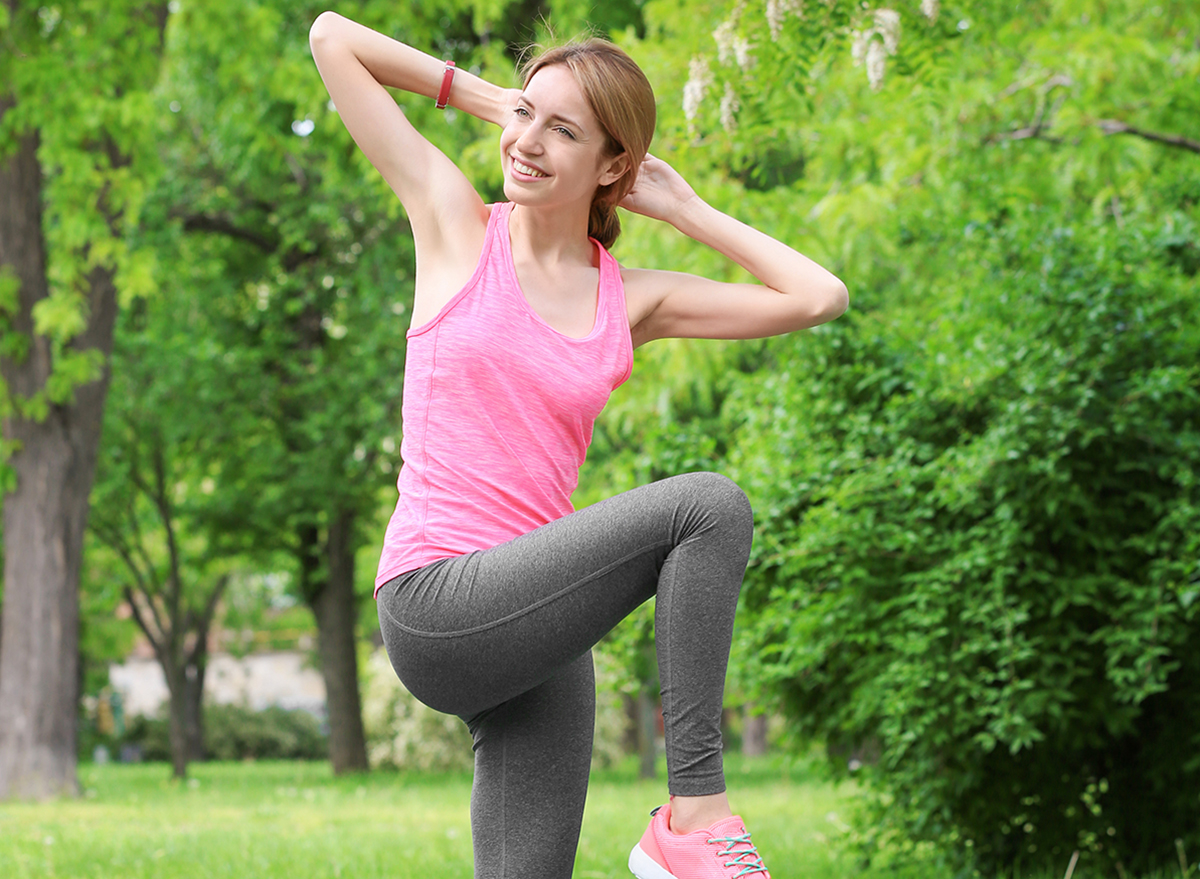
Standing Cross-Body Crunch: This dynamic movement directly targets the oblique muscles—the lateral abdominal muscles responsible for twisting and side-bending—which play a pivotal role in defining and tightening the waistline. By engaging in cross-body patterns, individuals improve their rotational control, activating a broader spectrum of trunk muscles. This widespread engagement helps flatten the lower abdominal region. Moreover, the standing nature of this crunch continuously challenges balance, ensuring constant activation of the core throughout each repetition. It replicates real-world movements where the body rotates and flexes simultaneously.
-
Standing Dumbbell Chops: Incorporating a light to moderate weight, standing dumbbell chops train the core’s ability to resist and control rotation, effectively strengthening the muscles that encircle the midsection. This movement is particularly effective because it’s a full-body exercise, simultaneously engaging the shoulders, hips, and deep core stabilizers. The increased muscle recruitment contributes to a higher calorie burn and improved intermuscular coordination. Critically, it teaches the abdominal muscles to brace and provide stability during powerful, dynamic actions, directly combating the laxity that can contribute to a protruding midsection. The "chopping" motion, when performed with control, is a powerful anti-rotational exercise.
-
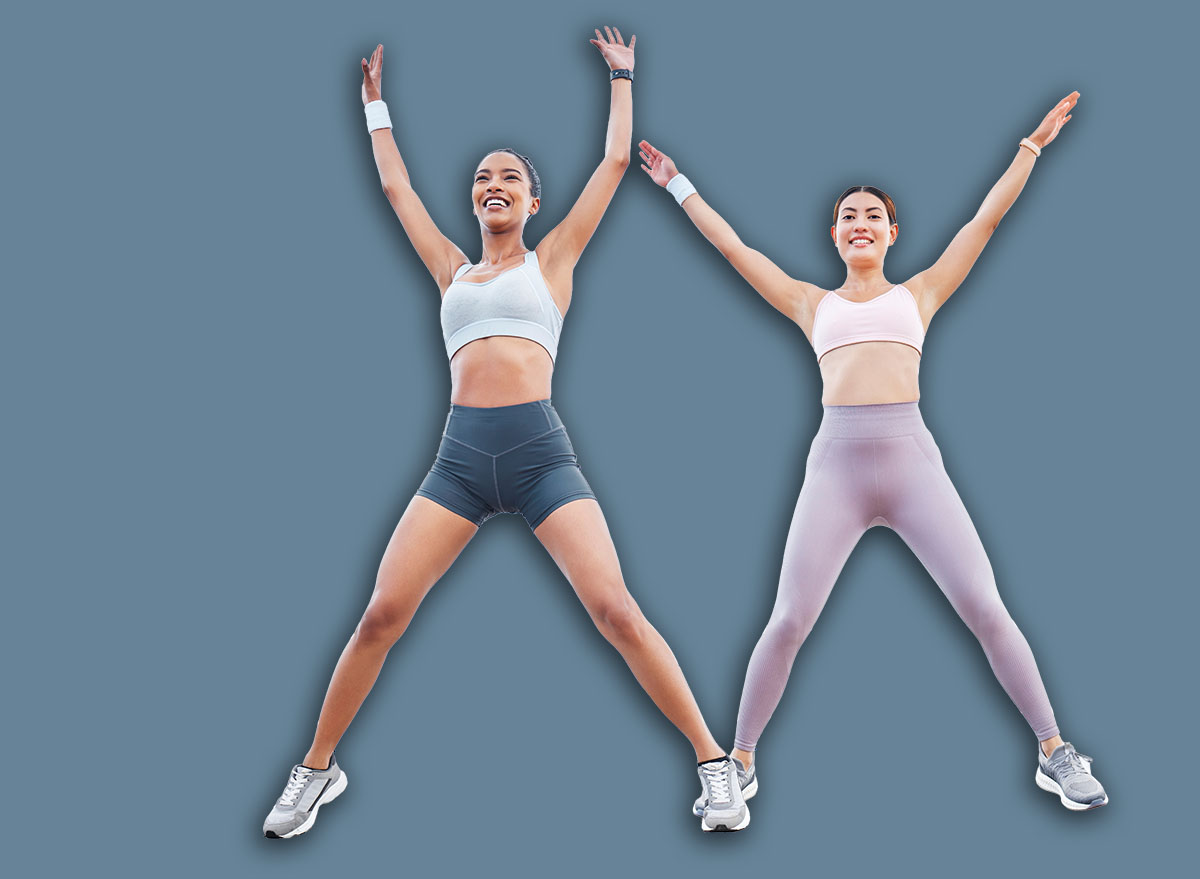
Jumping Jacks: Often considered a classic, jumping jacks are an excellent inclusion for their ability to significantly elevate the heart rate and boost overall energy expenditure, which is fundamental for systemic fat loss. They also reinforce rhythm, agility, and coordination while demanding continuous core engagement to stabilize the torso through rapid arm and leg movements. For many adults over 55, this exercise provides a straightforward yet highly effective cardiovascular component without requiring complex technique. Modified versions, such as stepping jacks, can be utilized to accommodate varying fitness levels and joint considerations, ensuring accessibility for all.
Beyond the specific exercises, maximizing the benefits of a standing core routine for midsection definition after 55 involves cultivating a mindful approach to daily movement and overall well-being. Sustained results extend beyond the brief workout itself and are deeply intertwined with consistent daily habits. The objective is not to maintain constant abdominal tension or chase fatigue but rather to build heightened awareness, improve posture, and integrate movement patterns that keep the midsection actively engaged throughout the day. When these elements coalesce, the abdominal region naturally becomes more toned and resilient over time.
Key strategies for optimizing results include:
- Conscious Core Engagement: Actively thinking about drawing the naval towards the spine during routine tasks like standing, walking, or lifting light objects. This subtle engagement strengthens the transverse abdominis, acting like a natural corset.
- Prioritizing Posture: Maintaining an upright posture with shoulders relaxed and back, and avoiding slouching, naturally activates core muscles and prevents the abdominal region from relaxing forward.
- Diaphragmatic Breathing: Practicing deep, belly breathing, where the diaphragm is fully engaged, can significantly enhance core activation and improve oxygen delivery, reducing stress and supporting overall physiological function.
- Holistic Wellness: Recognizing that exercise is one pillar of health. Adequate hydration, a balanced diet rich in whole foods, sufficient sleep, and effective stress management are equally crucial for managing abdominal fat and supporting overall vitality in later adulthood.
By embracing this accessible and functional approach to core training, individuals over 55 can proactively address concerns related to abdominal definition and stability. This method not only offers a practical alternative to more challenging floor exercises but also fosters a deeper connection to the body’s natural movement patterns, leading to enhanced balance, improved posture, and a more defined midsection, contributing significantly to a vibrant and active lifestyle in later adulthood. Consulting with a healthcare provider or a certified personal trainer before embarking on any new exercise program is always recommended to ensure it aligns with individual health needs and capabilities.
About the Author