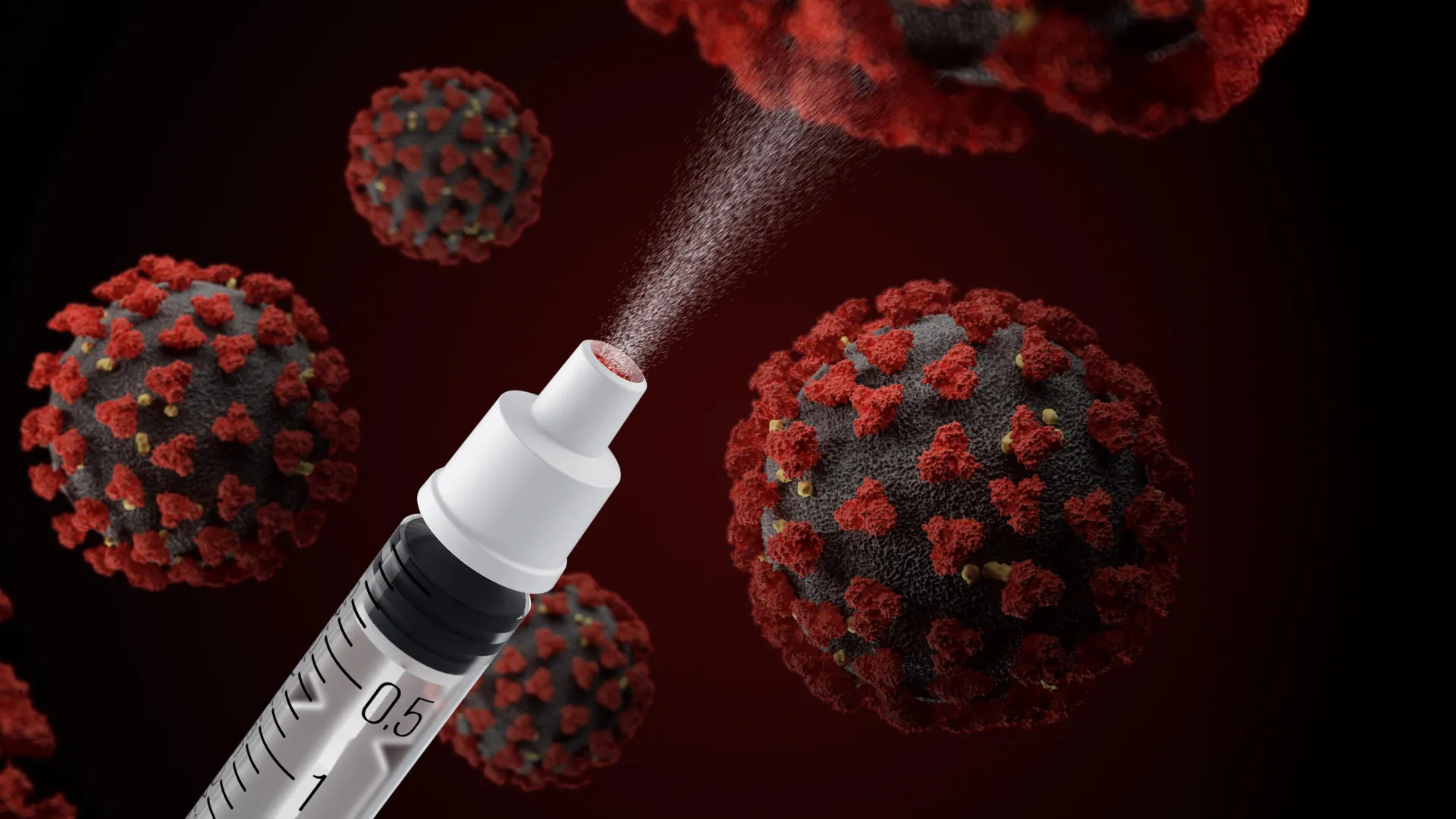
A groundbreaking experimental vaccine delivered via nasal spray has demonstrated unprecedented broad-spectrum protection against an array of respiratory threats, including various viruses, bacteria, and even common allergens, in a recent preclinical study. Researchers at Stanford Medicine, in collaboration with several other institutions, have reported a significant advancement in the long-pursued quest for a universal vaccine, moving beyond traditional antigen-specific approaches to harness and sustain the body’s integrated immune defenses. This novel strategy, detailed in findings published in Science on February 19, offers a compelling vision for future prophylactic medicine, potentially simplifying vaccination schedules and enhancing global readiness against emerging pathogens.
For centuries, the concept of immunity has been leveraged to protect against infectious diseases. The seminal work of Edward Jenner in the late 18th century, which introduced the principle of vaccination, established a paradigm centered on antigen specificity. This conventional method involves introducing a recognizable component of a pathogen – an antigen – to the immune system. In response, the body develops specific antibodies and specialized T cells capable of rapidly identifying and neutralizing the actual pathogen upon subsequent exposure. This approach has yielded remarkable success in eradicating diseases like smallpox and controlling numerous others. However, the relentless evolutionary capacity of many pathogens, particularly respiratory viruses such as influenza and coronaviruses, presents a persistent challenge to this traditional model.
These rapidly mutating microbes frequently alter their surface proteins, rendering previously effective vaccines less potent or entirely obsolete. This phenomenon, known as antigenic drift or shift, necessitates the periodic updating of vaccines, exemplified by the annual influenza shot and the recurring need for new COVID-19 boosters to target emerging variants. Scientists have thus been engaged in a continuous arms race against pathogens, seeking to develop broader vaccines that could offer protection against entire families of viruses or bacteria by targeting more conserved, less variable components. Yet, the ambition of creating a single immunization capable of defending against entirely unrelated classes of pathogens – from viruses to bacteria and allergens – has largely remained an elusive, almost theoretical, aspiration within the scientific community.
The team behind this latest research, led by senior author Bali Pulendran, PhD, the Violetta L. Horton Professor II and professor of microbiology and immunology, alongside lead author Haibo Zhang, PhD, a postdoctoral scholar in Pulendran’s laboratory, took an unconventional route. Instead of focusing on specific pathogen antigens, their innovative vaccine formulation aims to mimic the intricate communication signals exchanged between immune cells during an infection. This approach ingeniously bridges the body’s two primary defense mechanisms: the innate and adaptive immune systems, orchestrating a more coordinated, robust, and enduring protective response.
The immune system operates through two interconnected branches. The innate immune system represents the body’s first line of defense, reacting within minutes of encountering a perceived threat. It deploys a range of cells, including dendritic cells, neutrophils, and macrophages, which broadly attack invaders without prior exposure. While incredibly versatile and rapid, innate immunity is typically short-lived, fading within days. In contrast, the adaptive immune system mounts a more targeted response. It takes longer to activate, but it produces highly specific antibodies and T cells that not only neutralize particular pathogens but also retain immunological memory, providing long-term protection. Most existing vaccines primarily stimulate this adaptive arm of immunity.
The critical insight informing this new vaccine strategy emerged from Pulendran’s prior research into the Bacillus Calmette-Guerin (BCG) vaccine, originally developed for tuberculosis. Administered to approximately 100 million newborns globally each year, BCG has long been observed to offer "off-target" benefits, potentially reducing infant mortality from non-tuberculosis infections. The precise immunological mechanism underlying this extended, cross-protective effect, however, remained largely unclear until recently. In 2023, Pulendran’s group elucidated how BCG achieves this broad protection in mice: the vaccine triggers both innate and adaptive immune responses, but crucially, the adaptive T cells recruited to the lungs send sustained signals that keep the innate immune cells in an activated state for months. These signals, identified as specific cytokines, effectively ‘switch on’ pathogen-sensing receptors known as Toll-like Receptors (TLRs) on innate immune cells, thereby prolonging their protective readiness.
This discovery provided the conceptual blueprint for a synthetic vaccine. The researchers hypothesized that if they could replicate these T cell-mediated signals in the lungs, they could induce a similar sustained innate immune activation. "We speculated that since we now know how the tuberculosis vaccine is mediating its cross-protective effects, it would be possible to make a synthetic vaccine, perhaps a nasal spray, that has the right combination of toll-like receptor stimuli and some antigen to get the T cells into the lungs," Pulendran explained. "Fast forward two and a half years and we’ve shown that exactly what we had speculated is feasible in mice."
The newly developed formulation, currently designated GLA-3M-052-LS+OVA, is meticulously designed to mimic these critical T cell signals that stimulate innate immune cells specifically within the respiratory tract. It incorporates a combination of Toll-like Receptor agonists to directly activate innate cells and a harmless antigen – ovalbumin (OVA), a common egg protein – whose primary role is to attract and sustain T cells in the lungs. These T cells then act as crucial intermediaries, providing the ongoing cytokine signals necessary to maintain the heightened innate response for an extended period, spanning weeks to months.
In the experimental setup, mice received the vaccine through intranasal administration, with some groups receiving multiple doses spaced a week apart. Following vaccination, these animals were subsequently exposed to various respiratory pathogens. The results were remarkably consistent and robust. Mice that received three doses of the nasal vaccine exhibited protection against SARS-CoV-2 and other coronaviruses for at least three months. Unvaccinated control mice, in stark contrast, displayed severe weight loss, a clear indicator of significant illness, and often succumbed to the infections. Their lungs showed extensive inflammation and high viral loads. Vaccinated mice, however, experienced minimal weight loss, all survived, and their lung tissues contained dramatically reduced viral concentrations.
Pulendran characterized the vaccine’s impact as a "double whammy" effect. The sustained activation of the innate immune system served as a powerful first line of defense, reducing viral levels in the lungs by an extraordinary 700-fold. Any viruses that managed to bypass this initial robust barrier were then swiftly confronted by an exceptionally rapid adaptive immune response. "The lung immune system is so ready and so alert that it can launch the typical adaptive responses – virus-specific T cells and antibodies – in as little as three days, which is an extraordinarily short length of time," Pulendran noted, highlighting that in unvaccinated mice, a comparable adaptive response typically takes two weeks to develop.
Encouraged by the significant protection observed against viral infections, the researchers extended their investigation to bacterial respiratory pathogens. The intranasal vaccine proved equally effective against common hospital-acquired infections such as Staphylococcus aureus and Acinetobacter baumannii, protecting vaccinated mice for approximately three months. The team then explored another prevalent respiratory challenge: allergens. When mice were exposed to a protein derived from house dust mites, a frequent trigger for allergic asthma, unvaccinated animals developed a strong Th2 immune response, leading to the accumulation of mucus in their airways. Vaccinated mice, conversely, exhibited a significantly weaker Th2 response and maintained clear, healthy airways, indicating broad protection against allergic sensitization in the respiratory tract. These findings collectively suggest that the innovative strategy could indeed represent a universal vaccine against a diverse range of respiratory threats.
The promising preclinical results pave the way for the crucial next phase: human clinical trials. The immediate step involves a Phase I safety trial to assess the vaccine’s tolerability and safety in people. Should these initial results be favorable, larger-scale studies would follow, potentially including controlled human infection models to evaluate efficacy. Pulendran estimates that in humans, two doses delivered as a nasal spray might be sufficient to confer protection. With adequate financial backing and continued scientific progress, he projects that such a universal respiratory vaccine could become a clinical reality within five to seven years.
The implications of such a vaccine are profound and far-reaching. Imagine a future where a single nasal spray administered annually or semi-annually could provide comprehensive protection against not only seasonal influenza and prevalent coronaviruses like SARS-CoV-2, but also other common respiratory syncytial virus (RSV), the common cold, bacterial pneumonia, and even early spring allergens. Such a development would revolutionize public health practices, significantly alleviate the burden of seasonal respiratory illnesses, and critically bolster global preparedness for future pandemics by offering rapid, broad-spectrum defense against novel, unforeseen pathogens. The collaborative research team, which included scientists from Emory University School of Medicine, the University of North Carolina at Chapel Hill, Utah State University, and the University of Arizona, received funding from the National Institutes of Health, the Violetta L. Horton Professor endowment, the Soffer Fund endowment, and Open Philanthropy, underscoring the collaborative effort behind this potentially transformative medical innovation.
About the Author