A groundbreaking investigation into the drivers of substance-seeking behavior has revealed a compelling correlation between innate physiological stress responses and a heightened inclination for cannabis consumption in laboratory rats, suggesting that pre-existing biological vulnerabilities may significantly influence an individual’s propensity to engage with the substance. Researchers at Washington State University, in a study published in the esteemed journal Neuropsychopharmacology, meticulously examined a spectrum of behavioral and biological indicators to ascertain which animals would actively pursue cannabis and the underlying reasons for this engagement. Their findings point towards a critical role for baseline stress levels, identifying them as a primary determinant in the repeated self-administration of the widely recognized psychoactive compound.
The scientific endeavor was designed to unravel the complex interplay of factors contributing to the initiation and continuation of cannabis use. Lead researcher Dr. Ryan McLaughlin, an associate professor within WSU’s College of Veterinary Medicine, articulated the study’s core revelation: "When we meticulously analyzed all the diverse factors and measured variables, it became apparent that stress levels exerted the most significant influence on cannabis consumption." This observation underscores a fundamental principle in addiction research – that individuals often turn to external substances as a means of modulating internal states, particularly those associated with discomfort or distress.
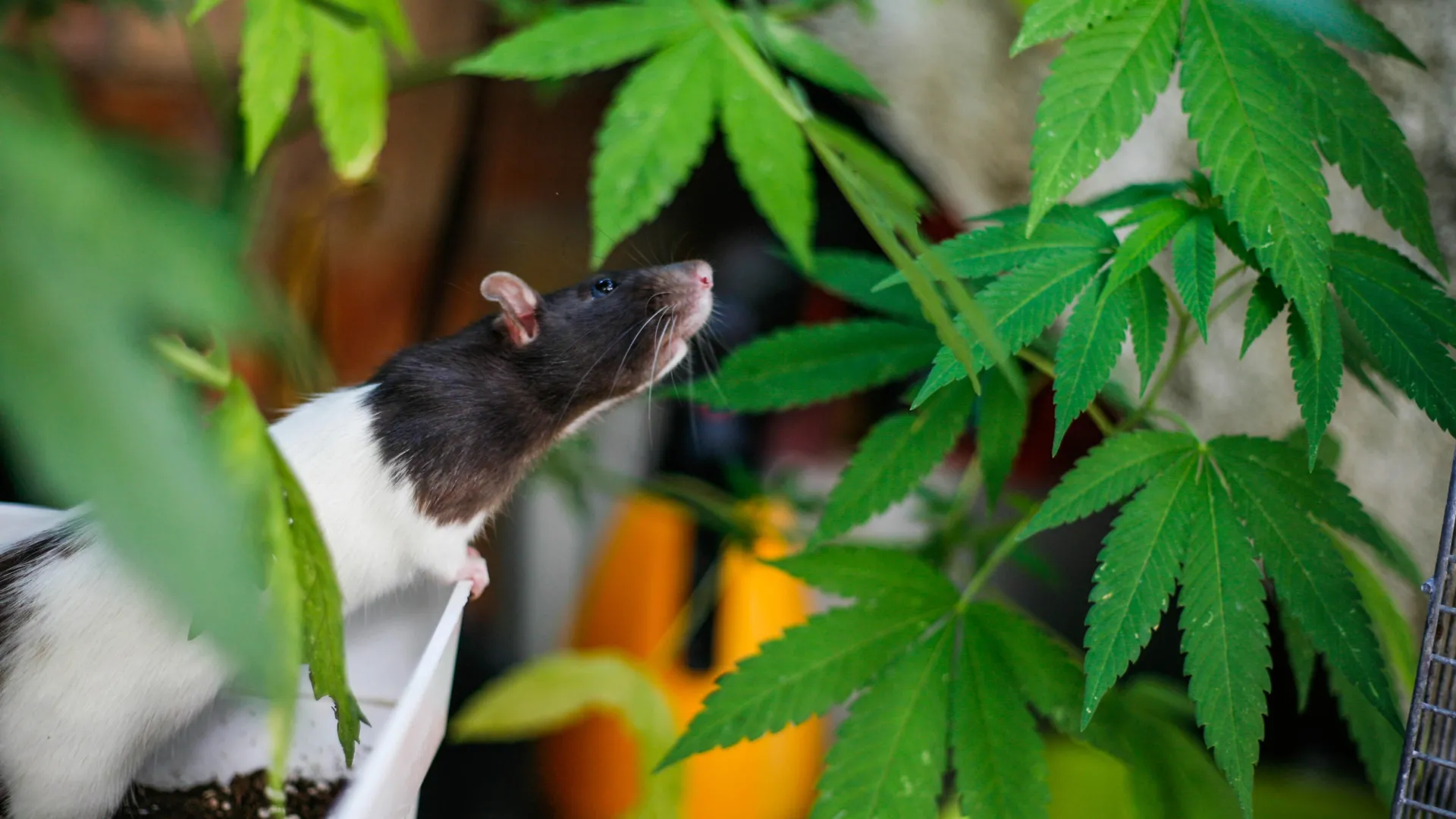
To meticulously probe the behavioral predispositions toward cannabis, Dr. McLaughlin and his dedicated team, comprising both undergraduate and graduate students, embarked on an exhaustive assessment of each rat. This comprehensive evaluation encompassed a wide array of characteristics, including their social interactions, sex, cognitive processing capabilities, their responsiveness to rewards, and their general arousal levels. By synthesizing these diverse data points, the researchers were able to construct a detailed behavioral profile for every animal participating in the study. The subsequent experimental phase involved a three-week observation period, during which each rat was granted one hour of daily access to self-administer cannabis. This was facilitated through a designated vapor port; upon the rat’s nasal insertion, a three-second emission of cannabis vapor would fill an airtight chamber, providing a direct route to exposure.
Throughout these daily experimental sessions, the student researchers diligently recorded the frequency of "nose-pokes" exhibited by each rat, a quantifiable measure of their active pursuit of the substance. These behavioral metrics were then rigorously compared against the rats’ pre-existing baseline levels of stress hormones. The analysis yielded a striking and consistent pattern: rats that demonstrated a higher frequency of nose-pokes were invariably those exhibiting elevated initial levels of stress hormones. This finding provided a crucial piece of evidence, suggesting a direct link between an animal’s inherent stress physiology and its motivation to consume cannabis.
The specific stress hormone under scrutiny was corticosterone, the rodent analog to the human stress hormone, cortisol. The researchers observed a pronounced proclivity for self-administration of cannabis among animals that naturally possessed higher concentrations of corticosterone. This physiological marker, therefore, emerged as a potent predictor of cannabis-seeking behavior. Dr. McLaughlin further elaborated on this crucial finding, stating, "To simplify the core takeaway, baseline levels of stress hormones can indeed forecast the rates at which cannabis is self-administered. This aligns logically with the widely acknowledged primary motivation for habitual cannabis use in humans – stress management."
Crucially, the study distinguished between chronic, baseline stress and transient, acute stress responses. The research team emphasized that it was the rats’ resting, inherent stress hormone levels that proved to be the decisive factor, rather than any temporary surges that might occur during periods of physical exertion or cognitively demanding tasks. When the researchers subsequently measured stress hormone levels following the deliberate introduction of a stressor, these acute measurements did not reveal any significant or meaningful association with the rats’ cannabis-seeking activities. This distinction is vital, as it highlights a predisposition rooted in an individual’s ongoing physiological state rather than a reactive response to immediate challenges.
Beyond stress hormones, the investigation also illuminated a significant connection between cannabis consumption and a rat’s performance on tests designed to assess "cognitive flexibility." This critical cognitive function refers to an organism’s capacity to adapt and adjust its behavior when confronted with changing rules or shifting environmental conditions. The study revealed that animals demonstrating less adeptness in transitioning between different cognitive sets, as evidenced in controlled tasks, tended to exhibit more pronounced rates of cannabis-seeking behavior. Dr. McLaughlin noted, "Animals that were less flexible in their ability to shift between rules, when we assessed them in a cognitive task, generally showed stronger rates of cannabis-seeking behavior." He further elaborated that rats which relied more heavily on visual cues to guide their decision-making processes were also found to be highly motivated when it came to self-administering cannabis vapor. This suggests that certain cognitive styles or vulnerabilities might be intertwined with the drive to seek out the substance.
Furthermore, the study uncovered another intriguing biological pattern involving a confluence of elevated morning corticosterone levels and diminished endocannabinoid levels. While this particular correlation was less robust than the direct impact of baseline stress, it nevertheless presented as a statistically significant factor associated with cannabis self-administration. Endocannabinoids are endogenous compounds, meaning they are naturally produced by the body. Their primary role is to maintain internal equilibrium and stability, a state known as homeostasis, by responding to the body’s needs on demand.
The researchers theorized about the potential biological underpinnings of this observation. "There is a prevailing hypothesis that explains why some individuals might be more predisposed to cannabis use," Dr. McLaughlin explained. "This theory suggests that THC, the primary psychoactive component of cannabis, could potentially serve as a functional substitute for endocannabinoids in individuals who have lower endogenous levels of these compounds. Consequently, there might be a heightened impetus to supplement this deficiency with cannabis." This concept points towards a potential biological mechanism where external cannabinoids fill a void created by insufficient internal production, thereby driving consumption.
In an era marked by the increasing decriminalization and legalization of recreational cannabis across numerous jurisdictions, understanding the intricate ways in which the drug interacts with the brain and influences behavior is paramount. This knowledge is essential for comprehending the development of patterns of substance abuse and for formulating effective public health strategies. Dr. McLaughlin emphasized the profound implications of their findings for future research and clinical applications: "Our discoveries highlight potential early indicators or pre-use markers that could, in the future, contribute to the development of screening and prevention strategies." He further posited a hypothetical scenario where "an assessment of baseline cortisol levels might offer a degree of insight into an individual’s propensity to develop problematic drug use patterns later in life." This forward-looking perspective underscores the potential for this research to inform proactive interventions aimed at mitigating the risks associated with substance use. The study’s insights into the biological and behavioral correlates of cannabis consumption offer a vital step towards a more nuanced understanding of addiction and the development of targeted preventative measures.
About the Author