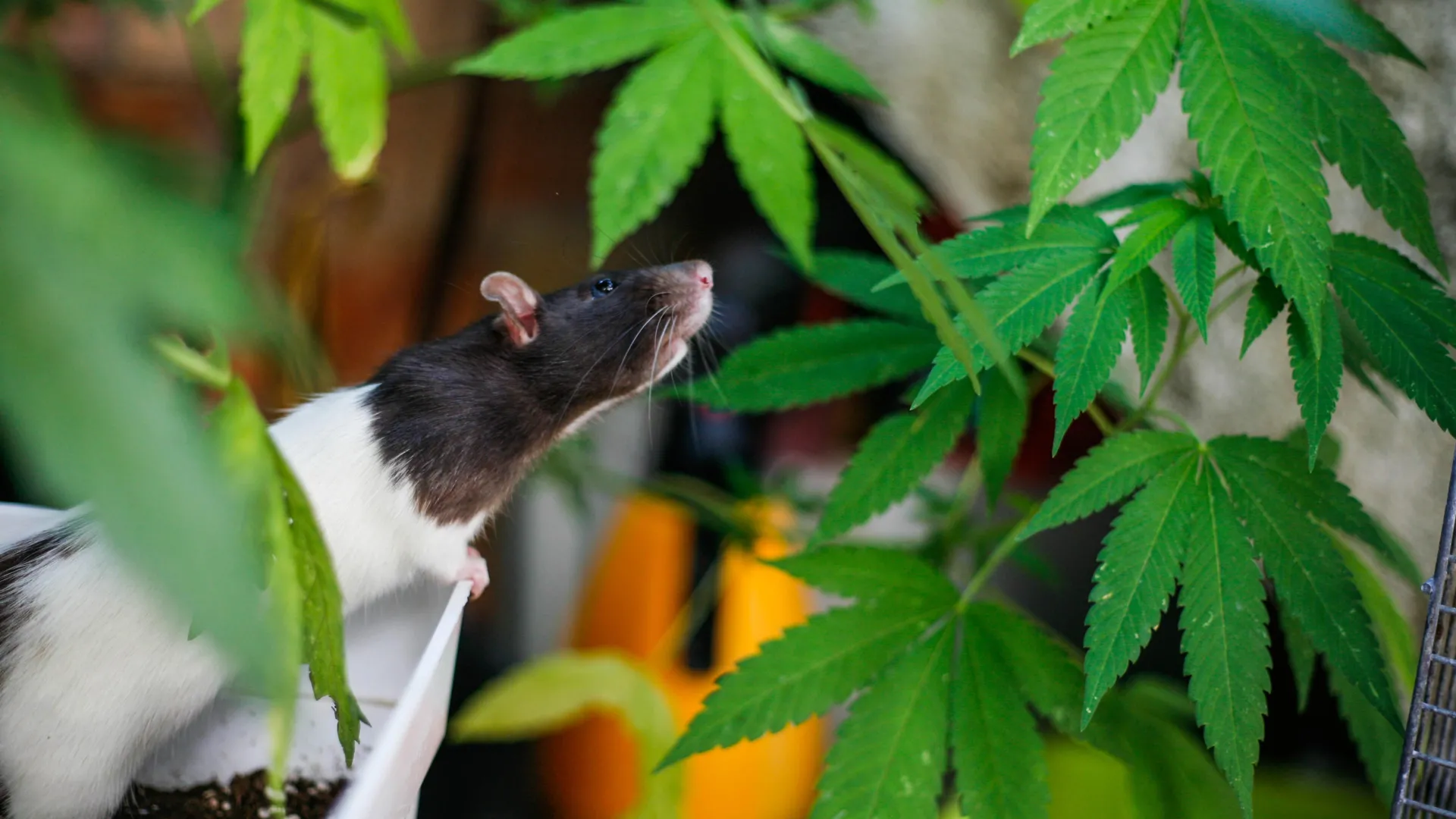
A groundbreaking investigation conducted by scientists at Washington State University has illuminated a significant correlation between inherent stress responses in rodents and their propensity to seek out and consume cannabis-derived compounds. This research, detailed in the esteemed journal Neuropsychopharmacology, aimed to unravel the underlying factors that drive animals to actively pursue cannabinoid substances, providing novel insights into the biological underpinnings of substance use. The findings reveal a compelling link: individuals exhibiting naturally elevated levels of stress hormones were demonstrably more inclined to repeatedly administer cannabis to themselves when presented with the opportunity.
The research team embarked on a comprehensive evaluation, subjecting their rodent subjects to a rigorous array of behavioral and biological assessments. Through meticulous examination of numerous variables, a singular factor emerged as the most influential determinant of cannabinoid engagement: the organism’s baseline stress status. Dr. Ryan McLaughlin, an associate professor within WSU’s College of Veterinary Medicine and a lead author on the study, articulated that after analyzing a broad spectrum of data points, stress levels consistently proved to be the most significant predictor of cannabinoid consumption.
To precisely gauge which intrinsic characteristics might predispose an animal to cannabinoid use, Dr. McLaughlin and his dedicated team, comprising both undergraduate and graduate researchers, meticulously cataloged a diverse range of traits. These included nuanced observations of social interactions, biological sex, cognitive processing capabilities, sensitivity to reward stimuli, and general arousal levels. By synthesizing this multifaceted data, the researchers were able to construct a detailed behavioral profile for each individual rat. Over a continuous three-week period, the animals were observed daily for one-hour intervals. During these sessions, they were presented with a choice: they could self-administer cannabis by engaging with a vapor port. Each interaction with the port dispensed a three-second cloud of cannabis vapor into a sealed chamber, allowing for controlled exposure.
Within each daily experimental session, the student researchers diligently recorded the frequency with which each rat interacted with the vapor port, quantified by "nose-pokes." These usage counts were subsequently cross-referenced with pre-established baseline levels of stress hormones. The analysis revealed a striking and unambiguous pattern: rats that exhibited a higher rate of nose-pokes, indicating more frequent self-administration of cannabis vapor, also possessed significantly higher initial concentrations of stress hormones.
The central stress hormone examined in this study was corticosterone, the rodent equivalent of cortisol, the primary stress hormone in humans. The scientific observations confirmed that subjects with inherently higher baseline levels of corticosterone demonstrated a markedly greater inclination to self-administer cannabis. Dr. McLaughlin summarized this key finding, stating that baseline levels of stress hormones can reliably predict the rate at which individuals will self-administer cannabinoids. He further posited that this observation aligns intuitively with the widely recognized primary motivation for habitual cannabis use in humans: stress management.
Crucially, the study emphasized that the significant predictor was not transient spikes in stress hormones, such as those induced by acute stressors like physical exertion or mentally demanding tasks. Instead, it was the rats’ resting, basal physiological state that correlated with their cannabinoid-seeking behavior. When the researchers measured stress hormone levels following the introduction of a specific stressor, these acute fluctuations did not yield a statistically meaningful connection to the observed patterns of cannabis consumption.
Beyond stress, the investigation also uncovered a notable relationship between the frequency of cannabinoid self-administration and performance on assessments of "cognitive flexibility." This cognitive trait refers to an organism’s capacity to adapt its behavior and thought processes when presented with changing rules or circumstances. The study indicated that animals demonstrating less proficiency in shifting between task rules, as measured by cognitive tests, tended to exhibit more robust rates of cannabis-seeking behavior. Specifically, rats that relied more heavily on visual cues to guide their decision-making processes were also found to be the most highly motivated to self-administer cannabis vapor when given the opportunity.
Furthermore, the research identified a secondary biological pattern associated with cannabinoid self-administration, albeit with a less pronounced effect than baseline stress. This pattern involved a combination of elevated morning corticosterone levels and concurrently low levels of endocannabinoids. Endocannabinoids are endogenous compounds naturally produced by the body to regulate and maintain internal equilibrium, a state known as homeostasis. The study’s authors theorize that in individuals with lower natural endocannabinoid levels, THC, the primary psychoactive component of cannabis, may act as a functional substitute, thereby increasing the drive to supplement these endogenous compounds with external cannabis intake.
In an era characterized by the increasing decriminalization and legalization of cannabis across numerous jurisdictions, a profound understanding of the drug’s neurobiological effects and the developmental pathways of substance abuse patterns is paramount. Dr. McLaughlin underscored the importance of these findings in this evolving landscape. He suggested that the identified biological markers could potentially serve as early indicators, facilitating the development of targeted screening and prevention strategies. He envisioned a future where assessments of baseline cortisol levels might offer valuable insights into an individual’s predisposition towards developing problematic drug use patterns later in life, thereby enabling proactive interventions and support.
About the Author