As individuals progress through their fifth decade and beyond, many experience natural physiological shifts that can impact body composition, including the appearance of the upper arms. The term often colloquially used to describe this phenomenon points to a common concern regarding the firmness and contour of the area beneath the bicep, particularly when the arms are extended or left unsupported. This alteration in tissue density and muscle tone is not merely a cosmetic issue but a manifestation of broader age-related biological processes, prompting many to seek effective exercise strategies that go beyond conventional bicep-focused routines. Understanding these underlying mechanisms is crucial for developing targeted fitness regimens designed to foster greater strength and improved aesthetic outcomes.
The primary culprits behind diminished upper arm firmness are a combination of factors linked to the aging process. One significant contributor is sarcopenia, the progressive and generalized loss of skeletal muscle mass and strength that begins around age 30 and accelerates after 50. This reduction in lean muscle tissue directly impacts the structural support and definition of the arms. Concurrently, changes occur within the skin and connective tissues. The production of essential proteins like collagen and elastin, which provide skin with its elasticity and firmness, naturally declines with age. This decrease in dermal resilience means the skin becomes less taut and more prone to sagging. Furthermore, metabolic rate tends to slow down, and hormonal shifts, particularly a decrease in estrogen for women, can lead to a redistribution of body fat, often favoring accumulation in areas such as the upper arms. When muscle mass decreases and skin elasticity wanes, coupled with potential localized fat deposits, the result can be a less toned appearance in the upper arm region.
Addressing these multifactorial changes requires a comprehensive approach to exercise that emphasizes specific muscle groups often overlooked by more traditional, isolated movements. While bicep curls are a staple in many arm workouts, their efficacy in counteracting the age-related changes in overall upper arm contour is limited. The reason for this lies in the fundamental anatomy of the upper arm. The bicep muscle is located on the front of the upper arm and is primarily responsible for flexing the elbow and supinating the forearm. However, the perceived lack of firmness or "jiggle" predominantly originates from the posterior aspect of the upper arm, an area dominated by the triceps brachii muscle. The triceps, which literally means "three heads," constitutes nearly two-thirds of the total muscle mass in the upper arm and is responsible for extending the elbow. Therefore, any regimen aiming to enhance upper arm definition must prioritize robust engagement of the triceps, along with synergistic activation of the shoulders and upper back.
Fitness experts frequently advocate for a shift towards functional, compound movements, particularly for older adults, citing their superior benefits compared to isolated exercises. A standing exercise, for instance, naturally recruits a wider array of muscles, including core stabilizers and back muscles, to maintain balance and posture throughout the movement. This integrated approach not only boosts caloric expenditure during the workout but also elicits a more favorable hormonal response, conducive to muscle growth and overall strength development. Unlike seated or machine-based exercises that often stabilize the body, standing movements challenge proprioception and improve functional strength, which translates directly to enhanced ability in daily activities. For individuals over 50, who may also be contending with joint stiffness or reduced mobility, prioritizing controlled movements with lighter weights and higher repetitions can build muscular endurance and tone without placing undue stress on joints. This strategy promotes sustainable fitness, helping to mitigate the risks of injury while still achieving significant strength and aesthetic improvements.
To effectively target the triceps, shoulders, and surrounding upper body musculature, a selection of standing exercises offers a dynamic and efficient pathway to improved arm definition. These movements are designed to engage multiple muscle groups simultaneously, fostering greater overall strength and a more sculpted appearance.
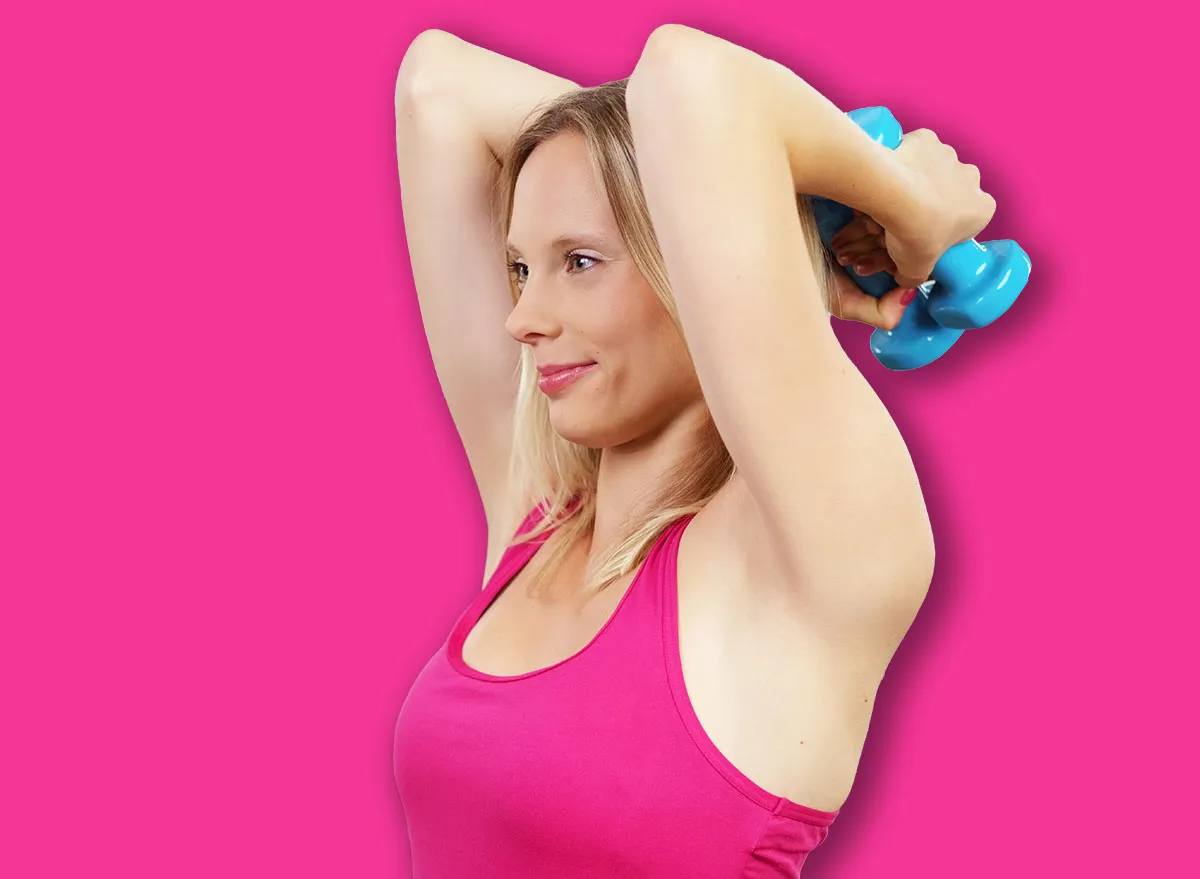
1. Standing Overhead Triceps Extension
This exercise is a cornerstone for isolating and strengthening the triceps muscle. To perform it, stand tall with feet shoulder-width apart, holding a single dumbbell with both hands, or two lighter dumbbells held together. Extend your arms straight overhead, keeping a slight bend in the elbows to prevent hyperextension. Slowly lower the dumbbell behind your head by bending your elbows, ensuring your upper arms remain close to your ears and stationary. Feel the stretch in your triceps. Exhale as you extend your arms back to the starting position, focusing on contracting the triceps. The key is to control the movement both on the way down and up, avoiding any swinging motion. This exercise directly targets the long head of the triceps, contributing significantly to the muscle’s bulk and firmness. It also engages the deltoids (shoulders) and core for stability, enhancing its functional benefits.
2. Triceps Kickbacks
Triceps kickbacks are another excellent exercise for honing in on the triceps, particularly the lateral head. Begin by standing with your feet hip-width apart, holding a light to moderate dumbbell in each hand. Hinge forward at your hips, keeping your back straight and core engaged, until your torso is almost parallel to the floor. Your elbows should be bent at a 90-degree angle, tucked close to your body, with your upper arms parallel to the floor. From this position, extend your forearms straight back, squeezing your triceps at the top of the movement. Your upper arms should remain static throughout the exercise, with the movement coming solely from the elbow joint. Slowly return the dumbbells to the starting position with control. This exercise emphasizes a peak contraction of the triceps, promoting muscle density and definition. Maintaining proper form is paramount to avoid recruiting other muscles and to ensure maximum triceps engagement.
3. Arm Circles
While seemingly simple, arm circles are a highly effective dynamic warm-up and conditioning exercise that targets the shoulders, upper back, and even provides some isometric work for the triceps, enhancing mobility and endurance. Stand tall with your feet shoulder-width apart, arms extended straight out to your sides at shoulder height, forming a "T" shape with your body. Begin by making small, controlled circles with your arms, either forward or backward. Gradually increase the size of the circles, maintaining good posture and keeping your core engaged. After a set number of repetitions or duration in one direction, reverse the direction. This movement improves shoulder joint mobility, activates the deltoid muscles (anterior, medial, and posterior heads), and engages the scapular stabilizers in the upper back. By performing them with deliberate control, you can build muscular endurance in the entire shoulder girdle, contributing to overall upper arm and shoulder firmness.
4. Hammer Curls to Overhead Press
This compound movement is exceptional for engaging multiple muscle groups in a fluid, functional sequence, delivering a comprehensive upper body workout. Stand with your feet shoulder-width apart, holding a dumbbell in each hand with a neutral grip (palms facing each other), arms extended by your sides. Perform a hammer curl, bringing the dumbbells up towards your shoulders while keeping your elbows tucked in. Once the dumbbells reach shoulder height, smoothly transition into an overhead press: rotate your wrists so your palms face forward, and press the dumbbells straight up until your arms are fully extended overhead. Control the descent, reversing the motion by lowering the dumbbells back to your shoulders, rotating your wrists back to a neutral grip, and then slowly lowering them to your sides, completing the hammer curl return. This exercise dynamically works the biceps (with a neutral grip emphasizing the brachialis and brachioradialis), the anterior and medial deltoids during the press, and the triceps during the extension phase of the press and the controlled lowering. The seamless integration of these movements promotes muscular coordination, strength, and definition across the entire upper arm and shoulder complex.
Incorporating these standing exercises into a regular fitness routine, ideally two to three times per week with adequate rest between sessions, can yield significant improvements in upper arm tone and strength for individuals over 50. It is always advisable to begin with lighter weights to perfect form and then gradually increase resistance as strength develops. Focusing on controlled movements, maintaining core engagement, and listening to one’s body are crucial for maximizing benefits and minimizing injury risk. Beyond the aesthetic enhancements, building and maintaining upper body strength is vital for functional independence, improving posture, and enhancing overall quality of life as one ages. By prioritizing these comprehensive, multi-joint movements, individuals can effectively address the unique physiological changes of aging, fostering a sense of vitality and confidence in their physical capabilities.
About the Author