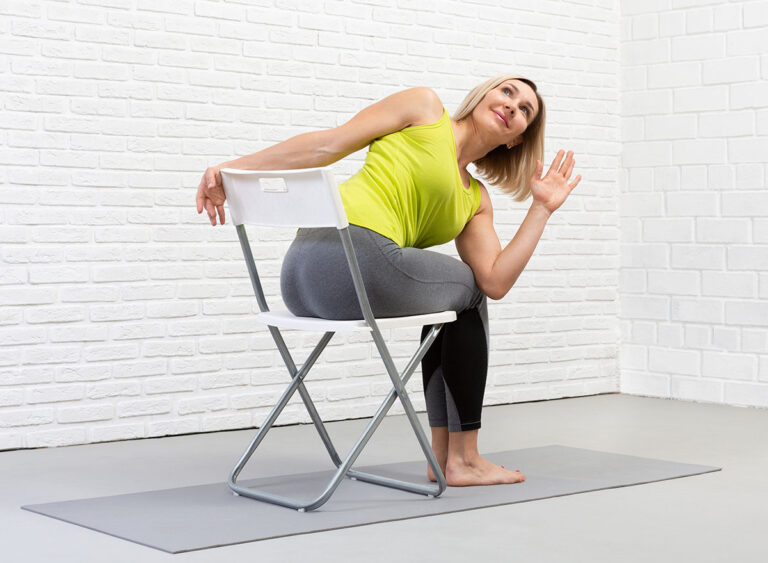
As individuals navigate the landscape of middle age and beyond, maintaining muscle tone and definition, particularly in the upper arms, often becomes a priority. The natural physiological changes associated with aging, such as a gradual decline in muscle mass (sarcopenia) and shifts in body composition, can contribute to a less firm appearance in the triceps region, commonly referred to as "batwing arms." While traditional strength training with heavy weights certainly holds its place in a comprehensive fitness regimen, a more frequent, lower-impact approach, focusing on consistent muscle activation and joint comfort, presents a highly effective and sustainable strategy for adults over 45 seeking to enhance upper arm aesthetics and functional strength without the need for a gym or heavy equipment.
The efficacy of daily, moderate exercise for mature adults stems from several key physiological principles. Unlike younger demographics who might tolerate and benefit from infrequent, high-intensity workouts followed by extensive recovery periods, older individuals often respond better to consistent, gentle stimulation. This method promotes sustained blood flow to the muscles, aids in nutrient delivery and waste removal, and can contribute to better joint health by encouraging synovial fluid production without imposing excessive stress. Furthermore, frequent, low-load activity fosters improved neuromuscular control, enhancing the brain’s ability to communicate with and activate muscle fibers. This consistent engagement, even at lower intensities, can lead to remarkable improvements in muscle endurance, posture, and overall upper body stability. The objective is not to induce extreme muscle fatigue or soreness, but rather to maintain an ongoing stimulus that encourages muscle adaptation and a firmer, more toned appearance over time.
Beyond the aesthetic benefits, a regular routine of arm-focused exercises plays a crucial role in preserving functional independence. Strong triceps are essential for everyday movements, including pushing, lifting, and supporting body weight, which become increasingly important as one ages. By prioritizing movements that can be performed daily, individuals are more likely to adhere to their fitness goals, transforming exercise into an integrated part of their lifestyle rather than an arduous task. The chosen exercises emphasize controlled tension and repeatable mechanics, ensuring that the target muscles—primarily the triceps and shoulders—are effectively engaged while minimizing strain on vulnerable joints like the elbows and shoulders. This approach focuses on quality of movement and consistent engagement, proving that effective muscle toning does not necessitate heavy lifting or expensive gym memberships.
Here, we explore five highly effective, accessible exercises designed to cultivate upper arm strength and definition, suitable for daily integration into a routine for individuals over 45:
1. Standing Resistance Band Triceps Kickbacks
This exercise leverages the continuous tension provided by a resistance band to optimally challenge the triceps muscle throughout its entire range of motion. Unlike free weights, which can lose resistance at the peak of contraction due to gravity, resistance bands maintain a consistent pull, ensuring the triceps remain actively engaged even during full elbow extension. This constant "time under tension" is a potent stimulus for muscle endurance and definition. Performing the kickbacks in a standing position further activates the core musculature and demands shoulder stability, contributing to improved overall kinetic chain control. Given the moderate resistance and minimal joint impact, this movement is exceptionally well-suited for daily performance, supporting long-term consistency without excessive strain.
- Muscles Engaged: Primarily targets the triceps brachii, with secondary engagement of the deltoids (shoulders) and core stabilizers.
- Execution Focus: Stand with a slight forward lean, holding one end of a resistance band while the other end is anchored under your foot or to a stable object. Keep your upper arm locked close to your torso, forming a 90-degree angle at the elbow. Extend your forearm backward until your arm is fully straight, squeezing the triceps at the end of the movement. Slowly return to the starting position.
- Sets and Repetitions: Aim for 3 sets of 15 to 20 repetitions, incorporating a brief 30-second recovery period between sets.
- Form Insight: Concentrate on moving only your forearms, ensuring your upper arms remain stationary and parallel to the floor. This isolates the triceps effectively.
- Progression: To increase difficulty, use a band with higher resistance or incorporate a brief pause at the point of full extension.
2. Wall Push-Ups
The wall push-up offers a highly modifiable and joint-friendly alternative to traditional floor push-ups, making it an excellent exercise for building foundational pushing strength and triceps engagement. By performing the movement against a vertical surface, the body’s angle reduces the gravitational load, minimizing stress on the shoulders and wrists while still requiring significant muscle activation in the triceps, chest, and shoulders. This exercise is invaluable for reinforcing proper scapular (shoulder blade) movement patterns, which are crucial for optimal upper body function and posture. Daily execution of wall push-ups can progressively build muscular endurance and contribute to a visibly firmer appearance in the upper arms without leading to excessive muscle soreness or recovery demands.
- Muscles Engaged: Primarily works the triceps, pectoralis major (chest), and anterior deltoids (front of shoulders), with core stabilization.
- Execution Focus: Stand facing a wall, placing your hands slightly wider than shoulder-width apart at chest height. Step your feet back until your body forms a straight line from head to heels. Inhale as you bend your elbows, lowering your chest towards the wall. Exhale as you push away from the wall, extending your arms fully and engaging your triceps.
- Sets and Repetitions: Complete 3 sets of 12 to 15 repetitions, resting for 30 seconds between each set.
- Form Insight: Imagine pushing the wall away from you, focusing on the contraction of your triceps and chest muscles. Maintain a neutral spine throughout the movement.
- Progression: Increase the challenge by stepping further away from the wall or performing the exercise against a lower incline (e.g., a sturdy countertop).
3. Overhead Arm Circles
Overhead arm circles, while seemingly simple, are remarkably effective for enhancing muscular endurance and promoting continuous blood flow in the shoulders and triceps. By maintaining an elevated arm position for an extended duration, this exercise places sustained, low-level tension on the target musculature, improving the muscles’ capacity to work without fatigue. The constant circular motion also contributes to improved shoulder joint mobility and stability, vital components for maintaining overall upper body health as one ages. The increased circulation facilitated by this movement supports tissue quality and aids in recovery, contributing to a more toned appearance even in the absence of heavy resistance. This is an ideal movement for activating and "waking up" the upper body daily.
- Muscles Engaged: Primarily targets the deltoids (shoulders) and triceps, with some involvement of the upper back stabilizers.
- Execution Focus: Stand tall with your feet shoulder-width apart, extending your arms straight out to the sides at shoulder height, or slightly above. Begin making small, controlled circular motions with your arms, first forwards, then backward. Focus on maintaining continuous tension.
- Sets and Repetitions: Perform 3 rounds, each lasting 40 to 60 seconds, with a brief 20-second rest between rounds. Alternate direction (forward/backward) in subsequent rounds.
- Form Insight: Keep the circles small and deliberate to ensure constant tension in the shoulders and triceps. Avoid swinging your arms loosely; maintain control.
- Progression: Introduce light hand weights (e.g., 1-2 lb dumbbells) or perform larger circles while maintaining control to increase intensity.
4. Chair Dips
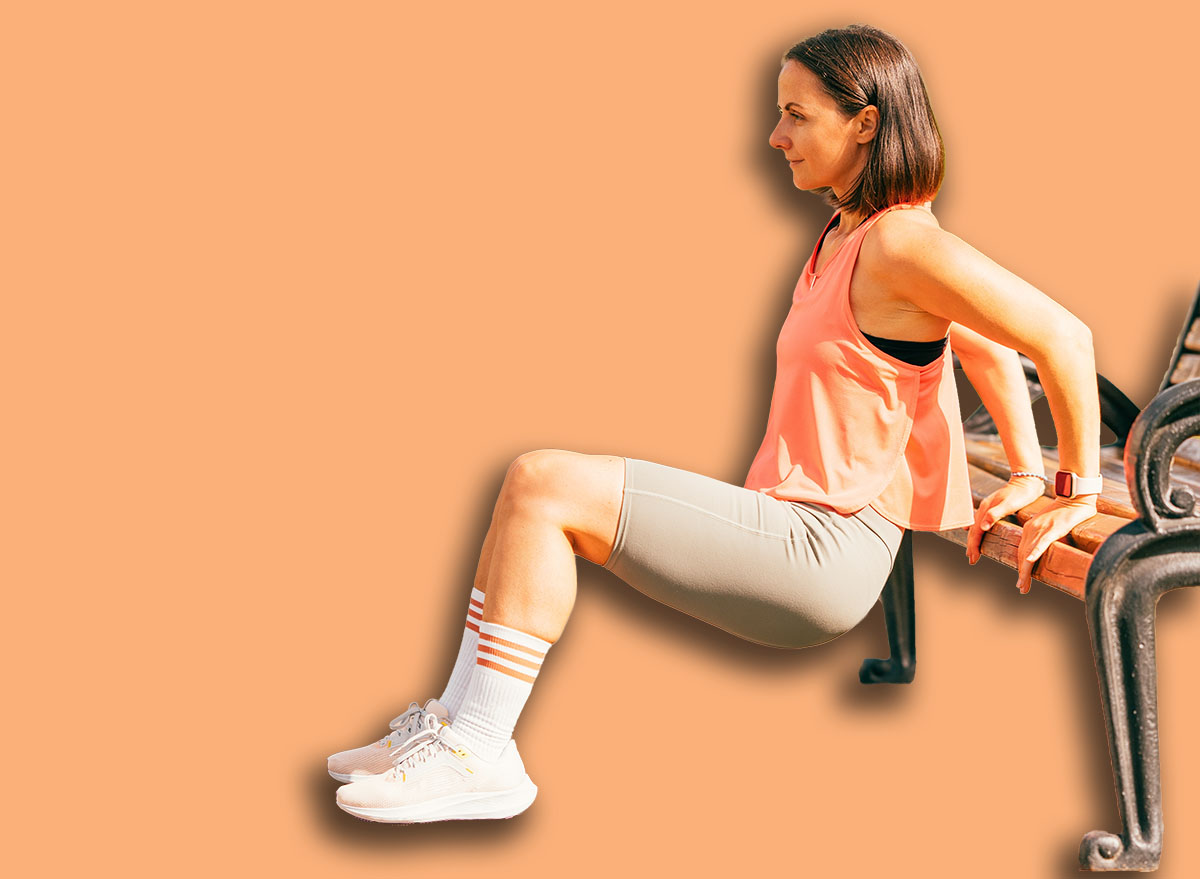
Chair dips are a powerful bodyweight exercise that directly targets the triceps through a highly effective elbow extension pattern. By utilizing one’s own body weight, this exercise provides significant muscle recruitment without requiring external equipment, making it incredibly accessible for home-based training. When executed with proper form and controlled depth, chair dips not only strengthen the posterior aspect of the upper arms but also reinforce critical shoulder stability. The inherent scalability of chair dips, allowing for modifications based on an individual’s strength level, renders them suitable for frequent incorporation into a daily routine, contributing substantially to improved arm firmness and strength after 45.
- Muscles Engaged: Primarily activates the triceps, with supporting roles from the anterior deltoids and pectoralis major.
- Execution Focus: Sit on the edge of a sturdy chair or bench, placing your hands shoulder-width apart on the edge, fingers pointing forward. Slide your hips off the chair, supporting your weight with your arms and heels (knees bent at 90 degrees for easier variation, legs extended for more challenge). Lower your body by bending your elbows directly backward until your upper arms are parallel to the floor, or slightly below. Push back up to the starting position, extending your arms fully.
- Sets and Repetitions: Aim for 2 to 3 sets of 8 to 12 repetitions, allowing for a 45-second recovery period between sets.
- Form Insight: Ensure your shoulders remain depressed and away from your ears throughout the movement. Your elbows should track directly backward, not splay out to the sides, to effectively target the triceps and protect the shoulders.
- Progression: Increase difficulty by extending your legs further, elevating your feet on another surface, or adding a weight plate to your lap.
5. Standing Resistance Band Pressdowns
Resistance band pressdowns offer another excellent method for isolating and strengthening the triceps with consistent tension. The nature of resistance bands ensures that the muscle is challenged throughout the entire pressing motion, maximizing the "time under tension" effect that is crucial for muscle development and definition. Performing this exercise in a standing posture naturally encourages improved core engagement and reinforces good overall body alignment, enhancing the functional benefits beyond just arm strength. This movement allows for high repetitions without imposing undue stress on the joints, making it an ideal candidate for daily, consistent training. Over time, regular pressdowns contribute significantly to enhanced muscle firmness and improved endurance in the upper arms.
- Muscles Engaged: Primarily targets the triceps, with secondary activation of the shoulders and core for stability.
- Execution Focus: Anchor a resistance band overhead (e.g., around a door frame or sturdy pole). Stand facing the anchor point, grasping the band handles with an overhand grip, elbows bent and tucked close to your sides. Press your hands downwards, extending your elbows fully until your arms are straight. Slowly control the band back to the starting position.
- Sets and Repetitions: Perform 3 sets of 15 to 25 repetitions, resting for 30 seconds between each set.
- Form Insight: Focus on initiating the movement with your triceps, ensuring your upper arms remain still and close to your body. Fully extend your arms at the bottom of each repetition to maximize triceps contraction.
- Progression: Utilize a band with stronger resistance or incorporate a slower tempo, emphasizing the eccentric (lowering) phase of the movement.
Holistic Principles for Sustainable Arm Tone
While these exercises form the bedrock of an effective daily routine, achieving and maintaining optimal upper arm tone after 45 is part of a broader wellness strategy.
- Nutritional Support: Adequate protein intake is paramount for muscle repair and growth, especially as sarcopenia becomes a concern with age. Prioritize lean proteins in your diet.
- Hydration: Water is essential for metabolic processes, joint lubrication, and overall cellular function, all of which impact muscle health.
- Quality Sleep: Muscle repair and hormonal regulation, including growth hormone release, predominantly occur during sleep. Sufficient rest is non-negotiable for recovery and adaptation.
- Mindful Movement: Beyond structured exercise, integrating active movement throughout the day can significantly contribute to overall circulation and muscle health.
- Listen to Your Body: The goal is consistency, not pain. Pay attention to your body’s signals and adjust intensity or take rest days as needed. This approach prioritizes long-term adherence and injury prevention.
By embracing this comprehensive and consistent approach to upper arm training, individuals over 45 can effectively counter age-related changes, fostering enhanced muscle definition, functional strength, and improved confidence in their physical capabilities. This strategy shifts the focus from sporadic, high-intensity efforts to a sustainable daily practice that yields lasting results.
About the Author