The burgeoning field of advanced prosthetics stands at a pivotal juncture, promising unprecedented levels of functionality and independence for individuals navigating life with limb loss. As artificial intelligence increasingly powers these sophisticated devices, moving beyond mere user-controlled operation to semi-autonomous assistance, a fundamental challenge emerges: how to make these robotic extensions feel like an intrinsic part of the user’s own body. Recent pioneering research underscores that the perception of seamless integration, often termed "embodiment," hinges not solely on a prosthetic’s raw speed or precision, but profoundly on the naturalistic timing of its movements, particularly a moderate pace akin to human biological actions. This insight is poised to revolutionize the design philosophy for future human-robot interfaces, extending its implications far beyond prosthetic limbs to a wider array of assistive and augmentative technologies.
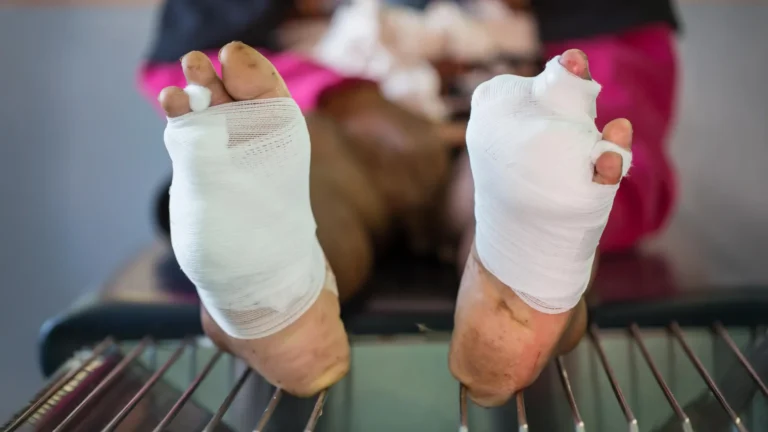
For centuries, the primary goal of prosthetic development has been to restore lost function, evolving from rudimentary hooks and pegs to intricate cosmetic hands and, more recently, to myoelectric systems that detect residual muscle signals. These contemporary prosthetics often rely on electromyography (EMG) or electroencephalography (EEG) to translate a user’s conscious intent into mechanical movement. While these advancements have significantly improved quality of life, they largely operate as tools commanded by the user, requiring deliberate mental effort to control.
The current frontier in prosthetic technology, however, is being shaped by rapid progress in machine learning and artificial intelligence. This wave of innovation promises to imbue prosthetics with a degree of autonomy, allowing them to anticipate user needs, adapt to varying environments, and even execute certain actions independently. Imagine a prosthetic hand that automatically adjusts its grip strength for delicate objects or a limb that positions itself optimally for a reaching task without explicit instruction. While the potential benefits of such autonomous or semi-autonomous systems are immense, enabling users to offload cognitive burden and enhance efficiency, they introduce a critical psychological hurdle: the "unsettling" sensation when a limb moves without direct, conscious command. This feeling of disjunction, of the device not truly belonging to or being controlled by oneself, represents a significant barrier to widespread adoption and profound user acceptance.
The concept of "embodiment" is central to overcoming this challenge. It encompasses several interconnected psychological dimensions: the sense of body ownership (the feeling that the limb is genuinely part of one’s physical self), the sense of agency (the feeling of being in control of the limb’s actions), perceived usability, and even social impressions such as competence and comfort both in the user and observed by others. When a prosthetic arm, no matter how advanced, fails to integrate seamlessly into a user’s body schema, it remains an external tool rather than a natural extension, diminishing psychological comfort and practical utility. Previous investigations have hinted that users are more amenable to autonomous movement when they grasp the underlying purpose or goal of the action. Building upon this foundation, researchers led by Harin Manujaya Hapuarachchi, then a doctoral student and now an Assistant Professor at Kochi University of Technology, embarked on a detailed exploration into whether the speed of autonomous movement might hold a key to unlocking greater embodiment.
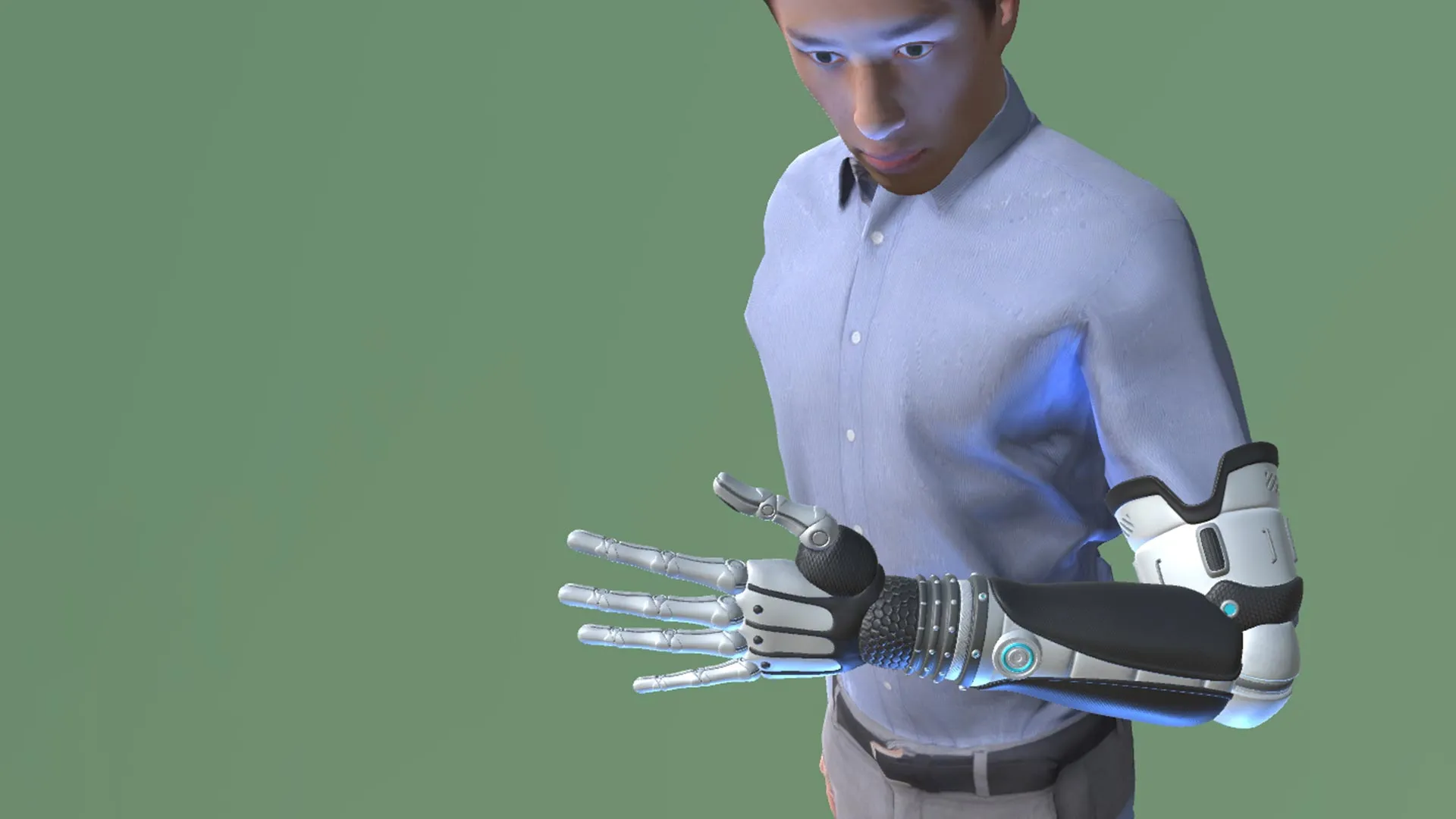
To rigorously investigate this hypothesis, Hapuarachchi and his collaborators devised an ingenious experimental setup leveraging the immersive capabilities of virtual reality (VR). VR offers a unique, controlled, and safe environment to test nascent robotic technologies and control algorithms before their real-world deployment. Participants in the study were immersed in a virtual world where they observed an avatar whose left forearm had been digitally replaced with a robotic prosthetic limb. The core task involved a simple reaching motion: the virtual prosthetic arm would autonomously move towards a designated target. Crucially, the researchers systematically varied the duration of each reaching movement across a spectrum of six distinct speeds, ranging from a brisk 125 milliseconds (ms) to a protracted 4 seconds (s).
Following each trial, participants were prompted to provide subjective evaluations across several key metrics. They assessed the degree to which the virtual prosthetic felt like their own biological arm, the extent of control they perceived over its actions, and its overall usability, employing the widely recognized System Usability Scale (SUS). Additionally, their impressions of the robotic arm itself were gauged using the Robotic Social Attributes Scale (RoSAS), which measures attributes such as competence, warmth, and potential discomfort. This multifaceted approach allowed for a comprehensive understanding of how movement speed influenced both the functional and psychological dimensions of human-robot interaction.
The findings from this meticulously designed VR study revealed a remarkably consistent and compelling pattern. The data unequivocally pointed to a "sweet spot" in movement timing. When the virtual prosthetic arm executed a reaching motion at a moderate pace, specifically taking approximately one second to complete the action, participants reported the strongest sense of body ownership and agency. This duration closely mimics the typical speed of natural human reaching movements, suggesting a deeply ingrained neurological expectation for how our limbs operate. Conversely, when the prosthetic arm moved either too rapidly or too sluggishly, participants consistently reported a diminished connection to the device and rated it as significantly less usable. The "too fast" movements often felt jarring and out of sync with natural perception, while "too slow" movements conveyed a sense of sluggishness or inefficiency, both undermining the illusion of a seamlessly integrated limb.
This discovery carries profound implications for the design paradigm of future AI-enabled prostheses. It challenges the conventional wisdom that faster is inherently better in robotic systems. Instead, the research strongly advocates for prioritizing "human-compatible timing" over raw speed. The human brain is intricately wired to anticipate and process movements within a specific temporal framework. When an artificial limb deviates significantly from this expected rhythm, it creates a cognitive dissonance that prevents true embodiment. Designers and engineers developing these advanced devices will need to meticulously tune their movement algorithms and control systems to align with what the human nervous system intuitively expects from a natural limb. This might involve incorporating bio-inspired movement profiles, leveraging machine learning to personalize movement timing based on individual user data, or even integrating haptic feedback that simulates the natural proprioceptive cues associated with human movement.
The relevance of these insights extends far beyond the realm of prosthetic arms. A growing category of "body augmentation" technologies, designed to enhance or expand human capabilities, could similarly benefit from movement that mirrors natural human rhythm. This includes "supernumerary robotic limbs," which are additional robotic appendages designed to assist with complex tasks; powered "exoskeletons" that enhance strength or aid mobility for individuals with physical limitations; and various "wearable robots" intended for rehabilitation, assistance, or even entertainment. For any technology that functions as an extension of the human body, whether for restoration or augmentation, achieving a sense of naturalness in movement will be paramount for user acceptance, comfort, and efficacy. Imagine an exoskeleton that moves with fluid, human-like grace rather than a stiff, mechanical gait, or a supernumerary limb that feels as natural to control as an extra hand.
Looking ahead, researchers also plan to delve into the fascinating phenomenon of long-term adaptation. It is a well-documented psychological principle that people often begin to experience frequently used tools as if they were extensions of their own bodies—a carpenter’s hammer, a musician’s instrument, or a surgeon’s scalpel can, over time, feel like a natural part of their hand. The question then arises: can prolonged, daily use of a prosthetic limb, even one initially perceived as moving at a non-optimal speed, eventually lead to a shift in perception? Could a fast and highly capable robotic limb, through sustained interaction, gradually start to feel "normal," easier to operate, and more fully embodied? Longitudinal studies tracking user experiences over extended periods will be crucial to answering these questions and understanding the dynamic interplay between initial perception and learned adaptation.
The continued role of virtual reality in this research domain remains indispensable. Its capacity to simulate diverse prosthetic designs, control systems, and environmental interactions in a controlled and adaptable setting allows scientists to rapidly iterate and evaluate psychological responses, user acceptance, and critical design considerations at early stages of development. This iterative approach is vital for refining future technologies before they become widely available, ensuring that the next generation of AI-powered prosthetics and body augmentation systems are not only functionally superior but also deeply integrated into the human experience, fostering a profound sense of ownership and agency for their users. The meticulous work of researchers like Hapuarachchi, supported by organizations such as JSPS KAKENHI, the Murata Science and Education Foundation, JST, and MEXT, is paving the way for a future where advanced robotics truly feel like an extension of ourselves.
About the Author