For many individuals navigating the complexities of aging, particularly those beyond their sixth decade, the accumulation of adipose tissue around the midsection presents a common and often frustrating challenge. This persistent increase in abdominal girth frequently appears resistant to traditional fitness regimens, prompting a reevaluation of exercise methodologies for older adults. While the inclination might be to intensify or prolong workouts, contemporary understanding of age-related physiological shifts suggests that a more judicious, precise approach to physical activity can yield superior outcomes, not only in aesthetic improvements but also in bolstering overall health. This article explores why conventional hour-long exercise sessions may prove less effective or even counterproductive for this demographic, and outlines a series of five succinct, impactful movements designed to sculpt the core and support metabolic function with greater efficiency.
The landscape of body composition undergoes significant transformations as individuals age, rendering the task of maintaining a lean waistline considerably more intricate after reaching 60. This phenomenon is not merely a matter of reduced activity or dietary indiscretion; rather, it is influenced by a confluence of biological factors that collectively foster the deposition of fat, particularly in the abdominal region. Understanding these underlying mechanisms is crucial for adopting effective strategies.
One primary driver is hormonal fluctuation. In women, the onset of menopause leads to a marked decline in estrogen levels, which often triggers a redistribution of fat from the hips and thighs to the abdomen. Similarly, men experience a gradual decrease in testosterone, a hormone linked to muscle mass maintenance and fat regulation, contributing to increased central adiposity. These hormonal shifts fundamentally alter how the body stores energy, favoring visceral fat—the metabolically active fat that surrounds internal organs and is strongly associated with numerous health risks.
Concurrent with hormonal changes is sarcopenia, the progressive and involuntary loss of skeletal muscle mass, strength, and function with aging. Muscle tissue is metabolically active, meaning it burns more calories at rest than fat tissue. As muscle mass diminishes, the basal metabolic rate (BMR) slows down, making it easier to gain weight and harder to lose it, even with consistent calorie intake. This reduction in metabolic efficiency exacerbates the challenge of managing body fat.
Furthermore, increased cortisol sensitivity plays a pivotal role. Cortisol, often dubbed the "stress hormone," is released in response to physical or psychological stressors. While essential in acute situations, chronically elevated cortisol levels can signal the body to store fat, particularly around the abdomen. Paradoxically, overly strenuous or prolonged exercise, especially if perceived as stressful by an aging body, can inadvertently elevate cortisol, undermining efforts to reduce waist fat. The body of a 60-year-old often recovers differently from exertion than that of a younger person, and what was once a beneficial workout might now induce an undesirable stress response.
Given these physiological realities, the conventional wisdom of "more is better" in exercise frequently falters. Instead, an emphasis on "smarter movement"—characterized by short, highly focused, and consistently executed exercises—emerges as a more advantageous paradigm. This approach minimizes the potential for overtraining and excessive cortisol release, while simultaneously engaging deep core musculature that contributes to structural support and a more defined silhouette. By prioritizing precision and mindful engagement over sheer duration, individuals can activate core stabilizing muscles more effectively, fostering a natural "corset" effect that cinches the waist and improves overall posture.
The concept of "spot reduction," or targeting fat loss in a specific area of the body through exercise, is a persistent myth in fitness. The human body loses fat systemically. However, specific exercises can strengthen and tone the underlying muscle groups, which, when combined with overall fat loss, can significantly enhance the appearance of a leaner, more sculpted midsection. The following five exercises are selected for their ability to engage multiple core muscles, improve spinal stability, and promote functional strength, making them particularly beneficial for adults over 60.
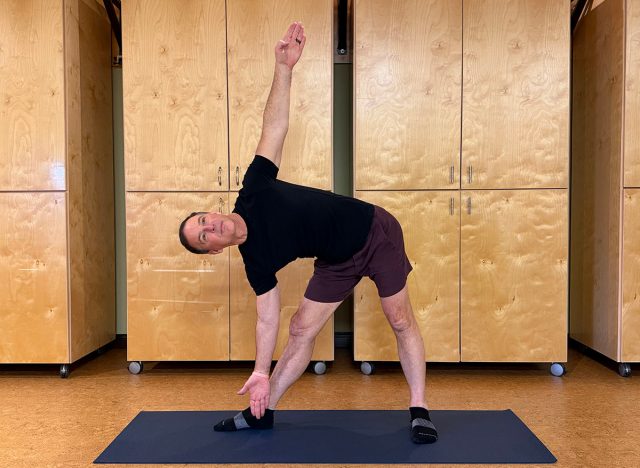
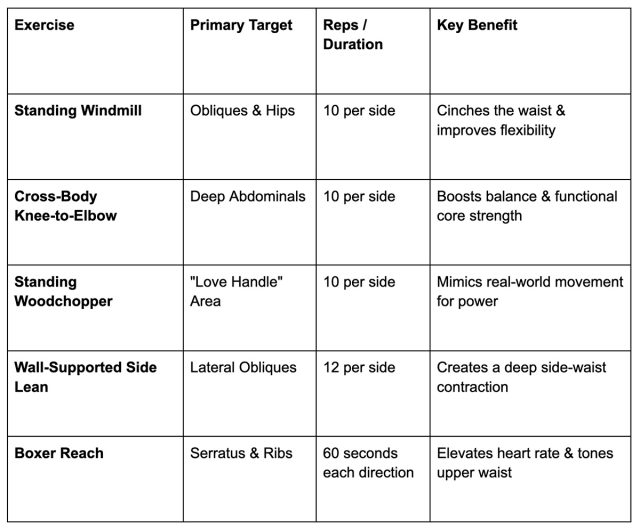
1. The Standing Windmill
This dynamic movement is exceptional for targeting the obliques—the muscles along the sides of your waist—and the transverse abdominis, which is the deepest abdominal muscle layer that acts like a natural belt, wrapping around your core. By necessitating spinal stabilization against gravity during a controlled hinge and reach, the exercise actively promotes a "cinching" effect.
- Execution Guide: Begin by standing with feet shoulder-width apart, one arm extended straight overhead, and the other hand resting on the hip. Keeping your back flat and core engaged, hinge at your hips, allowing the arm on your hip to slide down your leg towards your ankle, while the overhead arm remains extended upwards. Maintain a gentle bend in the knees. Slowly return to the starting position, focusing on using your core to pull you upright. Alternate sides.
- Targeted Benefits: Enhances oblique strength, improves spinal mobility, and strengthens the deep core stabilizers, contributing to a more defined lateral waistline.
2. Standing Cross-Body Knee-to-Elbow
Often described as a "functional crunch," this exercise engages the rectus abdominis (the "six-pack" muscles) and the internal and external obliques through a rotational movement. Performing it standing adds a balance component, increasing muscle activation and caloric expenditure compared to a traditional floor crunch.
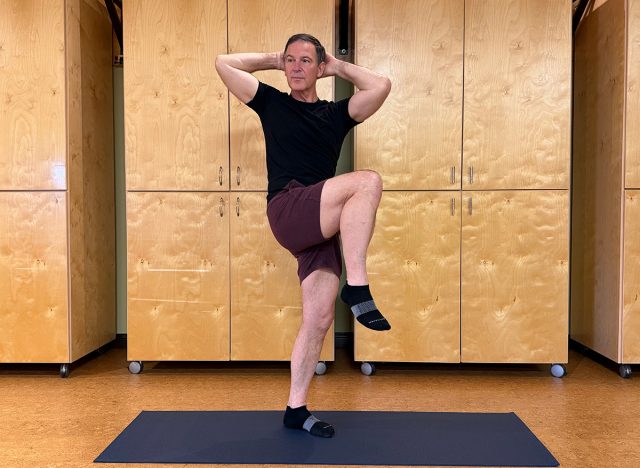
- Execution Guide: Stand tall with feet hip-width apart, hands lightly placed behind your head or crossed over your chest. Engage your core, then lift one knee towards your chest while simultaneously rotating your torso to bring the opposite elbow towards that knee. Aim to connect them or get as close as comfortably possible. Control the movement as you return to the starting position and repeat on the other side.
- Targeted Benefits: Strengthens the entire abdominal wall, improves rotational stability, and enhances coordination, contributing to a flatter and more stable midsection.
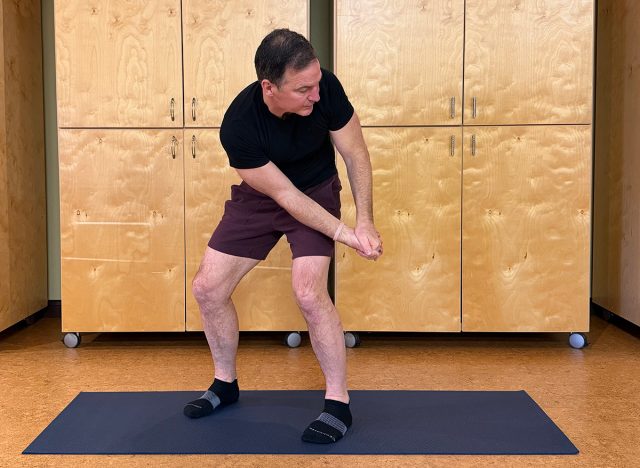
3. The Standing Woodchopper
This powerful, full-body exercise mimics real-life actions like gardening or lifting, making it highly functional. It employs a diagonal "slashing" motion that compels the entire core to rotate and stabilize, effectively targeting the often-troublesome "love handle" area (obliques).
- Execution Guide: Stand with feet shoulder-width apart, holding a light weight (or clasped hands) with both hands up and to one side, as if holding an axe. Keeping your core tight and a slight bend in your knees, smoothly bring your hands diagonally across your body and down towards the opposite hip, pivoting your feet as needed to allow for natural rotation. Control the return to the starting position. Perform repetitions on one side before switching.
- Targeted Benefits: Builds powerful rotational core strength, sculpts the obliques, and improves functional movement patterns, leading to a more streamlined torso.
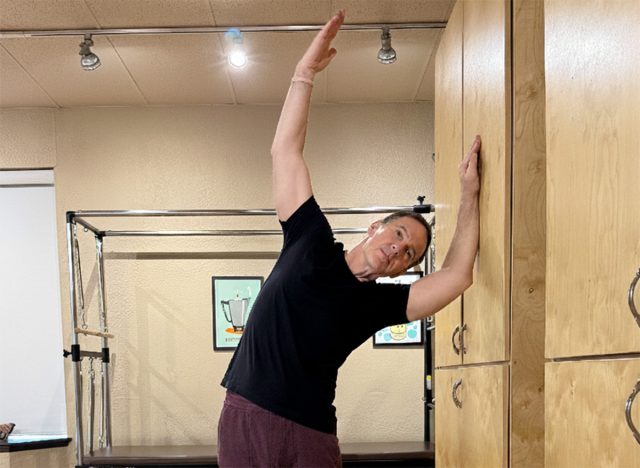
4. Wall-Supported Side Lean
This exercise offers an isolated focus on the obliques, providing excellent support for individuals seeking to firm the "side-seams" of their torso without excessive strain. The wall support allows for a deeper, more controlled engagement of these lateral abdominal muscles.
- Execution Guide: Stand sideways next to a wall, about an arm’s length away, with the arm closest to the wall extended to brace against it for support. Place your other hand on your hip or behind your head. Keeping your body in a straight line, gently lean away from the wall, allowing your obliques to contract as you create space between your body and the wall. Slowly pull yourself back to the starting position using your side abdominal muscles.
- Targeted Benefits: Maximizes isolation and engagement of the obliques, enhances lateral core strength, and contributes to a firmer, more tapered waistline.
5. The "Boxer" Reach
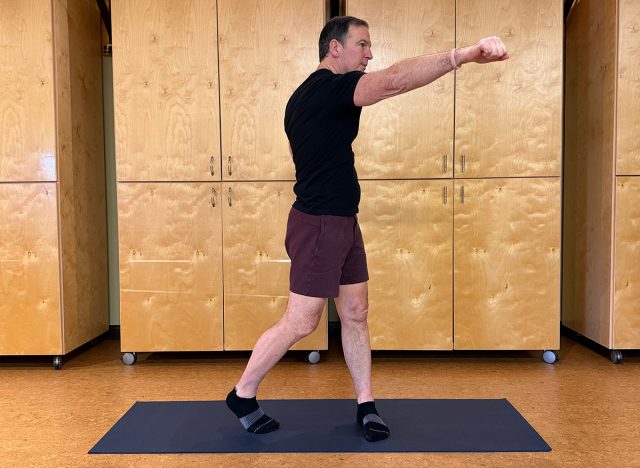
This low-impact, rhythmic movement generates "tension under rotation," effectively engaging the muscles along your ribs and obliques. It’s an excellent way to elevate the heart rate slightly while continuously working the core in a dynamic, controlled manner.
- Execution Guide: Stand with a slight bend in your knees and a soft stance, similar to a boxer. With your hands up in a guard position, gently rotate your torso from side to side, extending one arm forward in a controlled punch-like motion while the opposite arm guards. Focus on twisting from your core, keeping your hips relatively stable. The movement should be fluid and controlled, not jerky.
- Targeted Benefits: Boosts core endurance, improves dynamic stability, and engages the entire midsection through controlled rotation, helping to tone and tighten.
Safety and Scheduling for Sustainable Progress
Before embarking on any new exercise regimen after the age of 60, a consultation with a healthcare professional or physician is highly advisable. This is particularly important for individuals with a history of musculoskeletal issues, such as back pain, osteoporosis, or joint conditions, as well as those with cardiovascular concerns. Paying close attention to your body’s signals is paramount. Should you experience any acute pain in the spine, sudden dizziness, chest pressure, or unusual discomfort during these exercises, cease the activity immediately and seek medical advice.
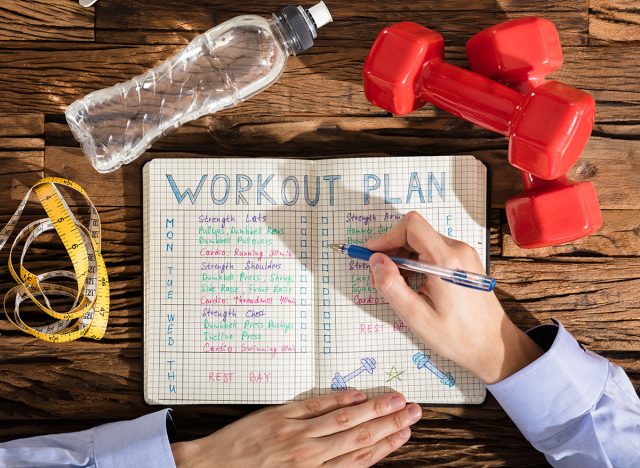
The principle of "consistency of degree" is the cornerstone of success. This suggests that regular, moderate effort consistently applied over time yields more significant and sustainable results than sporadic, intense bursts of activity. A realistic eight-week schedule might involve performing these five movements three to four times per week, allowing for rest and recovery on alternate days. Start with 8-10 repetitions of each exercise, gradually increasing to 12-15 repetitions as strength and confidence improve. The focus should always be on maintaining excellent form rather than rushing through the movements. Over time, you can add another set or slightly increase the duration of each exercise.
Nutritional Synergy: Complementing Exercise with Smart Choices
Exercise, however effective, is only one component of a holistic strategy for managing abdominal fat. Nutrition plays an equally critical role, especially in mitigating factors like cortisol and inflammation that contribute to central fat storage and bloating. Incorporating specific dietary elements can significantly amplify the benefits of your exercise routine.
- Fiber-Rich Vegetables and Fruits: These are crucial for digestive health and satiety. Foods like leafy greens, broccoli, berries, and apples provide essential vitamins, minerals, and antioxidants, and their high fiber content helps regulate blood sugar, reduce bloating, and promote a healthy gut microbiome, which in turn can influence metabolic health and even stress response.
- Lean Protein Sources: Adequate protein intake is vital for combating sarcopenia, as it supports muscle maintenance and growth. Protein also helps with satiety, reducing overall calorie intake. Opt for sources like fish (especially fatty fish rich in omega-3s), lean poultry, eggs, legumes, and plant-based proteins.
- Healthy Fats: While often demonized, healthy fats are essential for hormone production and nutrient absorption. Avocados, nuts, seeds, and olive oil provide monounsaturated and polyunsaturated fats that can help reduce inflammation, improve insulin sensitivity, and contribute to a feeling of fullness. These fats support overall cellular health and can indirectly aid in managing stress hormones.
Realistic Expectations and Lasting Impact
Consistent application of these targeted movements, combined with supportive nutritional choices, can lead to noticeable improvements within six to eight weeks. Individuals can realistically anticipate a tighter, firmer core, which translates into clothes fitting more comfortably and an overall improved posture. Beyond the visible changes, the strengthening of core muscles enhances balance, reduces the risk of falls, and improves functional capacity for daily activities, contributing significantly to independence and quality of life in later years. The mental uplift and increased confidence derived from feeling stronger and more capable are invaluable benefits.
Ultimately, the journey to a healthier midsection after 60 is less about radical overhauls and more about intelligent adaptation. By embracing the principle of "consistency over intensity" and prioritizing smart, functional movements that work with your body’s evolving physiology, you can achieve profound and lasting improvements in your physical well-being. Start small, stay consistent, and experience how these targeted efforts not only redefine your waistline but also empower your movement through the world.
About the Author