As individuals navigate the physiological shifts that accompany aging, particularly beyond the age of 45, maintaining a strong, defined midsection often becomes a significant fitness challenge. The accumulation of abdominal fat, frequently referred to colloquially as "apron belly," is a common concern exacerbated by a confluence of factors including hormonal fluctuations, a natural decline in lean muscle mass known as sarcopenia, and the body’s tendency to redistribute fat towards the waistline. While many instinctively turn to traditional floor-based abdominal exercises like crunches, a growing body of fitness expertise suggests that a more integrated, functional approach through standing movements offers superior benefits for overall core strength, metabolic health, and effective abdominal toning in this demographic.
Traditional abdominal exercises, such as crunches, primarily target the rectus abdominis, the superficial muscle responsible for the "six-pack" aesthetic. While this muscle contributes to spinal flexion, its isolated engagement often overlooks the deeper, more crucial core musculature. The transverse abdominis, for instance, acts as a natural corset, wrapping around the torso to provide intrinsic stability to the spine and pelvis. Similarly, the obliques, multifidus, and pelvic floor muscles work in concert to create a robust and functional core. Neglecting these deeper layers can lead to an imbalanced core, potentially contributing to lower back pain, poor posture, and less effective abdominal support. Furthermore, crunches are often low in caloric expenditure compared to compound movements and can place undue strain on sensitive areas like the neck, lower back, and hip flexors—regions already susceptible to discomfort or injury in many individuals experiencing age-related muscular changes. Felicia Hernandez, an NASM-Certified Personal Trainer and Community Engagement Lead at Eden Health Club, highlights this limitation, noting that crunches primarily isolate the rectus abdominis, doing little for deeper core layers or postural stabilizers. She further cautions against their low caloric burn and potential to strain sensitive joints, particularly relevant for those managing hormonal shifts or midlife muscle loss.
In contrast, standing core exercises offer a holistic approach to abdominal strengthening, integrating multiple muscle groups and movement patterns that mimic real-world activities. These exercises inherently engage the core as a dynamic stabilizer while simultaneously recruiting the back, legs, and glutes. This comprehensive muscle activation translates into several significant advantages. Firstly, the increased muscle recruitment leads to a higher energy expenditure during and after the workout, contributing more effectively to a caloric deficit—a fundamental requirement for fat loss. Hernandez emphasizes that crunches alone will not flatten the belly without a calorie deficit, underscoring the importance of improving metabolic efficiency, muscle retention, and overall movement quality, all areas where standing movements excel.
Secondly, standing movements significantly enhance functional strength, which refers to the ability to perform daily tasks with ease and efficiency. Actions like lifting groceries, twisting to reach an object, or maintaining balance while walking are all supported by a strong, integrated core that works in conjunction with the rest of the body. By training the core in an upright position, these exercises directly translate to improved posture and balance, crucial elements for injury prevention and maintaining independence as one ages. The natural aging process often brings a decline in balance and proprioception (the body’s sense of its position in space), making exercises that challenge these aspects particularly valuable.
Thirdly, the focus shifts from mere aesthetics to comprehensive physical well-being. While a flatter midsection is a desired outcome, the underlying benefits of a strong, functional core extend to spinal health, improved athletic performance, and a reduced risk of falls. For individuals over 45, who may be experiencing early signs of sarcopenia, incorporating exercises that preserve and build lean muscle mass is paramount. Standing compound movements are excellent for stimulating muscle protein synthesis, helping to counteract age-related muscle loss.
Understanding the "apron belly" phenomenon is also key. This term often refers to the excess skin and fat that hangs over the pubic area, often a combination of subcutaneous fat (fat just under the skin) and visceral fat (fat stored deep within the abdomen, surrounding organs). Visceral fat, in particular, is metabolically active and linked to increased risks of chronic diseases. While spot reduction of fat is a myth, comprehensive fitness strategies that include strength training and cardiovascular exercise, combined with a balanced diet to create a calorie deficit, are essential for reducing both subcutaneous and visceral fat stores. Standing core exercises, by boosting metabolism and building muscle, contribute significantly to this overall fat reduction strategy.
Let’s delve into four exemplary standing exercises that effectively engage the deep core musculature, promote lean muscle preservation, and offer a metabolic advantage over traditional floor-based ab work, all without requiring you to get down on the ground. These movements, as recommended by experts like Hernandez, are low-impact and designed to activate the core’s stabilizing and power-generating functions.
1. Standing Cross-Body Chop
This dynamic movement is a powerhouse for rotational core strength, engaging the obliques, transverse abdominis, and shoulders. It typically involves holding a light-to-medium dumbbell or medicine ball. The exercise mimics the functional movement of chopping wood or throwing, starting with the weight held high on one side of the body, then forcefully chopping it down across the body towards the opposite knee. The controlled rotation and anti-rotation demanded by this exercise are crucial for spinal stability and developing power from the core. It trains the core to resist unwanted twisting while simultaneously generating controlled rotational force, which is essential for many daily activities and sports. The engagement of the shoulders adds an upper body component, making it a more comprehensive movement than an isolated crunch.
2. High Knees With Arm Drive
More than just a cardio burst, high knees with an arm drive are a highly effective full-body metabolic exercise that vigorously engages the hip flexors, rectus abdominis, and deep core stabilizers. As you rapidly lift your knees towards your chest, driving your arms in a running motion, your core must work intensely to stabilize your torso and maintain balance. This explosive movement significantly elevates the heart rate, leading to a substantial caloric burn and improved cardiovascular fitness. The dynamic nature of the exercise forces the core to react and stabilize under rapid movement, enhancing its functional responsiveness. Hernandez notes its ability to get the heart rate up and recruit multiple muscle groups for more metabolic "burn," making it an excellent choice for overall fat loss and conditioning.
3. Wood Chop With Squat
This compound exercise combines a lower-body squat with an upper-body and core wood chop, creating a potent full-body workout. Starting with a squat, you descend while holding a weight (dumbbell or medicine ball) at one side, then explosively rise from the squat, driving the weight diagonally upwards across your body. This movement effectively targets the obliques, quadriceps, glutes, and shoulders. The integration of the squat ensures significant lower body engagement, amplifying the metabolic demand. The rotational component originating from the hips and core strengthens the oblique muscles, crucial for lateral flexion and rotation of the trunk. It teaches the body to generate power from the ground up, translating force through the core, which is a fundamental aspect of functional movement.
4. Crossover Toe Touch
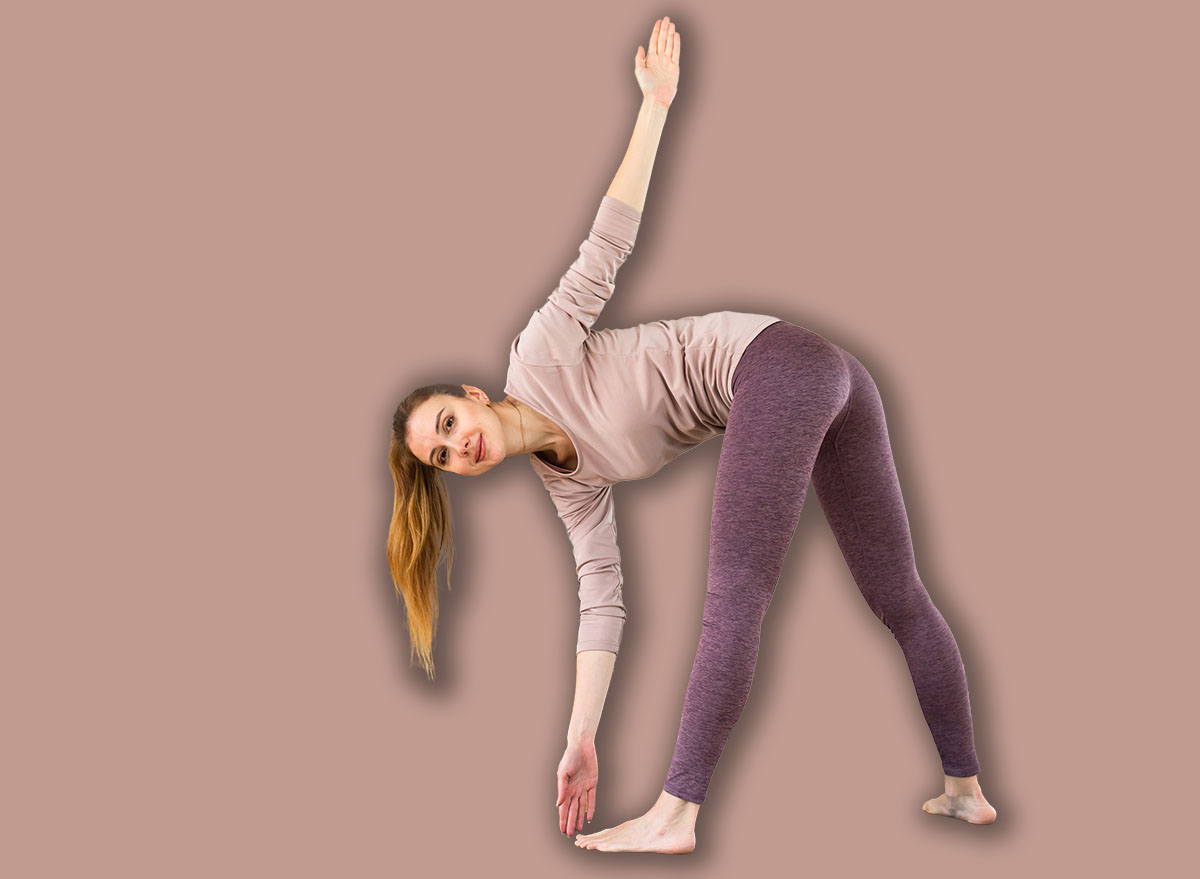
The crossover toe touch is an exceptional exercise for promoting rotational core strength, improving balance, and challenging hamstring flexibility, all without compressing the spine. Standing tall, you extend one arm and simultaneously kick the opposite leg across your body, reaching towards your toes. This movement engages the obliques and transverse abdominis to stabilize the trunk while the hamstrings are stretched and the glutes are activated for balance. The unilateral (one-sided) nature of the exercise significantly challenges balance and proprioception, which are critical for preventing falls and maintaining mobility as we age. Hernandez highlights that this move specifically promotes balance, mobility, and deep core control without spinal compression, making it a safer and more effective option for many individuals.
Beyond these specific exercises, a broader understanding of midlife fitness is crucial. Combating sarcopenia through consistent strength training is vital for maintaining metabolic rate and functional independence. Weight-bearing exercises like squats and lunges, often incorporated into standing core routines, also contribute positively to bone density, an increasingly important consideration for mature adults. Furthermore, while exercise is a powerful tool, it must be paired with sensible nutrition. A balanced diet rich in protein, healthy fats, and complex carbohydrates, consumed within a caloric framework appropriate for individual goals, remains foundational for reducing abdominal fat and supporting overall health.
In conclusion, for individuals over 45 seeking to effectively flatten their midsection and enhance overall well-being, shifting focus from isolated crunches to integrated, functional standing core movements presents a more advantageous and sustainable path. These exercises not only target the deep abdominal muscles essential for stability and support but also offer broader benefits including increased metabolic efficiency, improved posture, enhanced balance, and greater real-world strength. By embracing a holistic approach to core training, mature adults can achieve not just a more defined physique, but also a significantly improved quality of life and resilience against the challenges of aging.
About the Author