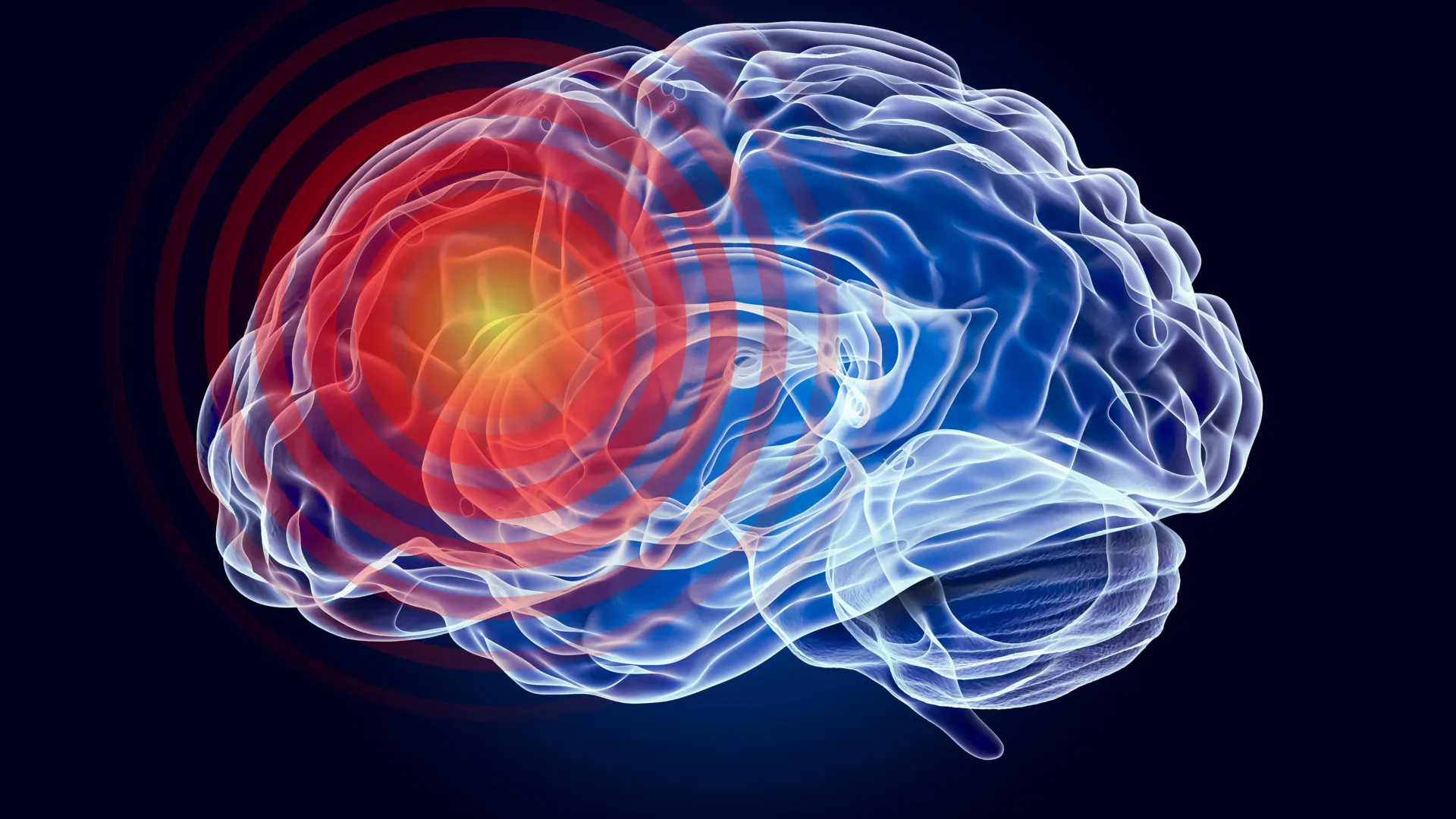
A groundbreaking international research collaboration, spearheaded by the biotechnology firm Aivocode and involving esteemed scientists from the Institute for Advanced Chemistry of Catalonia (IQAC) within the Spanish National Research Council (CSIC), has unveiled compelling evidence of a diminutive molecular entity capable of profoundly shielding brain tissue from the ravages of traumatic injury. This promising therapeutic agent, a peptide designated CAQK, is a concise assembly of merely four amino acids.
In rigorous preclinical investigations utilizing both murine and porcine subjects, the experimental peptide CAQK was administered intravenously in close proximity to the simulated injury event. A key characteristic of CAQK is its remarkable tropism for compromised neural regions; it exhibits a pronounced affinity for a specific protein that undergoes a substantial surge in abundance within brain tissue following traumatic insult. This targeted accumulation allowed CAQK to concentrate precisely where it was most needed, subsequently mitigating inflammatory responses, curtailing cellular demise, and arresting the progression of tissue damage. Crucially, in the rodent models, this intervention not only preserved neural integrity but also facilitated a notable recovery of functional capabilities, with no discernible adverse toxicological effects observed.
These pivotal findings, recently disseminated in the prestigious journal EMBO Molecular Medicine, illuminate a novel therapeutic avenue for addressing the complex sequelae of brain trauma. The research effort was a synergistic undertaking, primarily orchestrated by Aivocode, a San Diego-based company originating from the Sanford Burnham Prebys Institute, in concert with the IQAC-CSIC and the University of California, Davis.
Aivocode’s genesis can be traced to the pioneering work of researchers Aman P. Mann, Sazid Hussain, and Erkki Ruoslahti, all of whom are listed as authors on the current study. The company has articulated its intention to pursue regulatory clearance from the United States Food and Drug Administration (FDA) for the commencement of Phase I clinical trials in human subjects. While a definitive timeline for these human studies has not yet been established, the inherent advantages of CAQK’s molecular structure—its brevity as a peptide—render it amenable to straightforward and cost-effective large-scale synthesis, while simultaneously promoting effective penetration into target tissues, thereby solidifying its status as a compelling drug candidate.
Traumatic Brain Injury (TBI) represents a significant global health concern, typically arising from sudden physical impacts to the head, such as those sustained in motor vehicle collisions, occupational accidents, or accidental falls. Epidemiological data suggests that TBI affects approximately 200 individuals per 100,000 inhabitants annually. Current medical management strategies for TBI primarily focus on stabilizing the patient’s physiological condition by controlling intracranial pressure and ensuring adequate cerebral blood flow. However, a critical unmet need persists, as there are currently no FDA-approved pharmacological agents capable of directly arresting the primary or secondary cascade of brain damage that ensues post-injury, including the detrimental processes of inflammation and neuronal cell death. Furthermore, some experimental therapeutic approaches necessitate invasive direct injections into the brain parenchyma, a procedure fraught with inherent risks and potential complications.
Dr. Pablo Scodeller, a researcher at IQAC-CSIC and a co-author of the study, elaborated on this critical deficit, stating, "The current interventions for treating acute brain injury aim to stabilize the patient by reducing intracranial pressure and maintaining blood flow, but there are no approved drugs to stop the damage and secondary effects of these injuries."
The development of a non-invasive therapeutic modality for an injured brain remains one of the most formidable challenges confronting the field of neurology. The present research builds upon a foundational study published in Nature Communications in 2016, which laid crucial groundwork for understanding peptide targeting in the brain.
In that earlier investigation, researcher Aman P. Mann and Pablo Scodeller, working collaboratively within the laboratory of Dr. Ruoslahti at Sanford Burnham Prebys—who also served as senior author on both studies—identified a peptide with the remarkable ability to selectively localize to injured areas within the rodent brain. This peptide, subsequently named CAQK, was discovered through a sophisticated peptide-phage display technique, a high-throughput screening methodology employed to isolate molecules that exhibit specific binding affinities for particular tissues. At the time of its initial discovery, CAQK’s primary utility was envisioned as a molecular "carrier" or vehicle, designed to deliver therapeutic agents directly to the site of brain injury. The current research, however, transcends this earlier understanding by demonstrating that CAQK itself possesses intrinsic therapeutic capabilities, actively intervening to protect against injury.
To rigorously evaluate CAQK’s therapeutic efficacy, the research team administered the peptide intravenously shortly after inducing moderate to severe traumatic brain injuries in both mice and pigs. The porcine model was selected due to the greater anatomical and physiological similarity of its brain to that of humans, compared to rodents. Post-administration, researchers observed a significant accumulation of CAQK within the injured brain tissue of both species. Further investigation revealed that CAQK exerts its effects by binding to specific glycoproteins, which are proteins adorned with sugar molecules. The expression of these glycoproteins is known to increase following brain injury and they are integral components of the extracellular matrix, the supportive scaffolding that surrounds and nourishes brain cells.
Upon treatment with CAQK, mice exhibiting traumatic brain injury displayed demonstrably smaller lesion volumes when compared to their untreated counterparts. Dr. Mann, the study’s first author, provided further insights: "We observed less cell death and lower expression of inflammatory markers in the injured area, indicating that CAQK alleviated neuroinflammation and its secondary effects. Behavioral and memory tests conducted after treatment also showed improvement in functional deficits, with no evident toxicity." These findings collectively suggest that CAQK possesses the capacity to promote tissue repair and may hold significant therapeutic promise in the aftermath of traumatic brain injury.
Concluding on the implications of their work, Dr. Scodeller remarked, "What’s exciting is that, in addition to proving highly effective, it’s a very simple compound — a short peptide that is easy to synthesize safely at large scale. Peptides with these characteristics show good tissue penetration and are non-immunogenic." This confluence of potent efficacy, simplified synthesis, favorable pharmacokinetic properties, and a low likelihood of eliciting an immune response positions CAQK as a highly attractive candidate for further clinical development in the urgent quest for effective TBI treatments.
About the Author