A groundbreaking advancement from researchers at Nagoya University in Japan promises to reshape the landscape of organic synthesis, particularly within the pharmaceutical industry. This innovative development centers on a significantly redesigned iron-based photocatalyst that not only outperforms its predecessors in efficiency but also drastically reduces reliance on expensive and scarce precious metals, offering a more sustainable and economically viable pathway for creating complex molecules. The findings, recently published in the prestigious Journal of the American Chemical Society, highlight a strategic leap in catalyst design, culminating in the first total asymmetric synthesis of the biologically active natural compound (+)-heitziamide A.
For decades, the field of organic chemistry has grappled with the inherent challenges of constructing intricate molecular architectures. Many critical chemical reactions, especially those involved in drug discovery and material science, require catalysts – substances that accelerate chemical processes without being consumed themselves. Among these, photocatalysts hold a special place. These remarkable materials absorb light energy and channel it to drive chemical transformations, offering a cleaner, often more energy-efficient alternative to traditional thermal methods. Within the realm of organic synthesis, metal-based photocatalysts are particularly prized for their robustness and the ability to fine-tune their reactivity. This customization is typically achieved by modifying the "ligands," which are molecules attached to the central metal atom, influencing the catalyst’s behavior and the outcome of the reaction.
However, a significant hurdle in the widespread adoption of many highly effective photocatalytic systems has been their dependence on rare and costly transition metals such as ruthenium and iridium. These elements, while possessing unique electronic properties that make them excellent catalysts, are not only expensive due to their limited global supply but also raise concerns regarding long-term sustainability and geopolitical dependencies. The economic and environmental implications of extracting and utilizing these scarce resources have spurred a global scientific quest for more abundant and benign alternatives.
Recognizing this imperative, a team at Nagoya University, led by Professor Kazuaki Ishihara, Assistant Professor Shuhei Ohmura, and graduate student Hayato Akao, has been at the forefront of exploring iron as a viable substitute. Iron, the fourth most abundant element in Earth’s crust, presents an attractive, cost-effective, and environmentally friendlier option. The Nagoya group had previously made strides in this direction, introducing an initial iron-based photocatalyst. While a promising proof-of-concept, that earlier iteration carried its own set of limitations, primarily its heavy reliance on substantial quantities of costly chiral ligands.
Chiral ligands are crucial components in asymmetric synthesis, a sophisticated chemical process aimed at producing only one specific enantiomer of a chiral molecule. Chiral molecules possess a non-superimposable mirror image, much like our left and right hands. These mirror-image forms, known as enantiomers, can exhibit vastly different biological activities. In pharmaceutical applications, it is often critical to synthesize only one enantiomer, as the other might be inactive, less effective, or even harmful. Chiral ligands act as molecular guides, directing the three-dimensional arrangement of reacting molecules to ensure that only the desired enantiomer is formed. The high cost of these specialized ligands, however, posed a barrier to the practical implementation of the initial iron catalyst design.
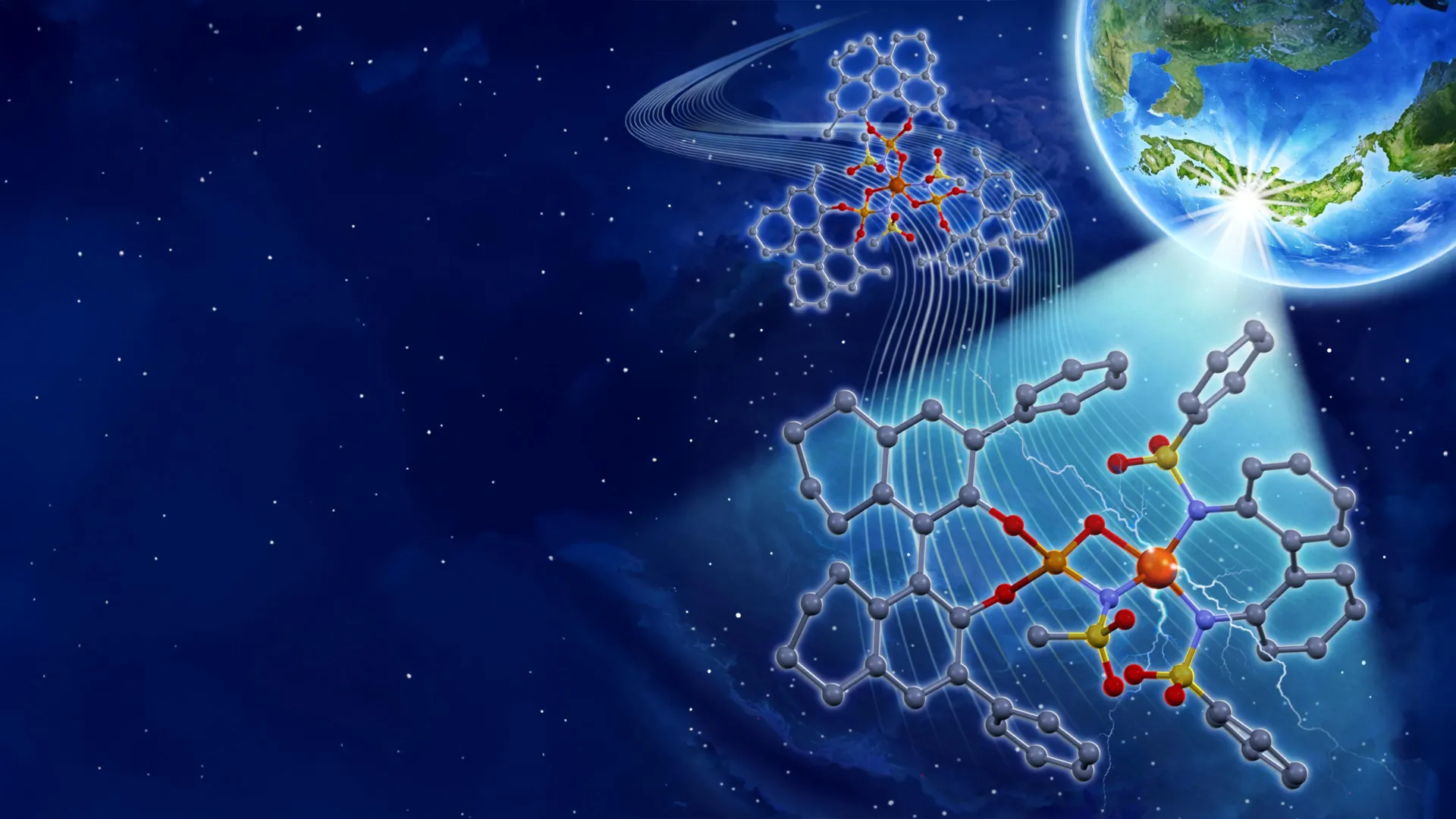
The latest breakthrough from the Nagoya team addresses this critical challenge head-on. Their redesigned iron catalyst, detailed in the Journal of the American Chemical Society, represents a strategic re-engineering that dramatically reduces the consumption of expensive chiral ligands by two-thirds. This ingenious system achieves remarkable efficiency by integrating more affordable achiral bidentate ligands alongside the essential chiral ligands. The achiral bidentate ligands, which do not impart chirality, play a crucial role in enhancing the overall catalytic performance and stability of the iron(III) salt structure, while the significantly reduced quantity of chiral ligands precisely dictates the three-dimensional configuration of the final product. This synergistic combination allows for the maintenance of high enantioselectivity – the ability to preferentially form one enantiomer – without the prohibitive cost associated with large quantities of chiral auxiliaries.
Beyond the cost-efficiency of the ligand system, the new catalyst operates under highly practical and sustainable conditions. It functions effectively when irradiated with blue LED light, a readily available and energy-efficient light source. Unlike many traditional photoredox reactions that require high-energy UV light or specialized lamps, the use of blue LEDs reduces energy consumption, lowers operational costs, and minimizes potential hazards, further cementing its appeal for industrial applications.
This refined catalytic system proved its mettle by enabling a highly controlled radical cation (4 + 2) cyclization reaction. In this type of reaction, two distinct molecular components come together in a precise manner to form a six-membered ring structure. This particular cyclization is invaluable for constructing complex 1,2,3,5-substituted adducts, which are specific structural motifs frequently encountered in a wide array of natural products and pharmacologically relevant compounds. Assistant Professor Ohmura, one of the corresponding authors of the study, remarked, "The new catalyst design represents the definitive form of chiral iron(III) photoredox catalysts. We believe this achievement marks a significant milestone in advancing iron-based photocatalysis."
The efficacy and precision of the redesigned catalyst were unequivocally demonstrated through its application in the asymmetric total synthesis of (+)-heitziamide A. This natural compound, isolated from certain medicinal plants, is known for its intriguing biological activity, specifically its ability to suppress respiratory bursts – a physiological process involved in immune responses. While previous laboratory syntheses of heitziamide A had been reported, the Nagoya team’s work represents the first successful total asymmetric synthesis of its naturally occurring enantiomer. This distinction is paramount, as only the (+)-enantiomer exhibits the desired biological properties. By meticulously controlling the formation of the six-membered ring structure using their blue light-activated iron photocatalyst, the researchers achieved this unprecedented feat. Furthermore, the findings suggest a tantalizing possibility: by employing the mirror-image version of their chiral catalyst, it should be equally feasible to produce the (-)-heitziamide A enantiomer, thus providing selective access to both forms for comprehensive biological evaluation.
The implications of this breakthrough extend far beyond the synthesis of a single natural product. The new iron photocatalyst opens up new avenues for the construction of a diverse range of complex molecules, including crucial pharmaceutical precursors, using an abundant and environmentally benign metal. This marks a significant departure from the traditional reliance on rare metals, aligning perfectly with the principles of green chemistry and sustainable manufacturing. Professor Ishihara, also a corresponding author of the study, emphasized the broader impact: "Achieving the first-ever asymmetric total synthesis of (+)-heitziamide A using this catalytic reaction is a remarkable accomplishment. Several additional bioactive substances can be accessed through total synthesis, with enantioselective radical cation (4 + 2) cycloaddition serving as a key step. We intend to publish follow-up papers on the asymmetric total synthesis of these compounds in the near future."
This pioneering work by the Nagoya University team not only showcases the immense potential of iron in catalysis but also establishes a robust and sustainable platform for the precise construction of enantiomerically pure compounds. By combining intelligent catalyst design with readily available materials and energy-efficient light sources, these researchers have laid a critical foundation for the development of more sustainable and cost-effective synthetic routes for medicines and other high-value chemicals, heralding a truly transformative moment for modern organic chemistry.
About the Author