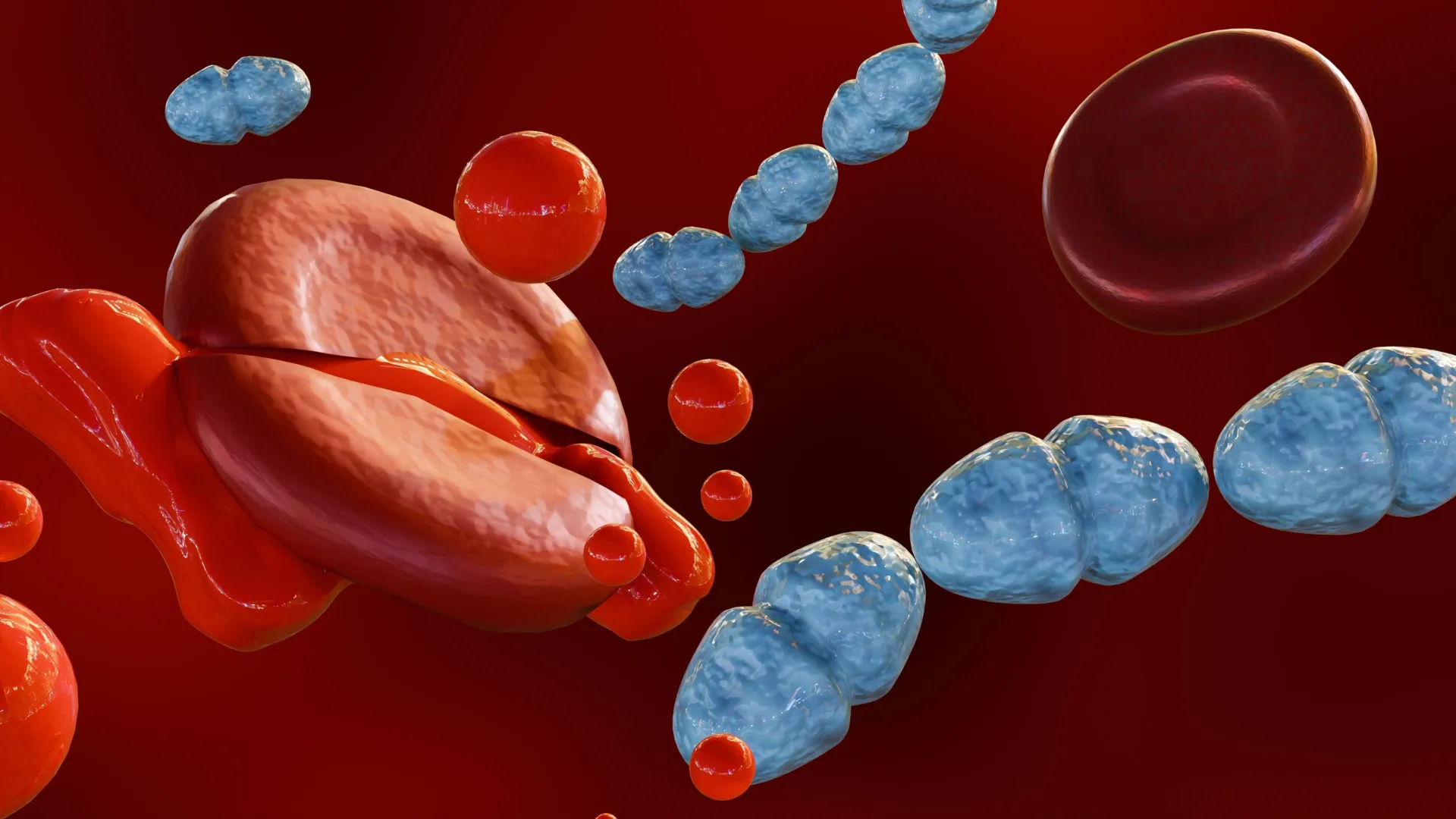
Sepsis, a life-threatening condition arising from the body’s overwhelming and dysregulated response to an infection, continues to pose an immense global health challenge. With millions affected annually, often leading to severe organ dysfunction, long-term disability, and high mortality rates, the medical community has long sought a targeted therapeutic intervention. In a significant development, a collaborative research endeavor has reported encouraging results from a Phase II clinical trial in China for an investigational drug, STC3141, which demonstrates the potential to substantially reduce the severity of this devastating syndrome. This advancement offers a glimmer of hope in a field where specific anti-sepsis treatments have remained elusive.
The experimental compound, designated STC3141, represents a novel carbohydrate-based therapeutic designed to address the underlying pathological mechanisms of sepsis. Its development is the culmination of extensive research stemming from a partnership between Distinguished Professor Mark von Itzstein AO and his dedicated team at Griffith University’s Institute for Biomedicine and Glycomics, and Professor Christopher Parish and his colleagues at The Australian National University. This inter-institutional collaboration underscores the complex nature of drug discovery and the necessity of pooling diverse scientific expertise to tackle formidable medical conditions.
The recent Phase II study, a crucial stage in the drug development pipeline, involved a cohort of 180 patients diagnosed with sepsis. Conducted under the auspices of Grand Pharmaceutical Group Limited (Grand Pharma), the trial aimed to assess the drug’s safety and preliminary efficacy. According to Professor von Itzstein, the principal investigator, the trial successfully achieved its predefined primary and secondary endpoints, signaling that STC3141 exhibited a discernible positive impact on reducing the clinical manifestations of sepsis in human subjects. This positive outcome is particularly noteworthy given the historically high failure rate of sepsis drug candidates in clinical trials, often due to the intricate and multi-faceted nature of the disease.
Sepsis initiates when an infection triggers an extreme immune response, causing the body’s defense mechanisms to turn against its own tissues and organs. This uncontrolled inflammation can rapidly escalate, leading to widespread cellular damage, organ failure, and, if not promptly managed, septic shock and death. Globally, sepsis accounts for a substantial proportion of hospital admissions and remains a leading cause of both inpatient mortality and long-term cognitive and physical impairments among survivors. The World Health Organization estimates that sepsis affects tens of millions of people worldwide each year, contributing to one in five global deaths. Despite this pervasive impact, therapeutic options primarily focus on supportive care, such as antibiotics to target the underlying infection, intravenous fluids, and vasopressors to maintain blood pressure, rather than directly mitigating the systemic inflammatory cascade. The absence of a specific anti-sepsis agent highlights a critical unmet medical need, making the progress with STC3141 all the more significant.
The mechanism of action for STC3141 distinguishes it from conventional approaches. Administered via intravenous infusion, the drug is engineered to neutralize specific biological molecules that are released in abundance during the acute phase of sepsis. These molecules, often referred to as damage-associated molecular patterns (DAMPs) or pathogen-associated molecular patterns (PAMPs), act as potent triggers for the body’s inflammatory response. In sepsis, this release becomes dysregulated, fueling a vicious cycle of inflammation that damages endothelial cells, compromises microcirculation, and ultimately impairs organ function. By directly counteracting these inflammatory mediators, STC3141 seeks to break this cycle, thereby not just managing symptoms but potentially reversing the organ damage that is characteristic of severe sepsis. This represents a paradigm shift from purely supportive care towards a more targeted, disease-modifying strategy.
The development of STC3141 as a small-molecule experimental therapy, specifically carbohydrate-based, leverages a unique understanding of how these complex sugars interact with biological systems. Glycomics, the study of glycans (carbohydrates) and their roles in biology, has emerged as a fertile ground for therapeutic innovation. The specific design of STC3141 allows it to interfere with inflammatory pathways in a precise manner, offering a distinct advantage over broader immunosuppressive agents that might compromise the patient’s ability to fight the initial infection. The ability of the drug to potentially mitigate widespread inflammation and subsequent organ injury holds the promise of improving patient outcomes, reducing the duration of intensive care, and lessening the long-term sequelae associated with sepsis survival.
The successful completion of the Phase II trial marks a pivotal milestone for STC3141. Following these encouraging findings, Grand Pharma, the pharmaceutical entity responsible for conducting the trial, has articulated its intention to advance the treatment into a Phase III study. Phase III trials are typically large-scale, multi-center investigations designed to confirm the efficacy and monitor adverse reactions of a new intervention in a diverse patient population, comparing it against existing standard treatments or placebo. If STC3141 continues to demonstrate a favorable risk-benefit profile and statistically significant improvements in patient outcomes during this rigorous phase, it could pave the way for regulatory approval. Professor von Itzstein expressed optimism regarding the timeline, suggesting that the treatment could potentially become available to patients within a few years, thereby holding the potential to rescue millions of lives globally.
The broader implications of this research extend beyond the immediate prospect of a new sepsis drug. Professor Paul Clarke, who serves as the Executive Director of the Institute for Biomedicine and Glycomics at Griffith University, lauded the positive trial results, emphasizing the institute’s foundational commitment to translational research. This type of research is specifically geared towards transforming fundamental scientific discoveries into practical applications that yield tangible benefits for human health. Professor Clarke underscored that the collective efforts of the institute’s researchers are focused on delivering real and immediate impacts, not only within Australia but across the globe, with the ultimate goal of improving and transforming lives through innovative medical solutions.
The journey from initial scientific insight to a market-ready therapeutic is arduous and fraught with challenges. However, the positive data emerging from the STC3141 Phase II trial injects renewed optimism into the fight against sepsis. Should the subsequent Phase III trial confirm these promising early results, STC3141 could represent a transformative addition to the critical care armamentarium, offering clinicians a targeted tool to combat the systemic devastation wrought by sepsis and fundamentally alter the prognosis for countless patients worldwide. This ongoing research stands as a testament to the perseverance of scientists and the collaborative spirit required to overcome some of medicine’s most formidable adversaries.
About the Author