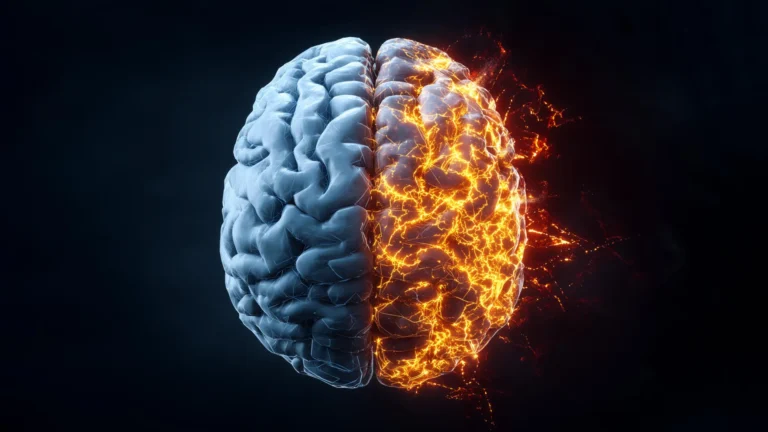
Psychedelic compounds exert their profound effects on the human brain primarily by engaging with a complex network of serotonin receptors. Scientists have cataloged no fewer than fourteen distinct receptor types that respond to the crucial neurotransmitter serotonin, a chemical messenger vital for mood regulation, sleep, and cognitive functions. Among these, a particular receptor, designated as the 2A subtype, exhibits a pronounced affinity for many psychedelic substances. This specific receptor plays a dual role, influencing not only the processes of learning and memory formation but also acting to modulate, or dampen, neural activity within brain regions responsible for interpreting visual stimuli from our external environment.
Earlier investigations had already suggested a suppression of visual processing in the brain mediated by this 2A receptor. This observation led to the hypothesis that when the brain’s access to real-time visual data from the outside world is diminished, it seeks to compensate by drawing upon internal stores of information. To bridge this perceived gap in sensory input, the brain appears to interpolate fragments drawn from long-term memory, a process that can manifest as hallucinations. In essence, when the influx of direct visual signals is curtailed, the brain actively reconstructs perceptual experiences by retrieving and integrating stored images and past events from its memory banks. These internally generated components can then merge with ongoing sensory perception, leading to the subjective experience of altered reality.
Further scientific inquiry has begun to elucidate the temporal dynamics of this perceptual shift. Researchers have observed that psychedelics tend to amplify coordinated patterns of neural activity, known as brain oscillations, particularly within the visual processing areas of the brain. Oscillations represent synchronized waves of electrical firing among neurons, facilitating communication and information exchange between different brain regions. Following the administration of psychedelic substances, a notable increase in low-frequency brain waves, specifically in the delta and theta ranges (around 5 Hz), was detected in visual cortices.
These slower rhythmic patterns appear to exert a stimulatory influence on a distinct brain region known as the retrosplenial cortex. This area is recognized as a critical hub for accessing and retrieving stored memories. As the communication between these visual and memory-related regions intensifies, the brain transitions into an altered state of operation. In this state, the conscious awareness of immediate external events is attenuated, while perception becomes increasingly reliant on the retrieval and interpretation of previously encoded information. This phenomenon has been likened by leading researchers to experiencing a state akin to "partial dreaming," where internal mental landscapes take precedence over external reality.
To meticulously document these intricate neurological transformations, scientists employed a cutting-edge optical imaging methodology capable of tracking neural activity across the entire cerebral surface in real-time. The experimental framework for this research utilized specially bred laboratory mice, engineered by Professor Thomas Knöpfel at Hong Kong Baptist University. These genetically modified animals were designed to express fluorescent proteins within specific populations of brain cells, enabling researchers to visualize and measure neuronal activity with unprecedented precision.
This sophisticated technique allowed the research team to accurately pinpoint the origin of the recorded neural signals. It provided definitive confirmation that the observed fluorescent signals emanated from pyramidal cells located within layers 2/3 and 5 of the cerebral cortex. These particular cell types are fundamental to mediating intra- and inter-regional communication within the brain, playing a central role in the transmission of information throughout the cortical network. By precisely identifying the cellular sources of the activity, the study offered robust evidence for the proposed mechanism of action.
The implications of these findings extend significantly into the realm of therapeutic applications, particularly in the context of treating mental health conditions such as depression and anxiety. The research suggests that under controlled medical supervision, psychedelic substances may facilitate a temporary recalibration of brain activity. This recalibration could potentially promote the recall of positive or adaptive memories while simultaneously weakening the grip of deeply entrenched negative thought patterns that contribute to these disorders.
Professor Jancke articulated that when administered within a therapeutic setting, these compounds can transiently alter the brain’s operational state, enabling a selective retrieval of positive mnemonic content. This process, in turn, may aid in restructuring learned, maladaptive cognitive biases, essentially facilitating a process of "unlearning" negative associations. The prospect of further personalizing such therapeutic interventions in the future is a subject of considerable excitement within the scientific community.
By providing a clearer biological understanding of how psychedelics redirect perceptual focus from external sensory input towards internal memory networks, this study offers a more comprehensive scientific explanation for both the subjective experience of hallucinations and the burgeoning therapeutic promise associated with these compounds. The research underscores the complex interplay between sensory processing, memory retrieval, and the subjective experience of reality, opening new avenues for both fundamental neuroscience and clinical intervention. The ability to visualize and quantify these brain changes in real-time represents a significant leap forward in our comprehension of consciousness and the potential for neurochemical modulation to influence mental well-being.
About the Author