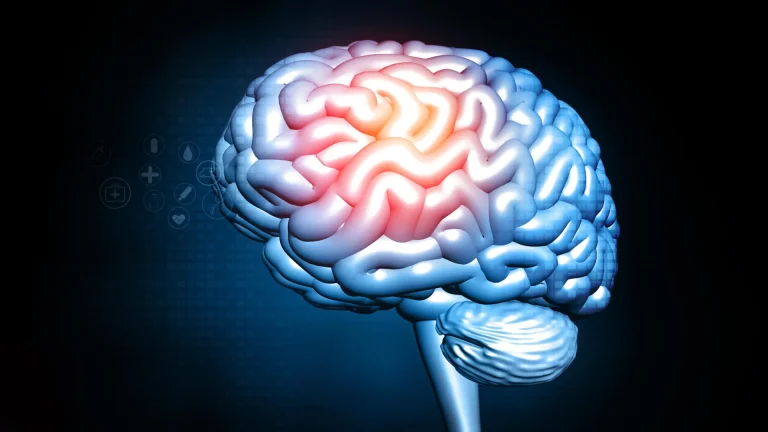
The human brain operates as a marvel of intricate coordination, constantly processing a torrent of sensory input and internal signals that arrive at vastly different speeds. Some stimuli necessitate immediate, almost reflexive responses to environmental shifts, while others require a more protracted period of deliberation, allowing for the nuanced interpretation of meaning, context, and underlying intent. Understanding how these disparate temporal streams are harmoniously integrated to form coherent thought and action has been a persistent challenge in neuroscience. A recent groundbreaking investigation from Rutgers Health, detailed in the esteemed journal Nature Communications, offers profound insights into this complex neural orchestration, specifically examining the pivotal role of white matter networks in bridging the temporal divides between various brain regions. This research illuminates the fundamental mechanisms by which the brain orchestrates its internal timing to underpin sophisticated cognitive functions, guide decision-making processes, and ultimately shape observable behavior.
At the heart of this discovery lies the concept that different areas within the brain do not process information with a uniform tempo. Each neural hub operates within a characteristic temporal window, a property termed intrinsic neural timescales (INTs). These timescales represent the duration for which a specific brain region retains and integrates incoming information before transitioning to the next incoming signal. This inherent temporal heterogeneity means that a signal processed by one area in milliseconds might be processed by another over several seconds, creating a complex temporal landscape that the brain must navigate. As Linden Parkes, an assistant professor of Psychiatry at Rutgers Health and the senior author of the study, elucidates, "To effectively interact with our environment through purposeful action, our brains must adeptly combine information that has been processed across a spectrum of different timescales." The brain achieves this remarkable feat by strategically employing its extensive network of white matter tracts, which act as communication highways, facilitating the exchange of information between disparate regions. This seamless integration of temporally diverse information is, therefore, absolutely critical for the execution of all human behavior.
To systematically investigate the intricacies of this integration process, Parkes and his research collaborators embarked on an ambitious endeavor, analyzing extensive brain imaging data acquired from a cohort of nearly 1,000 individuals. This substantial dataset allowed for the meticulous construction of detailed maps, known as connectomes, for each participant, illustrating the intricate web of their brain’s structural connections. Subsequently, the researchers employed sophisticated mathematical models, designed to describe the temporal evolution of complex systems, to trace the pathways and dynamics of information flow across these neural networks. This methodological approach allowed them to move beyond static structural maps and infer the dynamic functional relationships between different brain regions based on their connectivity patterns.
Parkes, a key member of the Rutgers Brain Health Institute and the Center for Advanced Human Brain Imaging Research, further elaborated on the study’s innovative approach: "Our research delves into the underlying mechanisms governing this integration process in humans by directly modeling the intrinsic neural timescales of individual brain regions derived from their observed connectivity." This novel methodology establishes a direct and quantifiable link between the local computational properties of brain regions – how they process information internally – and the manner in which this processing is subsequently disseminated and integrated across the entire brain to generate observable actions and cognitive outputs. It provides a concrete bridge between the microscopic level of neural processing and the macroscopic level of behavior.
The findings revealed a compelling correlation: the spatial arrangement and interplay of these intrinsic neural timescales across the cerebral cortex are instrumental in determining the brain’s efficiency in transitioning between broad patterns of neural activity that are intrinsically linked to specific behaviors. This temporal organization, the study discovered, is not a monolithic characteristic but exhibits significant inter-individual variability. "We observed that the inherent differences in how the brain processes information at varying speeds serve as a significant explanatory factor for the observed variations in individual cognitive abilities," stated Parkes, underscoring the functional significance of these temporal distinctions.
Moreover, the research uncovered a fascinating connection between these temporal processing patterns and the fundamental biological underpinnings of brain tissue. The study demonstrated that these timing patterns are intrinsically linked to genetic, molecular, and cellular characteristics of brain tissue, effectively tying the observed functional differences to foundational biological processes. The existence of similar correlational patterns in the brains of mice suggests that these underlying mechanisms for temporal integration are conserved across species, pointing towards an evolutionary ancient and fundamental aspect of neural organization. "Our work unequivocally highlights a fundamental and previously underappreciated link between the brain’s white matter connectivity, which dictates information flow, and its intrinsic computational properties, including its temporal processing capabilities," Parkes emphasized. This implies that individuals whose neural wiring exhibits a more optimal alignment between the temporal processing capacities of different regions and the temporal demands of information integration tend to exhibit enhanced cognitive capacities.
The implications of these findings extend significantly into the realm of mental health research, opening new avenues for understanding and potentially treating neuropsychiatric disorders. The research team is actively leveraging this established methodology to investigate conditions such as schizophrenia, bipolar disorder, and depression. The primary objective is to ascertain how disruptions in the brain’s intricate connectivity patterns might lead to dysregulation in the temporal processing of information, thereby contributing to the symptomatology of these complex disorders. By quantifying these temporal integration deficits, researchers hope to identify novel biomarkers and therapeutic targets for a range of mental health conditions. The collaborative effort behind this pivotal study included Avram Holmes, an associate professor of psychiatry and a core member of the Rutgers Brain Health Institute and the Center for Advanced Human Brain Imaging Research, alongside postdoctoral researchers Ahmad Beyh and Amber Howell, and Jason Z. Kim from Cornell University, underscoring the interdisciplinary nature of this significant scientific advancement.
About the Author