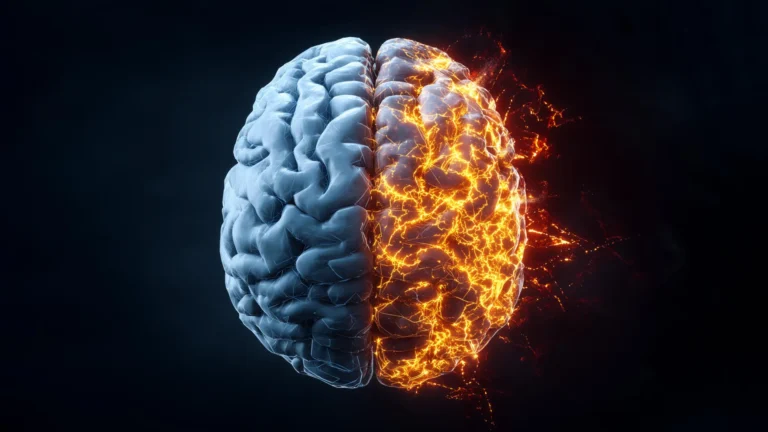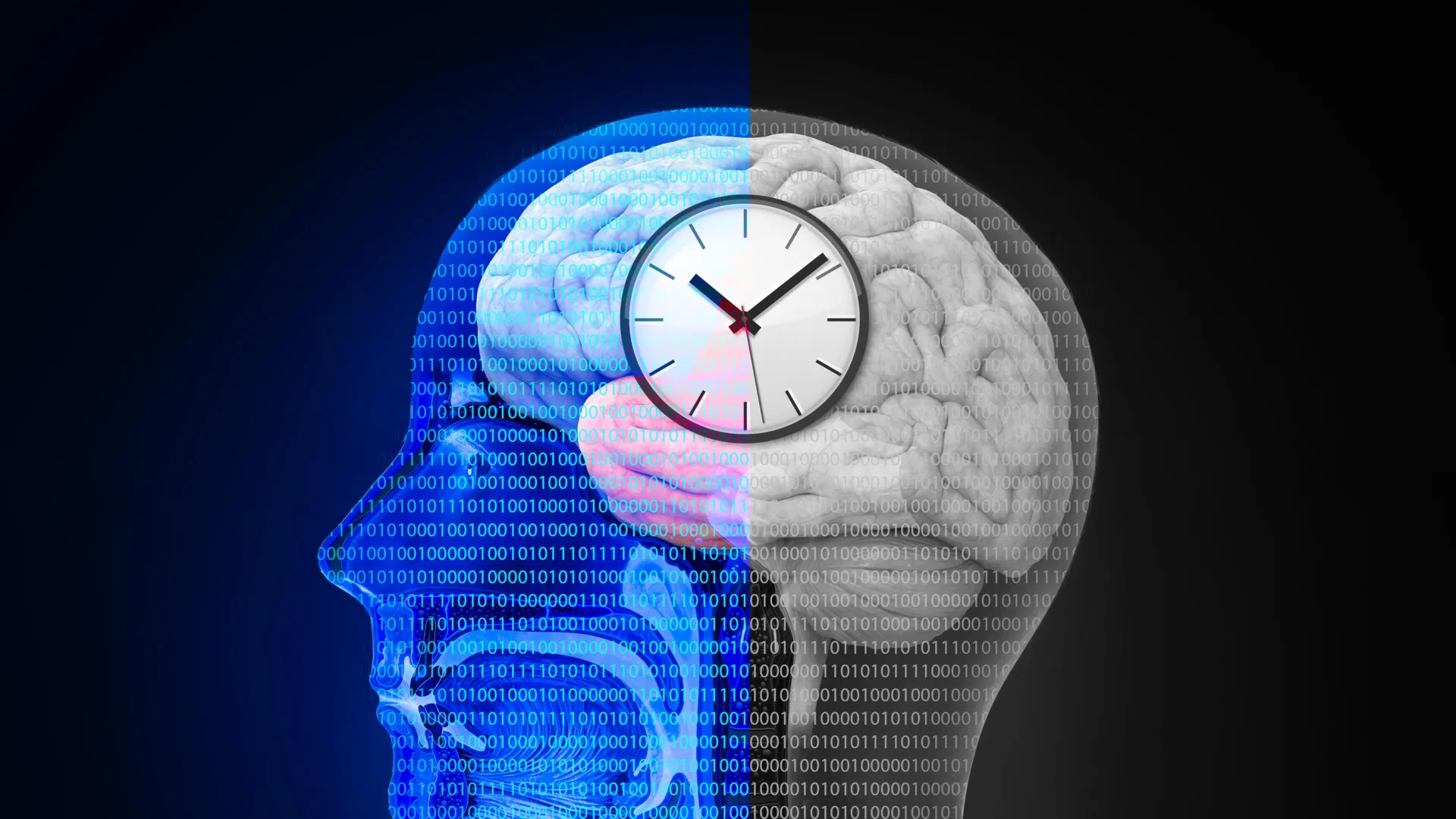
The intricate machinery of the human brain continuously processes a vast spectrum of incoming data, each arriving on distinct temporal frequencies. Some environmental cues necessitate immediate, reflexive responses, while others require a more deliberate, extended period of analysis to discern meaning, context, or underlying intent. A groundbreaking investigation by researchers at Rutgers Health, detailed in the esteemed journal Nature Communications, illuminates the sophisticated neural mechanisms by which the brain harmonizes these disparate temporal streams, a process fundamental to thought, decision-making, and behavioral output. The study posits that the brain’s white matter infrastructure, comprising the interconnected highways of neural pathways, plays a pivotal role in facilitating inter-regional communication, thereby underpinning higher cognitive functions.
At the heart of this research lies the concept of intrinsic neural timescales (INTs), a measure reflecting the characteristic temporal window within which individual brain regions operate. Rather than adhering to a singular, uniform pace, each area of the brain possesses its own unique chronometer, dictating how long it retains a particular piece of information before shifting its attention to subsequent neural signals. This inherent variability in processing speed is not a mere byproduct of neural architecture but a critical functional attribute. As Linden Parkes, the senior author of the study and an assistant professor of Psychiatry at Rutgers Health, explained, "To effectively interact with our environment through deliberate action, our brains must seamlessly integrate information that has been processed across these divergent timescales." This vital integration, he elaborated, is achieved through the strategic utilization of the brain’s white matter connectivity, enabling the dynamic exchange of information between distinct neural territories, a synergy that is indispensable for orchestrating complex human behaviors.
To empirically investigate the intricacies of this temporal integration, Parkes and his collaborators undertook an ambitious data analysis of brain imaging scans from an impressive cohort of 960 participants. This extensive dataset allowed the researchers to construct highly detailed neural maps, known as connectomes, for each individual, illustrating the unique network of connections within their brains. Subsequently, the team employed sophisticated mathematical models, designed to describe the temporal evolution of complex systems, to meticulously track the flow of information as it traversed these intricate neural networks. "Our research delves into the underlying biological processes governing this integration in humans by directly modeling the intrinsic neural timescales of brain regions based on their connectivity patterns," stated Parkes, who also holds significant affiliations with the Rutgers Brain Health Institute and the Center for Advanced Human Brain Imaging Research. "This approach establishes a direct correlation between the local information processing capabilities of brain regions and how that processing is subsequently shared across the broader neural landscape to generate observable behavior."
The research uncovered a compelling correlation between the spatial organization of these neural timescales across the cerebral cortex and the brain’s proficiency in transitioning between different large-scale activity patterns that underpin behavior. This inherent temporal structuring, the study revealed, is not uniform across individuals, suggesting a biological basis for variations in cognitive performance. "We discovered that the inherent differences in how the brain processes information at varying speeds contribute significantly to explaining the observed variability in people’s cognitive abilities," Parkes noted. Furthermore, the study provided evidence that these distinct temporal patterns are intricately linked to fundamental biological substrates, including genetic, molecular, and cellular characteristics of brain tissue. Intriguingly, similar associations were observed in the brains of mice, indicating that these temporal processing mechanisms may be conserved across species, hinting at a deep evolutionary origin. "Our findings underscore a profound and fundamental connection between the brain’s white matter connectivity architecture and its localized computational properties," Parkes emphasized. "Individuals whose neural wiring is more optimally aligned with the brain’s capacity to manage both rapid and slow information streams tend to exhibit enhanced cognitive capabilities."
These groundbreaking findings carry significant implications for the future trajectory of neuropsychiatric research. The research team is actively extending their analytical framework to investigate a range of neuropsychiatric disorders, including schizophrenia, bipolar disorder, and depression. The ultimate objective is to gain a deeper understanding of how alterations in brain connectivity might disrupt the temporal dynamics of information processing, potentially leading to the characteristic cognitive and behavioral deficits associated with these conditions. This collaborative endeavor involved key contributions from Avram Holmes, an associate professor of psychiatry and a core member of both the Rutgers Brain Health Institute and the Center for Advanced Human Brain Imaging Research, alongside postdoctoral researchers Ahmad Beyh and Amber Howell, and Jason Z. Kim from Cornell University. By dissecting the neural correlates of temporal integration, this research opens new avenues for identifying biomarkers, developing targeted interventions, and ultimately improving the lives of individuals affected by neurological and psychiatric challenges. The ability to quantify and understand these internal timing mechanisms offers a powerful new lens through which to view brain health and dysfunction, moving beyond static structural analyses to embrace the dynamic temporal dimension of neural computation.
About the Author