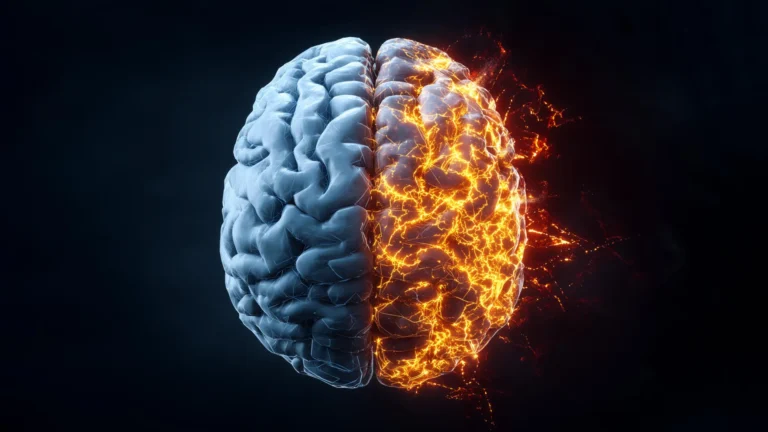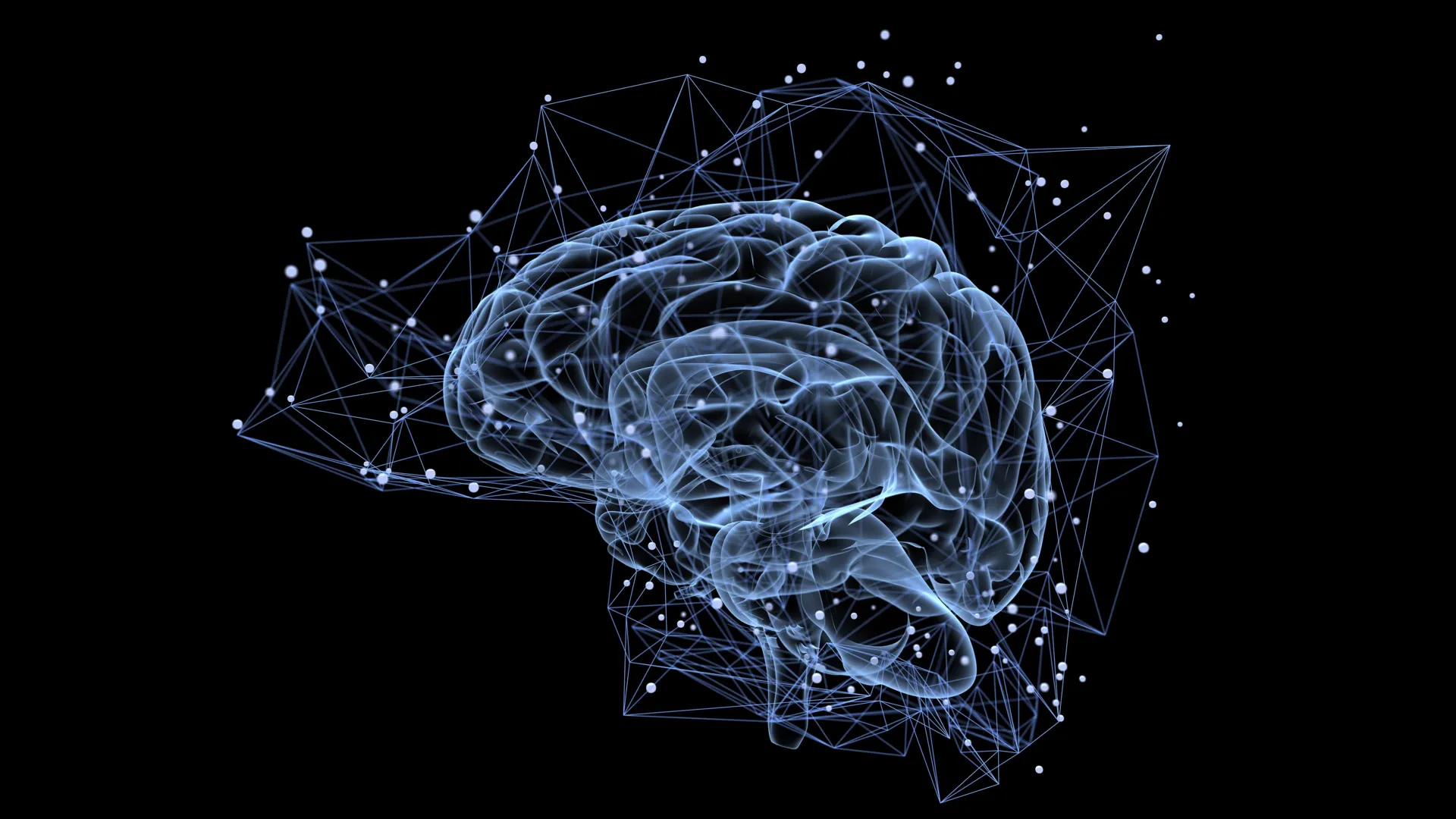
Every fleeting sensory input, every flash of inspiration, and every deeply felt emotion is processed by the brain, potentially transforming into enduring memories that sculpt our sense of self and inform our future actions. A persistent enigma within neuroscience has revolved around the intricate mechanisms by which the brain discerns which fragments of information warrant long-term preservation and for what duration these mental imprints should persist. New research is illuminating a sophisticated temporal choreography within the brain, revealing a sequence of molecular timing processes that unfold across various neural territories to solidify or permit the dissolution of our memories.
Scientists have recently pinpointed regulatory factors that orchestrate the progression of memories into progressively more stable states, or conversely, facilitate their complete erasure. This breakthrough was achieved through the application of a sophisticated virtual reality behavioral paradigm developed for laboratory mice. This innovative approach allowed researchers to meticulously observe and manipulate the conditions under which memories are formed and retained, offering unprecedented insight into the underlying molecular machinery.
A significant study, published in the esteemed scientific journal Nature, underscores the collaborative effort of multiple brain regions in the temporal re-organization of memories. This intricate process involves critical junctures, or checkpoints, that meticulously assess the perceived significance of each memory and, consequently, its projected longevity. This signifies a departure from simpler models, suggesting that memory durability is not a fixed attribute but rather a dynamically regulated process.
"This represents a pivotal advancement because it elucidates how we modulate the persistence of our memories," explained Dr. Priya Rajasethupathy, the director of the Skoler Horbach Family Laboratory of Neural Dynamics and Cognition. "What we ultimately retain is not determined by a single, irreversible event but rather by a continuously adapting system." This perspective challenges the long-held notion of memories being akin to a digital file, permanently stored once saved.
For decades, the prevailing understanding of memory consolidation largely centered on two principal neural structures: the hippocampus, known for its role in immediate and short-term memory formation, and the cerebral cortex, which was considered the repository for long-term recollections. Within this framework, long-term memories were conceptualized as being stored through a biological equivalent of on-and-off switches, implying a definitive binary state of storage or non-storage.
"Previous conceptualizations of memory storage in the brain often invoked molecular components that functioned like on-off switches, akin to transistors," Dr. Rajasethupathy noted. This established model proposed that once a memory was tagged for enduring storage, it would remain accessible indefinitely. While this paradigm offered valuable insights into memory function, it fell short of explaining the observed variability in memory persistence, failing to account for why some long-term memories endure for mere weeks while others remain remarkably vivid for many decades.
The identification of a crucial neural circuit that bridges short-term and long-term memory systems has been a recent game-changer. This newly described pathway prominently features the thalamus, a subcortical structure that plays a pivotal role in determining the fate of memories, guiding them toward the cortex for long-term stabilization. This discovery has naturally propelled further inquiry into the post-hippocampal journey of memories and the molecular determinants of their persistence or evanescence.
To delve into these fundamental questions, the research team engineered a specialized virtual reality environment enabling mice to acquire specific, measurable memories. "Dr. Andrea Terceros, a postdoctoral researcher in my laboratory, devised an exceptionally insightful behavioral model that allowed us to approach this complex problem from a novel angle," Dr. Rajasethupathy elaborated. "By systematically varying the frequency of exposure to certain experiences, we could induce differential memory retention in the mice. Subsequently, we examined their brains to identify the neural mechanisms correlated with these varying degrees of memory persistence."
However, correlation alone could not fully elucidate the causal relationships. To overcome this limitation, co-lead author Celine Chen developed a cutting-edge CRISPR-based screening platform. This innovative tool allowed for the targeted manipulation of gene activity specifically within the thalamus and cortex. Through this experimental approach, the researchers demonstrated that the selective removal of certain molecular components directly impacted memory duration, with each molecule operating on its own distinct temporal schedule.
The findings strongly suggest that the persistence of long-term memories is not governed by a single, binary switch but rather by a complex cascade of gene-regulating programs that operate sequentially, much like molecular timers, across different brain regions. These timers are characterized by varying activation speeds and durations. Early-acting timers, which activate rapidly, contribute to the transient nature of some memories, allowing them to fade. Conversely, later-acting timers engage more gradually, providing the essential structural support required for significant experiences to become deeply entrenched and long-lasting. In the context of this study, the repetition of experiences served as a proxy for their importance, enabling researchers to compare the neural underpinnings of memories formed in frequently encountered versus infrequently encountered contexts.
The research team successfully identified three critical transcriptional regulators essential for memory maintenance: Camta1 and Tcf4, both located in the thalamus, and Ash1l, situated in the anterior cingulate cortex. These molecules are not involved in the initial encoding of a memory but are indispensable for its subsequent consolidation and preservation. The experimental disruption of Camta1 and Tcf4 led to a weakening of the neural connections between the thalamus and the cortex, resulting in a discernible loss of memory.
According to the proposed model, memory formation commences in the hippocampus. Camta1 and its downstream effectors then play a role in preserving this nascent memory. As time progresses, Tcf4 and its associated targets become active, bolstering cell adhesion and providing crucial structural reinforcement. Finally, Ash1l initiates chromatin remodeling processes that further solidify memory stability. "Without the engagement of these molecular timers to reinforce memories, the brain appears predisposed to rapid forgetting," Dr. Rajasethupathy posited.
Intriguingly, the molecular mechanisms identified for cognitive memory appear to be conserved across various biological systems. Ash1l belongs to a protein family known as histone methyltransferases, which are involved in maintaining memory-like functions in diverse cellular contexts. "Within the immune system, these molecules enable the body to retain a memory of past infections," Dr. Rajasethupathy explained. "During embryonic development, these same molecules guide cells to differentiate into specific types, such as neurons or muscle cells, and to maintain that identity throughout their lifespan." This suggests that the brain may be ingeniously repurposing these fundamental cellular memory mechanisms to support our complex cognitive recollections.
These groundbreaking discoveries hold significant promise for advancing research into memory-related disorders. Dr. Rajasethupathy suggests that a deeper understanding of the gene programs that govern memory preservation could enable scientists to develop strategies for rerouting memory pathways around damaged brain regions in conditions like Alzheimer’s disease. "If we can identify the secondary and tertiary neural areas critical for memory consolidation, and if neurons in the primary area are degenerating, it might be possible to bypass the compromised region and allow healthy brain areas to assume the burden of memory storage," she articulated.
The ongoing research endeavors by Dr. Rajasethupathy’s team are focused on deciphering how these molecular timers are initiated and what factors dictate their operational duration. This includes investigating the complex processes by which the brain evaluates the importance of a memory and makes decisions regarding its intended lifespan. The current findings consistently point towards the thalamus as a central command center in this critical decision-making hierarchy. "We are keenly interested in understanding the trajectory of a memory beyond its initial formation in the hippocampus," Dr. Rajasethupathy concluded. "Our work strongly indicates that the thalamus, along with its parallel communication streams to the cerebral cortex, plays a pivotal role in this ongoing process of memory maintenance and regulation."
About the Author