The intricate human capacity for altruism, a cornerstone of social cohesion, has long fascinated scientists, prompting investigations into its underlying neural mechanisms. New research, published on February 10th in the peer-reviewed journal PLOS Biology, illuminates a potential pathway through which this complex trait can be influenced. A collaborative effort between researchers at East China Normal University and the University of Zurich has demonstrated that by strategically synchronizing neural activity within specific brain areas, individuals can be nudged towards more generous decision-making. This groundbreaking study introduces the concept of directly modulating altruistic tendencies through targeted brain stimulation, offering profound insights into the biological underpinnings of social behavior.
Human societies thrive on the ability of individuals to consider the well-being of others, a trait cultivated from early childhood through parental guidance and societal norms. Yet, the spectrum of selflessness among adults is remarkably broad, ranging from unwavering dedication to the needs of others to a pronounced focus on personal advancement. Understanding the origins of these individual variations has been a persistent quest for neuroscientists and psychologists. This latest investigation delves into this fundamental question by exploring the causal link between specific patterns of brain communication and the propensity for altruistic acts.
The experimental design employed a well-established behavioral economics paradigm known as the Dictator Game. In this scenario, 44 adult participants were tasked with making a series of choices regarding the division of monetary resources. Across 540 distinct rounds, participants were presented with opportunities to allocate a sum of money to an anonymous recipient, with the remaining portion being retained by themselves. The variability in payout amounts across these rounds ensured that participants encountered situations where sharing more would result in a smaller personal gain, and vice versa, thereby creating a genuine trade-off between self-interest and generosity.
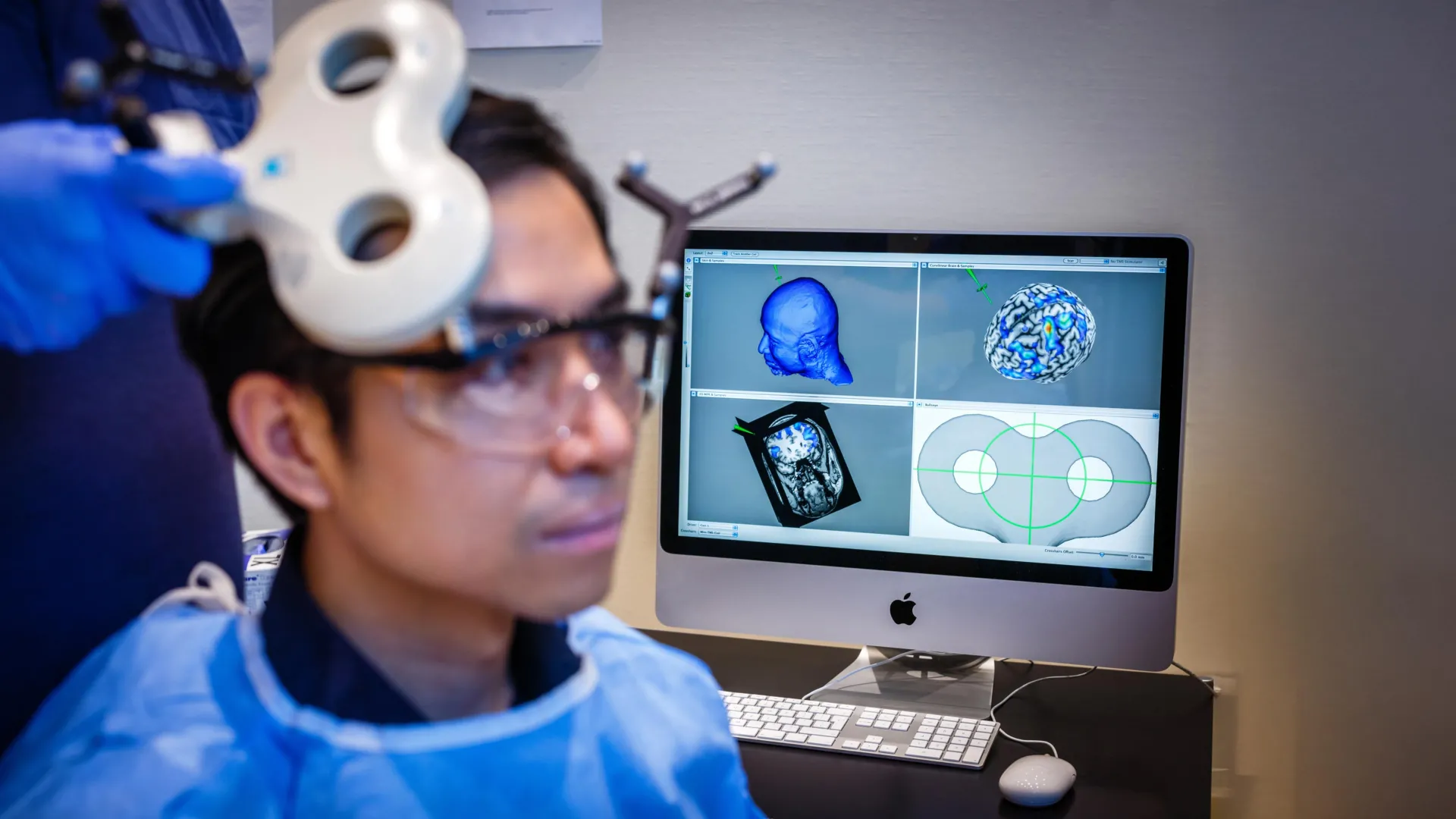
Central to the study’s methodology was the application of transcranial alternating current stimulation (tACS), a non-invasive neuromodulation technique. This method involves applying weak electrical currents to the scalp, influencing the electrical activity of underlying brain regions. The tACS device was specifically calibrated to enhance the synchronized firing patterns of neurons in two critical areas: the frontal lobe, broadly associated with executive functions, decision-making, and social cognition, and the parietal lobe, involved in sensory integration, spatial awareness, and attention. The researchers aimed to entrain neural oscillations within these regions into specific rhythmic patterns, namely gamma or alpha waves, hypothesizing that coordinated activity would correlate with altered social decision-making.
The results revealed a significant and intriguing outcome: when the tACS effectively strengthened gamma synchrony between the frontal and parietal cortices, participants exhibited a discernible increase in altruistic choices. This enhancement translated into a greater willingness to allocate larger portions of the available money to their counterpart in the Dictator Game, even when such generosity directly reduced their own financial stake. The effect, while described as modest, was statistically significant and provided compelling evidence for the causal role of synchronized frontal-parietal activity in promoting prosocial behavior.
Further analysis, employing a computational model, provided a deeper understanding of how this neural modulation influenced participants’ decision-making processes. The model suggested that the gamma synchrony stimulation led to a re-evaluation of the financial offers. Following the intervention, individuals appeared to assign greater importance to the potential outcome for the recipient when making their allocation decisions. This indicates that the enhanced neural coordination did not simply create a superficial urge to share, but rather altered the fundamental weighting of social considerations in the decision-making calculus. It is important to note that the study did not directly measure neural activity during the behavioral task; however, the authors propose that future research could integrate brain stimulation techniques with neurophysiological recordings, such as electroencephalography (EEG), to provide direct evidence of how these interventions alter brain signals in real-time. Nevertheless, the findings strongly suggest that the synchronized interplay between the frontal and parietal lobes plays a crucial role in facilitating altruistic decision-making.
The researchers underscored the significance of their findings in establishing a clear cause-and-effect relationship. Coauthor Christian Ruff highlighted the identification of a specific communication pattern between brain regions that is demonstrably linked to altruistic choices. He emphasized that this discovery advances our fundamental understanding of the neural architecture supporting complex social decisions and lays critical groundwork for future investigations into cooperation, particularly in contexts where collective action is paramount for success.
Jie Hu, another coauthor, reiterated the novelty of establishing a causal link. "What’s new here is evidence of cause and effect," Hu stated, explaining that by precisely altering communication within a defined neural network using targeted, non-invasive stimulation, the study observed consistent shifts in participants’ sharing behaviors, reflecting an adjusted balance between personal interests and the welfare of others. This direct manipulation provides a powerful demonstration of how specific neural circuits contribute to our social predispositions.
Marius Moisa, a third coauthor, expressed his astonishment at the direct impact of boosting coordination between two brain areas on altruistic outcomes. "We were struck by how boosting coordination between two brain areas led to more altruistic choices," Moisa remarked. He further elaborated that the observed increase in synchrony between the frontal and parietal regions corresponded with a heightened tendency for participants to assist others, even when such assistance incurred a personal cost. This finding has significant implications, suggesting that the brain’s capacity for empathy and prosociality is not merely a fixed trait but can be influenced by modulating specific neural communication pathways. The study opens up avenues for exploring potential interventions aimed at fostering greater cooperation and social responsibility in various settings, from interpersonal relationships to broader societal challenges.
About the Author