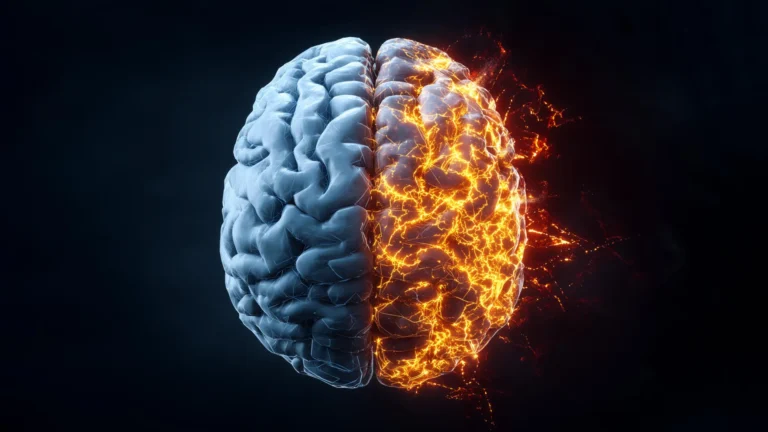

A recent scientific investigation has unveiled a striking convergence between the human brain’s method of comprehending spoken words and the sophisticated operational principles of advanced artificial intelligence systems, specifically large language models. This groundbreaking research, which meticulously tracked neural activity in individuals as they absorbed spoken narratives, has demonstrated a remarkable parallel: later stages of the brain’s response patterns align with the deeper, more complex processing layers found within AI language frameworks, with particular correlations observed in well-established linguistic centers of the brain, such as Broca’s area. The implications of these findings are profound, potentially necessitating a re-evaluation of long-held theories positing a strictly rule-based mechanism for language comprehension and are further bolstered by the simultaneous release of a comprehensive public dataset, offering an unprecedented tool for dissecting the intricate biological processes underlying semantic acquisition.
The collaborative endeavor, meticulously detailed in the esteemed journal Nature Communications, was spearheaded by Dr. Ariel Goldstein of the Hebrew University, in conjunction with Dr. Mariano Schain from Google Research and Professors Uri Hasson and Eric Ham, all affiliated with Princeton University. Collectively, this interdisciplinary team has illuminated an unforeseen resonance between the cognitive architecture that enables human understanding of speech and the computational architecture powering contemporary AI models engaged in textual analysis.
Employing electrocorticography (ECoG) to capture high-resolution neural data from participants who engaged with a roughly thirty-minute podcast, the researchers meticulously charted the temporal dynamics and spatial localization of brain activity during the intricate process of language assimilation. Their findings unequivocally indicate that the human brain navigates the acquisition of meaning through a structured, sequential progression, a methodology that uncannily mirrors the layered design inherent in sophisticated AI systems like GPT-2 and Llama 2.
The intricate journey of meaning construction within the human brain unfolds not as an instantaneous revelation, but rather as a progressive integration of information. Each spoken utterance traverses a series of distinct neural processing stages. Dr. Goldstein and his colleagues have meticulously demonstrated that these sequential neural events occur over time in a manner that is strikingly analogous to how AI models progressively refine their understanding of language. In AI systems, initial layers are typically dedicated to the identification of rudimentary linguistic features, while subsequent, deeper layers are responsible for synthesizing contextual nuances, vocal inflections, and overarching semantic significance.
The observed patterns in human brain activity remarkably mirrored this hierarchical AI progression. The initial neural signals detected bore a strong resemblance to the early-stage processing within AI models, while later neural responses demonstrated a significant alignment with the more profound processing layers of these artificial intelligence frameworks. This temporal synchronicity was particularly pronounced within higher-order language processing regions, including Broca’s area, where neural responses exhibited a delayed peak when associated with the deeper computational layers of the AI models.
Reflecting on the discovery, Dr. Goldstein articulated the profound nature of their findings: "The most astonishing aspect of our research was the degree to which the brain’s temporal progression of meaning aligns with the sequential transformations occurring within large language models. Despite the fundamentally different architectures of these systems, both appear to converge on a comparable, step-by-step methodology for achieving comprehension."
Beyond the fascinating insights into neural processing, this study carries significant implications for our understanding of artificial intelligence and its potential applications in cognitive science. It suggests that AI’s utility extends beyond its generative capabilities, offering a potent new lens through which scientists can more deeply interrogate the biological mechanisms underlying human semantic creation. For an extended period, prevailing linguistic theories largely posited that language comprehension was primarily predicated on the manipulation of discrete symbols and the adherence to rigid hierarchical structures. The results of this research challenge this entrenched perspective, instead advocating for a more fluid and statistically driven process wherein meaning emerges organically through the dynamic interplay of context.
Furthermore, the research team rigorously investigated the efficacy of traditional linguistic elements, such as phonemes and morphemes, in predicting real-time brain activity. These classic linguistic units proved to be less predictive of neural responses compared to the contextually rich representations generated by AI models. This observation lends substantial credence to the hypothesis that the human brain prioritizes the interpretation of continuous contextual information over the strict adherence to discrete linguistic building blocks.
To facilitate continued advancements in this burgeoning field of language neuroscience, the research consortium has generously made the entirety of their neural recordings and the associated linguistic feature data accessible to the global scientific community. This open-access dataset represents an invaluable resource, empowering researchers worldwide to rigorously test competing theories of language understanding and to cultivate computational models that more accurately encapsulate the complexities of human cognitive processing.
About the Author