Navigating Later Life: The Crucial Role of Single-Leg Stability in Sustaining Mobility and Well-being

As individuals progress through the decades, maintaining physical autonomy and a high quality of life becomes a paramount concern. Among the many facets of physical health, balance often receives less immediate attention than cardiovascular fitness or muscular strength, yet it underpins nearly every movement we perform and profoundly influences an individual’s independence. A straightforward yet remarkably insightful diagnostic tool—the single-leg stand—offers a compelling window into an individual’s overall physiological resilience and their trajectory toward healthy aging. This seemingly simple test can reveal intricate details about how the body’s complex systems collaborate to maintain equilibrium, providing insights far beyond mere fall risk assessment.
The capacity to stabilize confidently on one leg is not merely an exercise for athletes or a skill to be showcased; it is a fundamental motor competency essential for navigating the complexities of daily existence. Consider the ubiquitous act of walking, which is, at its core, a continuous series of controlled single-leg stances, where one foot lifts and propels the body forward while the other provides the sole point of support. Similarly, the challenge of ascending or descending a staircase demands a confident shift of weight onto a single limb with each step. Even routine actions like dressing, stepping over an unexpected obstacle, or traversing an uneven garden path require instantaneous, unconscious stabilization. When this foundational ability diminishes, these activities transform from effortless movements into formidable challenges, potentially eroding independence, confidence, and overall quality of life.
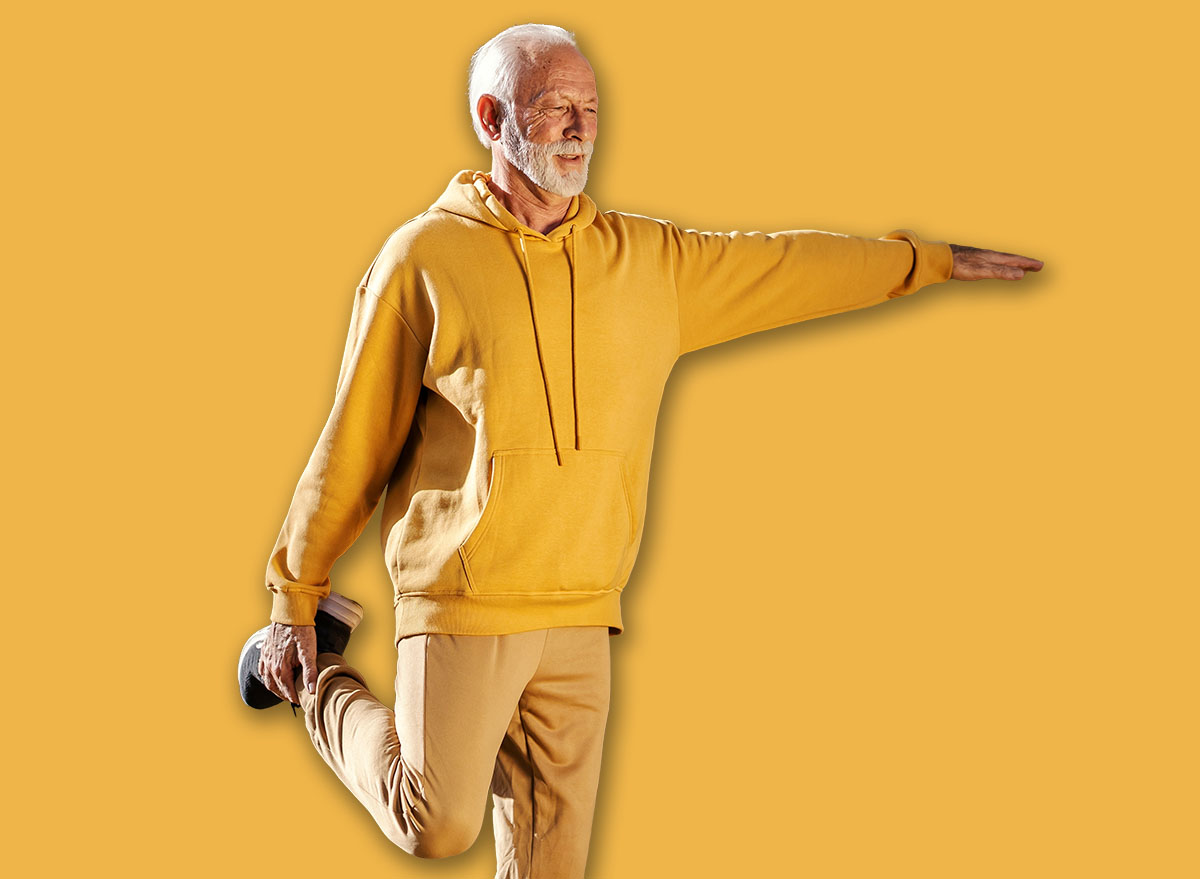
Longevity and Fitness Expert Sue Hitzmann, a distinguished fascia educator, manual therapist, and exercise physiologist, underscores this critical connection. Hitzmann, who is also the visionary founder of the MELT Method, observes that older adults often develop compensatory gaits, such as shuffling or a side-to-side waddle, precisely because their intrinsic balancing mechanisms are compromised. This isn’t just about preventing a sudden tumble; it’s about preserving the fluid, confident flow of movement that defines an active, engaged life and allows individuals to participate fully in their communities and hobbies without hesitation or fear.
The single-leg balance test offers a sophisticated readout of the intricate interplay between the body’s proprioceptive system, the central nervous system, and a remarkable, often overlooked, network of connective tissue known as fascia. Proprioception, frequently referred to as the "sixth sense," is the body’s innate ability to sense its position, motion, and equilibrium in space. It relies on continuous feedback from sensory receptors located in muscles, joints, and tendons. When an individual attempts to balance on one leg, thousands of minute, reflexive adjustments occur throughout the entire kinetic chain, from the intrinsic muscles of the foot and ankle up through the hips, core, and even the head. These micro-adjustments are orchestrated by the nervous system in direct response to a constant stream of sensory feedback, allowing the body to maintain its center of gravity over a narrow base of support.
Fascia, a ubiquitous web of collagen and elastin fibers, forms a three-dimensional matrix enveloping muscles, organs, bones, and nerves throughout the entire body. Far from being inert packing material, fascia plays a pivotal role in this communication network. Often described as the body’s "organ of awareness," fascia is densely populated with millions of specialized mechanoreceptors. These receptors continuously transmit vital information to the brain regarding joint position, muscle tension, tissue compression, and overall bodily orientation. This constant, dynamic dialogue allows the brain to instantaneously direct the necessary muscular contractions and relaxations to maintain upright posture and stability. Hitzmann emphasizes that the efficiency of this fascial communication is paramount. If the fascial matrix becomes dehydrated, stiff, or sluggish—a common occurrence with age if not proactively addressed—these sensory signals become "fuzzy" or impaired. This degradation in signal clarity directly translates into diminished balance, often manifesting years before an individual might notice overt mobility limitations. The smooth, elastic, and hydrated nature of healthy fascia ensures clear, rapid neural signaling, enabling precise, reflexive stability.

The natural aging process frequently brings with it a gradual decline in various physiological functions, and balance is no exception. This decline isn’t solely due to obvious factors like decreased muscle mass (sarcopenia) or joint stiffness, though these certainly contribute. More fundamentally, it relates to the efficiency of the nervous system’s processing speed, slower reaction times, and, critically, the health and responsiveness of the connective tissues, particularly fascia. As Hitzmann points out, impaired balance can serve as an early warning sign, preceding more significant losses in overall mobility or an increased susceptibility to falls. This makes balance a powerful, often overlooked, predictor of an individual’s long-term functional independence and overall health span. A robust stability system signifies a responsive nervous system, well-supported joints, and a properly functioning connective tissue matrix. When these elements begin to falter, the body’s ability to react swiftly to unexpected perturbations or maintain equilibrium under challenging conditions is significantly compromised, increasing the risk of injurious falls.
Given its profound implications for healthy aging, objective assessment of single-leg balance is a crucial component of any comprehensive wellness strategy. For individuals aged 60 and above, a widely recognized benchmark for excellent balance involves the ability to maintain a single-leg stance for a duration of 20 to 30 seconds with their eyes open. During this test, it is important to avoid compensatory actions such as holding one’s breath, excessive wobbling, or tightly gripping the floor with the toes, as these can mask underlying instabilities. These clinical benchmarks are derived from extensive population studies and clinical evaluations, providing a reliable indicator of optimal stability. Hitzmann stresses that while these specific timings offer a valuable target, the most critical factor for long-term health is consistency over time. A noticeable decrease in one’s single-leg hold duration over several months or years should serve as a clear signal for focused attention on improving the stability system.
For an advanced assessment that further enhances proprioception and challenges the body’s internal sensing mechanisms, individuals can attempt the single-leg stand with their eyes closed. By intentionally removing visual cues—a primary source of balance information—the body is forced to rely more heavily on its internal sensory systems (proprioception and vestibular input). An ideal performance in this more challenging variation for those over 60 would see an individual maintaining balance for 10 to 15 seconds. It is also insightful to observe if one side of the body demonstrates superior balance compared to the other, potentially highlighting muscular imbalances or unilateral fascial restrictions that could benefit from targeted intervention.

The encouraging news is that the body’s connective tissue system, including fascia, is remarkably adaptable and responsive to consistent, gentle input. Maintaining optimal balance and fascial health is not a passive process but an active commitment to one’s well-being that can yield significant benefits. Incorporating daily habits that specifically nurture the fascial network and enhance neural communication can lead to notable improvements. These practices include the application of gentle vibration and sustained pressure, often through tools like foam rollers or specialized balls, which can help stimulate fluid exchange within the fascial matrix, break up adhesions, and improve its elasticity. Mindful movement, focusing on body awareness, controlled execution, and coordination, is equally beneficial for refining neuromuscular pathways. Breathwork exercises can also positively influence the autonomic nervous system, reducing overall tension and improving body awareness. Crucially, adequate hydration, combined with regular, appropriate exercise that includes balance training, forms the cornerstone of a resilient fascial matrix and a responsive stability system. By prioritizing these elements, individuals can proactively combat age-related decline, enhance their body’s inherent communication pathways, and maintain the fluid, confident movement essential for a fulfilling life.
In the journey toward healthy longevity, balance emerges as a non-negotiable pillar, extending its profound influence far beyond simply preventing falls. It is a fundamental indicator of the sophisticated coordination between the nervous system, muscles, and the pervasive fascial network. By understanding the intricate insights offered by a simple single-leg balance test and committing to proactive strategies for maintaining fascial health and neuromuscular efficiency, individuals can significantly impact their physical autonomy and overall quality of life as they age. Embracing balance assessment and training as integral components of a daily wellness routine empowers us to move through life with greater confidence, ease, and sustained vitality, ensuring that later life is lived to its fullest potential.

Related News