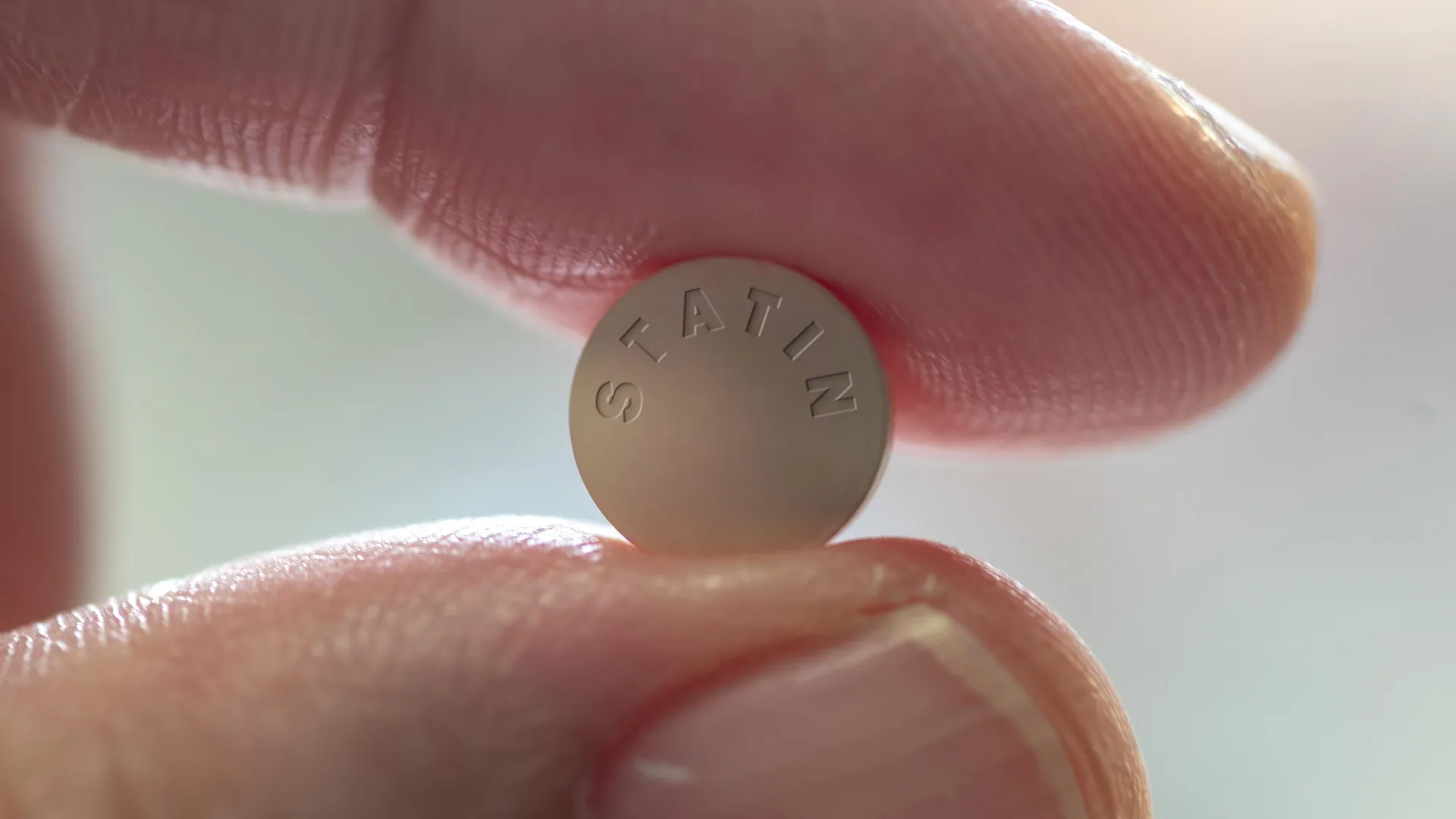
Millions of individuals worldwide rely on statin medications to manage high cholesterol levels, a critical intervention in preventing cardiovascular disease, the leading cause of mortality globally. Despite their proven efficacy, a significant challenge persists: a considerable proportion of patients discontinue their statin therapy due to debilitating muscle-related side effects, including pain, weakness, and persistent fatigue. This issue of non-adherence undermines the public health benefits of these vital drugs and has long perplexed the medical and scientific communities. Now, groundbreaking research emerging from Columbia University offers a compelling molecular explanation for this common adverse reaction, potentially paving the way for safer, more tolerable cholesterol-lowering treatments.
The new findings pinpoint a specific cellular mechanism through which certain statins may induce muscle discomfort. Researchers suggest that some widely prescribed statins can inadvertently bind to a crucial protein within muscle cells, known as the ryanodine receptor. This interaction, the study proposes, triggers an abnormal efflux of calcium ions, disrupting the delicate electrochemical balance essential for normal muscle function. This cellular dysregulation, according to the research team, could directly underpin the muscle pain and weakness experienced by many statin users.
Andrew Marks, who chairs the Department of Physiology and Cellular Biophysics at the Vagelos College of Physicians and Surgeons, and a leading figure in the study, underscored the significance of this discovery. "While this mechanism may not account for every instance of statin-induced muscular side effects, even if it clarifies the experience for a substantial subset of patients, that represents a vast number of individuals whose quality of life we could significantly improve if we can mitigate this specific issue," Marks stated, emphasizing the potential for widespread clinical impact. His perspective highlights the nuanced understanding required for complex drug-side effect profiles, acknowledging that patient responses can be highly individualized.
Statins represent a cornerstone of modern preventive medicine. In the United States alone, approximately 40 million adults are prescribed these medications to regulate their cholesterol levels, thereby reducing their risk of heart attacks, strokes, and other serious cardiovascular events. However, the prevalence of muscle-related adverse effects is notable, affecting roughly one in ten statin users. This rate, while seemingly modest, translates into millions of people annually who face a difficult choice between managing their cholesterol and enduring discomfort, often leading to therapy abandonment. Marks reiterated the clinical dilemma: "I’ve encountered numerous patients who, after being prescribed statins, refuse to take them due to the anticipated or experienced side effects. It is unequivocally the primary reason patients cease statin therapy, posing a very real and urgent problem that demands an effective resolution." This highlights a critical gap in patient care, where a highly effective medication is underutilized due to an unresolved side effect profile.
The conundrum of statin-associated muscle problems has been a subject of intense scientific inquiry since the drugs first became available for clinical use in the late 1980s. Initially hailed as a revolutionary class of drugs, their widespread adoption quickly brought to light the perplexing issue of myalgia (muscle pain). Statins primarily exert their therapeutic effect by inhibiting HMG-CoA reductase, an enzyme crucial for cholesterol synthesis in the liver. This targeted action is well-understood. However, like many pharmaceuticals, statins can also interact with other, unintended biological targets throughout the body, leading to off-target effects. For decades, researchers have hypothesized that such an off-target interaction within muscle tissue was responsible for the debilitating side effects, but the precise molecular details of this interaction remained elusive, a significant barrier to developing more patient-friendly formulations.
Previous investigations offered tantalizing clues, suggesting a link between statin side effects and their interaction with a specific protein found in muscle cells. Yet, without high-resolution imaging and detailed biochemical analysis, the exact nature of this binding and its downstream consequences could not be definitively established. The Columbia team overcame this hurdle by employing cryo-electron microscopy (cryo-EM), a sophisticated imaging technique that allows scientists to visualize biological molecules at near-atomic resolution. This powerful method enabled the researchers to directly observe how a commonly prescribed statin, simvastatin, physically interacts with muscle cell components. Cryo-EM freezes biological samples rapidly, preserving their native structures and allowing researchers to reconstruct detailed three-dimensional models, revealing intricate molecular interactions previously impossible to discern.
Through the intricate cryo-EM images, the researchers made a pivotal observation: simvastatin, a widely used statin, specifically binds to two distinct sites on the ryanodine receptor (RyR1), a large calcium-release channel protein predominantly found in skeletal muscle. The ryanodine receptor plays a critical role in muscle contraction by regulating the release of calcium ions from the sarcoplasmic reticulum—an internal storage compartment—into the muscle cell’s cytoplasm. This calcium surge is the signal that initiates muscle fiber shortening. The binding of simvastatin to RyR1, the images revealed, caused an unintended opening of this channel, allowing calcium to "leak" into areas of the cell where its concentration is normally tightly controlled.
This uncontrolled calcium leak, Marks explained, provides a plausible explanation for the muscle pain and weakness frequently associated with statin therapy. Excess calcium within the muscle cell cytoplasm can have several detrimental effects. It can directly impair the contractile machinery of muscle fibers, leading to weakness. Furthermore, sustained elevated calcium levels can activate intracellular enzymes known as proteases, which are responsible for protein degradation. This activation can initiate a gradual breakdown of muscle tissue, contributing to chronic pain and fatigue. The delicate balance of calcium signaling is fundamental to muscle health, and its disruption can cascade into significant cellular distress, manifesting as the symptoms patients report.
The elucidation of this specific molecular pathway opens promising new avenues for mitigating statin side effects and improving patient adherence. One primary strategy involves the rational redesign of statin molecules. By understanding the precise binding sites on the ryanodine receptor, medicinal chemists could potentially modify statin structures to retain their cholesterol-lowering efficacy while simultaneously preventing their unwanted interaction with RyR1 in muscle cells. Marks confirmed that his team is actively collaborating with chemists to develop such next-generation statins that circumvent this detrimental binding. This approach represents a targeted effort to refine existing drug classes, offering a more precise therapeutic profile.
Another innovative therapeutic strategy focuses on directly addressing the calcium leak itself. The Columbia researchers demonstrated that in mouse models, statin-induced calcium leaks could be effectively suppressed using an experimental drug developed in Marks’ laboratory. This particular compound was originally designed for other disorders characterized by abnormal calcium flow, suggesting a potential for drug repurposing. Repurposing existing or nearly-existing drugs can significantly accelerate the path to clinical application, as much of the safety and pharmacokinetic data might already be available.
Marks further elaborated on the potential clinical translation of this approach. "These experimental drugs are currently undergoing evaluation in human trials for rare muscle diseases," he noted. "If they demonstrate efficacy and safety in those patient populations, it would provide a strong rationale to then test their effectiveness in individuals experiencing statin-induced myopathies." This sequential approach to drug development is standard, ensuring that new treatments are thoroughly vetted before being applied to broader populations. The success in rare disease settings could serve as a vital proof-of-concept for their application in the more common statin-related muscle issues.
This landmark study, titled "Structural basis for simvastatin-induced skeletal muscle weakness associated with RyR1 T4709M mutation," was published on December 15 in the esteemed Journal of Clinical Investigation. The comprehensive research involved a multidisciplinary team of scientists, including Gunnar Weninger, Haikel Dridi, Steven Reiken, Qi Yuan, Nan Zhao, Linda Groom, Jennifer Leigh, Yang Liu, Carl Tchagou, Jiayi Kang, Alexander Chang, Estefania Luna-Figueroa, Marco C. Miotto, Anetta Wronska, Robert T. Dirksen, and Andrew R. Marks. Key funding for this extensive research was provided by multiple grants from the National Institutes of Health (NIH), underscoring the national importance and scientific rigor of the investigation.
In the interest of full transparency, the authors also disclosed potential conflicts of interest. Andrew Marks holds stock in RyCarma Therapeutics Inc., a company actively developing compounds that target the ryanodine receptor. He is also a coinventor on U.S. patent numbers US8022058 and US8710045, which are relevant to this area of research. Additionally, Gunnar Weninger, Haikel Dridi, Marco Miotto, and Marks are listed as inventors on a patent application titled "STATIN INNOVATION FOR MUSCLE-FRIENDLY CHOLESTEROL MANAGEMENT" (Invention Report #CU24350), which is slated for filing by Columbia University. Such disclosures are standard practice in scientific publishing, ensuring that potential biases are openly acknowledged, and the integrity of the research remains paramount.
Ultimately, this significant scientific advancement offers more than just an explanation for a persistent medical problem; it provides concrete, actionable pathways for developing improved therapeutic strategies. By understanding the intricate molecular dance between statins and muscle cells, researchers are now better equipped to design next-generation medications that retain their life-saving benefits while minimizing debilitating side effects. This promises a future where a greater number of patients can adhere to their prescribed cholesterol-lowering regimens, leading to enhanced cardiovascular health outcomes globally and a significant reduction in the burden of heart disease.
About the Author