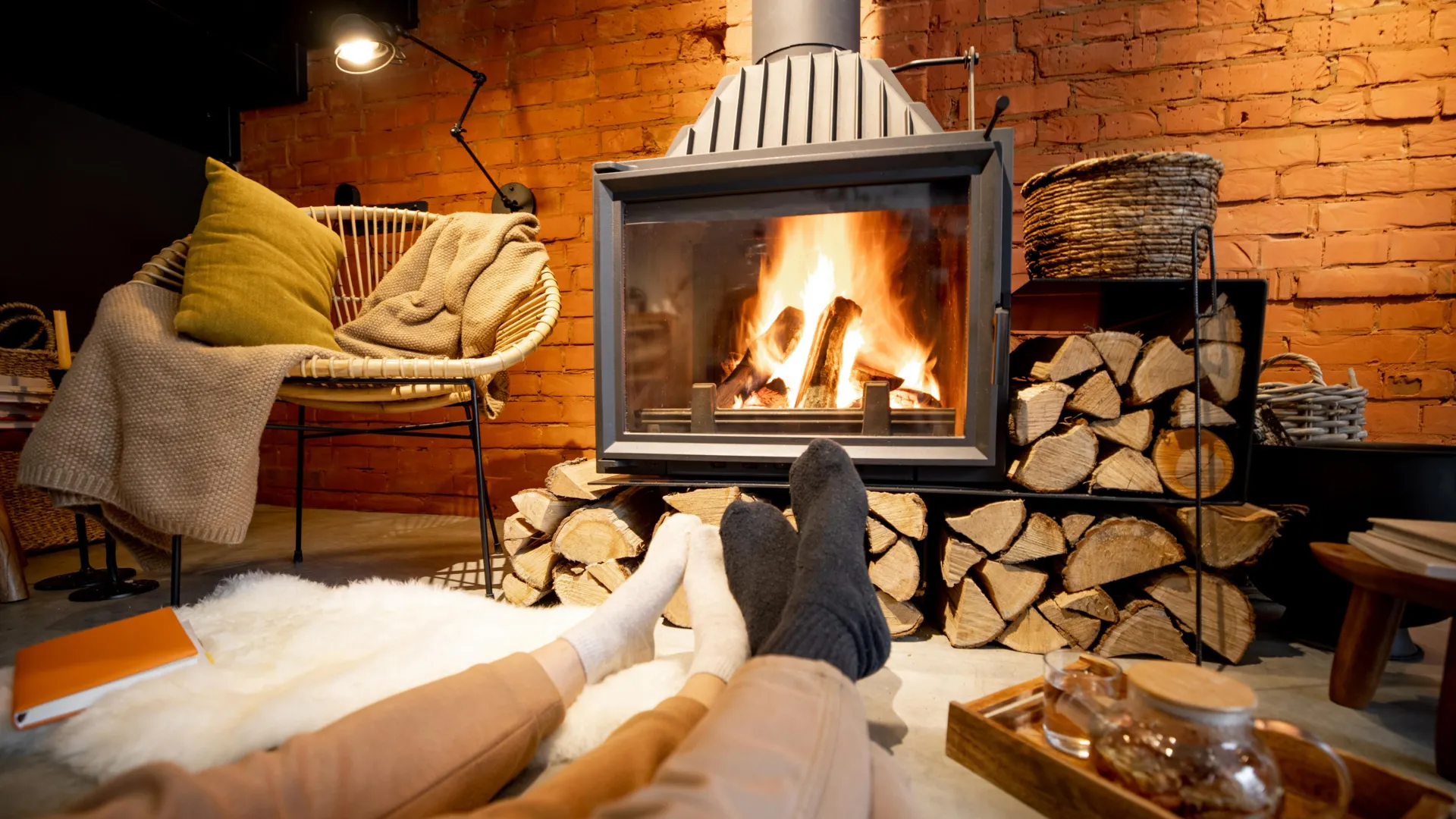
The quintessential image of a crackling fireplace on a frigid evening, often associated with warmth and tranquility, may belie a significant and underappreciated environmental hazard. A comprehensive investigation recently published by researchers at Northwestern University reveals that the seemingly innocuous act of burning wood within homes contributes substantially to winter air pollution across the United States, far exceeding common understanding and posing serious public health risks. This pivotal study challenges long-held perceptions, pinpointing residential wood combustion as a major, yet often overlooked, driver of fine particulate matter during the coldest months, with particularly severe implications for urban populations and communities of color.
At the heart of this concern lies fine particulate matter, scientifically denoted as PM2.5. These minuscule airborne particles, measuring less than 2.5 micrometers in diameter – approximately 30 times smaller than the width of a human hair – possess a dangerous ability to bypass the body’s natural defenses. Once inhaled, they can penetrate deep into the respiratory system, cross into the bloodstream, and circulate throughout the body, triggering systemic inflammation and cellular damage. Prolonged exposure to elevated levels of PM2.5 has been definitively linked by a wealth of epidemiological studies to a spectrum of severe health conditions, including exacerbated asthma, chronic bronchitis, non-fatal heart attacks, various forms of lung disease, and significantly increased rates of cardiovascular mortality and premature death. The Northwestern study, detailed in the prestigious journal Science Advances on January 23rd, quantifies this grave impact, estimating that fine particulate matter originating from residential wood combustion is implicated in approximately 8,600 premature deaths annually across the nation, solely considering wintertime exposure.
Perhaps one of the most counterintuitive revelations from the research challenges preconceived notions about where the greatest environmental burden of wood smoke pollution is felt. Contrary to the popular image of rural communities as primary consumers of wood for heating, the investigation unequivocally demonstrates that urban and suburban populations bear the disproportionate brunt of health consequences. While only a modest 2% of U.S. households primarily rely on wood for heating, the collective emissions from these sources contribute to over one-fifth, specifically 22%, of Americans’ winter exposure to outdoor PM2.5. This phenomenon is exacerbated in densely populated metropolitan areas where, even if individual wood burning is less common, the cumulative effect of scattered suburban sources combined with atmospheric transport mechanisms can lead to significant concentrations over city centers. Daniel Horton, the study’s senior author and an associate professor of Earth, Environmental and Planetary Sciences at Northwestern’s Weinberg College of Arts and Sciences, highlighted this complexity: "While a lot of emissions from residential wood burning come from the suburbs, pollutants emitted into the air don’t typically stay put. When this pollution is transported over densely populated cities, more people are exposed." This intricate interplay of emission patterns and atmospheric dynamics means that cities not traditionally associated with widespread wood burning can still experience detrimental air quality during cold snaps, recreational burning periods, or when smoke plumes travel considerable distances.
Beyond geographical disparities, the study illuminates a stark environmental justice issue: the health ramifications of residential wood burning disproportionately impact communities of color. Despite these populations typically exhibiting lower rates of residential wood combustion, they experience elevated exposure levels and suffer greater adverse health outcomes from the resulting smoke. The researchers meticulously linked this disturbing trend to a confluence of factors, including higher baseline mortality rates within these communities and the enduring legacy of historical discriminatory urban planning and housing policies, such as redlining, which have often concentrated vulnerable populations in areas with poorer environmental quality. Kyan Shlipak, an undergraduate mechanical engineering student at Northwestern and the study’s lead author, underscored this finding: "People of color face both higher baseline mortality rates and higher rates of exposure to pollution from wood burning. However, people of color are correlated with lower emissions rates, indicating that a large fraction of this pollution is transported to these communities, rather than emitted by them." A compelling illustration of this inequity emerged from the analysis of the Chicago metropolitan area, where Black communities were found to endure over 30% higher negative health effects attributable to residential wood burning when compared to the broader citywide average. This complex interplay of social vulnerability and pollutant transport paints a grim picture of environmental injustice, demanding targeted policy responses.
The pervasive issue of air quality degradation from residential wood burning has historically received considerably less public and regulatory attention compared to more dramatic environmental events like wildfire smoke. While massive blazes understandably capture headlines and fuel widespread concern, the cumulative impact of countless individual hearths and stoves operating daily in colder months has largely escaped equivalent scrutiny. Professor Horton observed this disparity, stating, "We frequently hear about the negative health impacts of wildfire smoke, but do not often consider the consequences of burning wood for heat in our homes." He further elaborated on the potential for significant improvements: "Since only a small number of homes rely on wood burning for heat, facilitating a home-heating appliance transition to cleaner burning or non-burning heat sources could lead to outsized improvements in air quality." This suggests that targeted interventions, despite the relatively small percentage of households involved, could yield substantial dividends for public health, making it an attractive target for environmental policy.
To meticulously quantify the impact of residential wood combustion, the Northwestern team employed a sophisticated, multi-stage research methodology, diverging from traditional air quality studies that often prioritize industrial emissions, vehicular exhaust, and agricultural activities. Their investigation focused intently on a previously less-scrutinized category: domestic wood heating appliances, encompassing everything from traditional fireplaces and wood stoves to furnaces and boilers. The foundational data for their analysis was drawn from the U.S. Environmental Protection Agency’s (EPA) National Emissions Inventory (NEI), a comprehensive database that compiles emissions estimates derived from extensive household surveys, detailed housing characteristics, local climatic conditions, and specific appliance types. This rich dataset provided the necessary groundwork for modeling actual emissions across the country.
With this baseline data, the scientists then leveraged a high-resolution atmospheric transport model, a powerful computational tool designed to simulate the intricate movement and transformation of pollutants within the atmosphere. This model integrated a complex array of environmental variables, including prevailing weather patterns, wind velocity and direction, ambient temperature fluctuations, topographical features, and atmospheric chemical reactions. By processing these factors, the model could dynamically estimate variations in air quality over specific temporal and spatial scales. Professor Horton elucidated the atmospheric chemistry at play: "Wood burning emissions enter the atmosphere, where they are affected by meteorology. Some emissions are considered primary pollutants, such as black carbon, and some interact with the atmosphere and other constituents, and can form additional, secondary species of particulate matter pollution." This distinction is critical, as secondary pollutants can form far from their original source, extending the reach of emissions.
To achieve an unprecedented level of granularity in their findings, the continental United States was tessellated into a precise grid of 4-kilometer by 4-kilometer squares. For each individual grid cell, the researchers computed hourly pollution generation rates, tracked pollutant dispersion and accumulation patterns, and mapped their atmospheric trajectory. This granular approach enabled the identification of localized pollution hotspots that would otherwise be obscured or averaged out in broader regional or county-level assessments, providing a truly nuanced understanding of exposure. Crucially, the model was executed in two distinct scenarios: once incorporating emissions from residential wood burning, and a second time with these emissions entirely excluded. A comparative analysis of these two outputs allowed the team to isolate and precisely attribute the contribution of domestic wood combustion to overall air pollution, ultimately revealing its accountability for approximately 22% of wintertime PM2.5 pollution. Finally, to understand the human toll, the researchers integrated their refined pollution estimates with U.S. census data and granular mortality statistics at the census tract level, allowing them to map health impacts directly to specific communities.
The profound implications of this study extend beyond academic understanding, pointing towards tangible pathways for significant public health improvements. The researchers’ findings strongly advocate for policy interventions aimed at reducing residential wood burning, particularly in urban and suburban environments, as a powerful strategy to mitigate outdoor air pollution. Such a transition, moving away from wood-fueled heating towards cleaner alternatives, holds the potential to avert thousands of premature deaths annually and deliver substantial public health benefits. Shlipak reiterated the critical urban focus: "Our results suggest that the impacts of residential wood burning are primarily an urban and suburban phenomenon. This finding underscores the public health relevance of this pollution. We estimate that long-term exposure to emissions from wintertime wood burning is associated with approximately 8,600 deaths per year, and this estimate does not account for particulate matter exposures in other seasons." It is also crucial to note that this extensive analysis specifically concentrated on the health impacts stemming from outdoor exposure to wood smoke pollution. The equally significant, though distinct, health risks associated with indoor exposure to particulate matter from domestic wood burning were not encompassed within the scope of this particular study, representing an additional layer of public health concern that warrants further investigation. This pioneering research, titled "Ambient air quality and health impacts of PM2.5 from U.S. residential wood combustion," received vital financial backing from the National Science Foundation under award number CAS-Climate-2239834, underscoring its scientific merit and national importance. The study serves as a clarion call for a re-evaluation of how we heat our homes and the broader societal and environmental costs associated with a seemingly innocent tradition, urging a shift towards cleaner, more equitable energy solutions for a healthier future.
About the Author