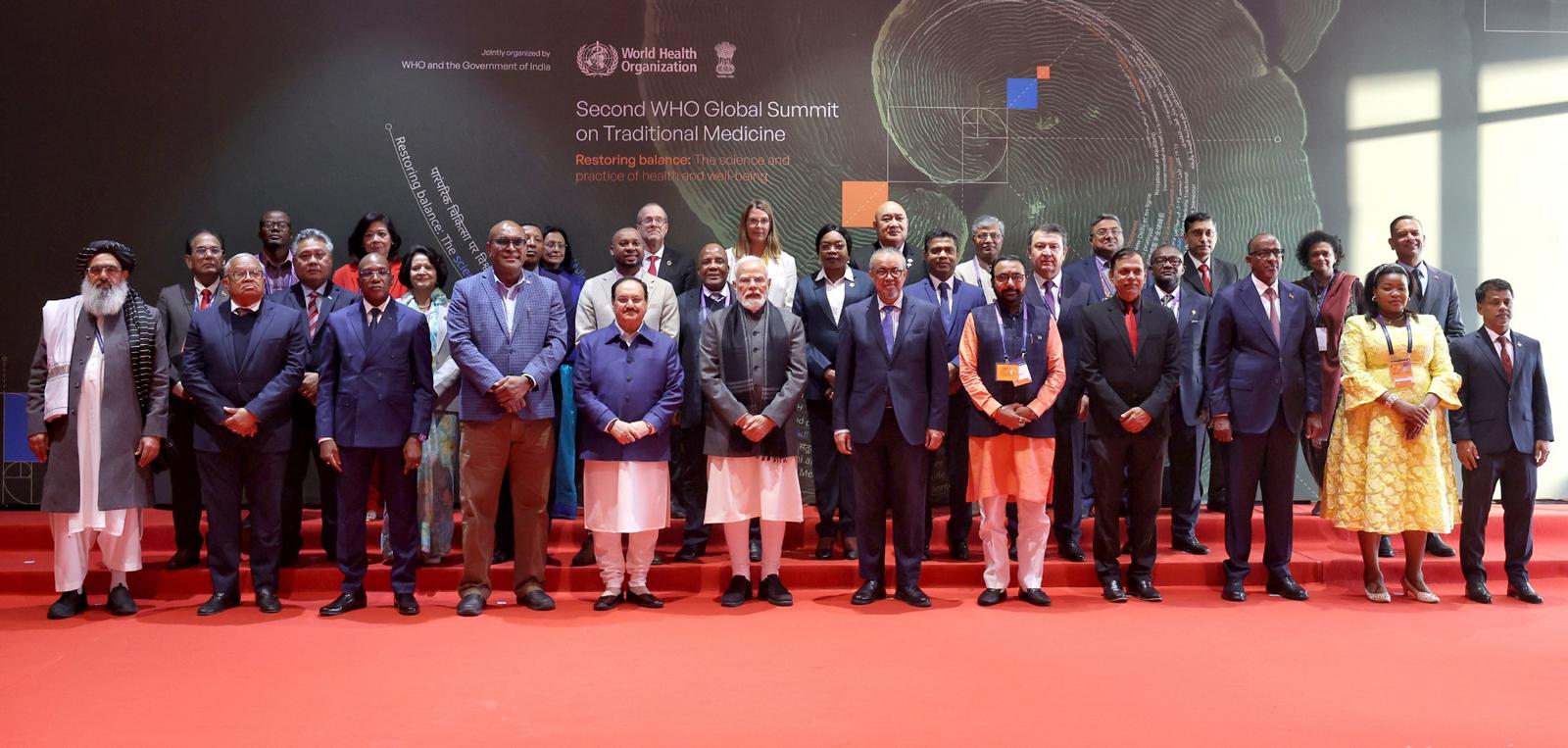
The bustling Indian capital of New Delhi recently served as the epicenter for a landmark global convergence, as policymakers, scientific experts, indigenous community representatives, and healthcare practitioners from over 100 nations gathered to redefine the future role of traditional, complementary, and integrative medicine (TCIM) within mainstream healthcare systems. This pivotal event, the second such global summit orchestrated by the World Health Organization (WHO) in collaboration with the Government of India, concluded with a resounding call for action, drawing an impressive digital audience of over 16,000 registrants alongside 800 in-person delegates, including health ministers from more than 20 countries. The palpable energy throughout the discussions underscored a growing international consensus: that TCIM holds immense, yet largely untapped, potential to address some of the most pressing health challenges facing humanity today.
For centuries, various forms of traditional medicine have been the bedrock of healthcare for billions worldwide, deeply intertwined with cultural heritage and local knowledge systems. However, their integration into modern, evidence-based healthcare has been a complex endeavor, often hampered by a lack of rigorous scientific validation, inconsistent regulatory frameworks, and insufficient data on safety and efficacy. Recognizing this dichotomy, the WHO has increasingly championed a more systematic and evidence-informed approach to TCIM, culminating in strategic initiatives designed to bridge the gap between ancient healing practices and contemporary medical science. This recent summit was a critical step in operationalizing the newly minted WHO Global Traditional Medicine Strategy 2025–2034, an ambitious blueprint aimed at fostering safe, ethically sound, and affordable integration of TCIM into national health infrastructures.
A cornerstone of this renewed global strategy, and a major unveiling at the New Delhi gathering, is the Traditional Medicine Global Library (TMGL). This pioneering digital repository represents an unprecedented effort to consolidate the fragmented knowledge base surrounding traditional medicine. Housing an astonishing 1.6 million resources, ranging from peer-reviewed scientific studies and clinical trials to invaluable indigenous wisdom and historical texts, the TMGL is poised to revolutionize access to credible information on TCIM. Its advanced features, such as Evidence Gap Maps, which visually highlight areas requiring further research, and an AI-powered conversational tool, TMGL GPT, promise to democratize knowledge, empower researchers, and inform policy decisions worldwide. By providing a centralized, trusted source of data, the TMGL aims to accelerate the scientific validation of traditional practices and facilitate their responsible application in diverse healthcare settings.
Beyond mere documentation, the summit also put a strong emphasis on fostering innovation at the intersection of traditional practices and cutting-edge technology. This vision materialized with the launch of Health & Heritage Innovations (H2I), an initiative specifically designed to nurture breakthrough ideas that merge ancient healing principles with modern advancements like artificial intelligence, genomics, and digital health platforms. From a pool of over 1,000 submissions globally, 21 finalists were announced during the summit, each poised to enter a year-long acceleration program. This intensive phase will provide them with critical support to refine their prototypes, receive expert scientific and regulatory guidance, and connect with potential investors and policymakers, ultimately aiming to transform promising concepts into scalable, impactful health solutions. The H2I initiative embodies a forward-looking perspective, recognizing that the future of medicine may lie in a synergistic blend of historical wisdom and technological prowess.
To ensure robust governance and provide expert guidance for the overarching strategy, the WHO also formally introduced its first-ever Strategic and Technical Advisory Group on Traditional, Complementary and Integrative Medicine (STAG-TM). Comprising 19 distinguished independent experts from diverse fields, STAG-TM is tasked with shaping global research priorities, developing internationally recognized standards for practice, and offering strategic advice on the seamless integration of TCIM into national health systems. During its inaugural meeting, convened concurrently with the summit, the group immediately identified several urgent priorities: enhancing evidence generation for TCIM interventions, safeguarding and preserving invaluable traditional knowledge, leveraging digital innovation for broader reach, and building capacity within healthcare workforces to competently engage with TCIM modalities. This advisory body is crucial for navigating the complex landscape of TCIM, ensuring that its integration is grounded in safety, efficacy, and ethical considerations.
A powerful demonstration of international commitment emerged in the form of the Delhi Declaration, a collective pledge embraced by 26 Member States. This declaration signifies a monumental shift in the global approach to traditional medicine, moving beyond mere acknowledgment to concrete, actionable commitments. Signatory nations have pledged to actively integrate traditional medicine into their primary healthcare services, thereby enhancing universal health coverage. Key commitments include strengthening regulatory frameworks and safety standards to protect patients, significantly increasing investment in TCIM research, and developing interoperable data systems to meticulously track outcomes and monitor the impact of integrated practices. This collective resolve underscores a paradigm shift: traditional medicine is no longer viewed as a peripheral or parallel system but as a vital component capable of driving equitable and comprehensive health coverage for all.
Dr. Tedros Adhanom Ghebreyesus, the Director-General of the WHO, powerfully articulated the profound significance of these commitments. He emphasized that the Delhi Declaration not only solidified the rationale for prioritizing traditional medicine but also laid out a clear roadmap for implementation. Dr. Tedros highlighted TCIM’s unique potential to address multifarious modern health challenges, including the escalating global burden of noncommunicable diseases, persistent inequities in access to essential health services, and the far-reaching health impacts of climate change. He underscored its capacity to foster healthcare models that are inherently person-centered, deeply rooted in cultural contexts, and holistically oriented, thereby offering a more compassionate and comprehensive approach to well-being.
As the curtains closed on the New Delhi summit, the focus firmly shifted to the arduous yet critical task of translating these ambitious commitments into tangible realities. The WHO, in close collaboration with its Member States, is now poised to embark on the next phase: scaling up access to trusted knowledge, accelerating the pace of innovation, and systematically embedding traditional medicine into health systems across the globe. The comprehensive Global Traditional Medicine Strategy 2025–2034, bolstered by the Delhi Declaration and the launch of key initiatives, charts a definitive course toward a future where healthcare is more inclusive, culturally resonant, adaptable, and ultimately, more resilient in the face of evolving global health demands. The journey ahead will require sustained collaboration, rigorous scientific inquiry, and an unwavering commitment to harnessing the full spectrum of human healing traditions for the benefit of all.
About the Author